

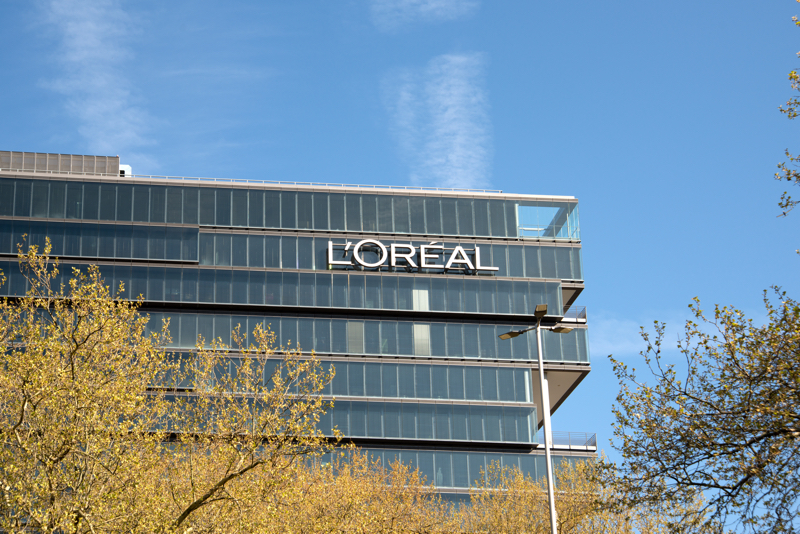
L’Oréal Groupe’s sales have risen 3.6% in the first quarter of 2026 to €12.5bn on a reported basis, and 7.6% like-for-like, driven by a “step up” in innovation.
Adjusted like-for-like sales at the French beauty giant, which takes into account the net impact of IT transformation, grew 6.7% in the three-month period to the end of March.
L’Oréal CEO Nicolas Hieronimus hailed the performance as a “great start” that was “significantly” ahead of the wider beauty market, which accelerated the Garnier and Lancôme-owner’s market share gains globally.
“Driven by the step up in our innovation plan, we continue to win in fragrances, hair care and make-up, and start seeing some encouraging signs in skin care,” he said.
The Q1 performance was ahead of analysts expectations and sent shares up 8%.
Sales grew across all of L’Oréal’s divisions and regions, with a recovery in its two largest markets – the US and China – in the second half of 2025, continuing into 2026 and outpacing the market, said Hieronimus.
L’Oréal Q1 2026 divisions performance
L’Oréal’s Professional Products Division, which includes hair care brands such as Kérastase and Redken, was the fastest growing in Q1, with like-for-like adjusted sales up 13.1% .
This was driven by its omnichannel strategy and its “focus on premiumising the salon industry through tailored services,” L’Oréal said in a statement.
The group’s Dermatological Beauty Division’s like-for-like adjusted sales grew 10.2% in the period, boosted by a strong innovation pipeline.
This included the expansion of La Roche-Posay’s Hyalu B5 Suractivated range and a “promising start” to the launch of Cera Ve’s sun care range in Europe.
L’Oréal’s Luxe Division grew 5.6% on a like-for-like adjusted basis in Q1, outperforming the market in all regions, and with emerging markets “particularly dynamic”.
Fragrance was a “standout growth engine” for the division, with Prada Paradigme, Yves Saint Laurent Libre and Valentino Born in Roma continuing to deliver “exceptional growth”.
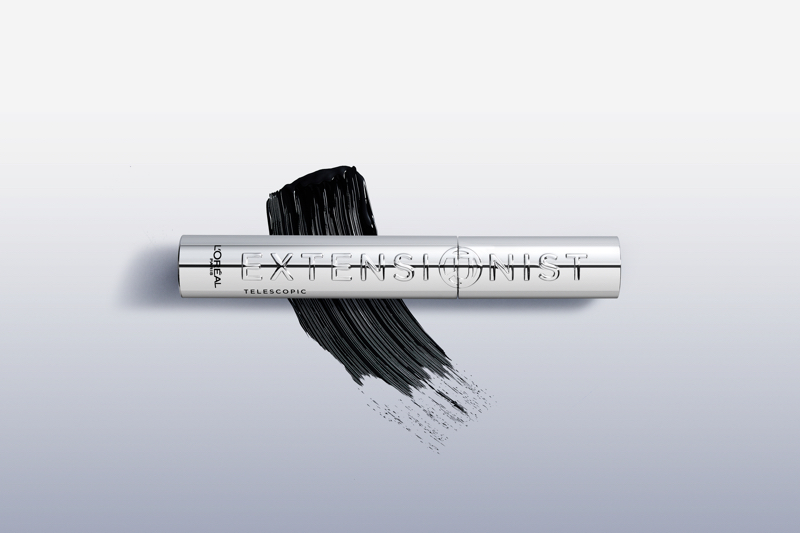
L’Oréal Paris Extensionist Mascara (pictured) is among the beauty giant's newest innovations
The newly launched Power of You by Emporio Armani also had a “very strong start”, L’Oréal said.
Skin care sales momentum within the division also improved, with recently acquired vitamin A-focused brand Medik8 delivering “exceptional growth”.
“The division outpaced a flat yet gradually recovering market with strong contributions from Helena Rubinstein Re-Plasty, Yves Saint Laurent Pure Shots,” said L’Oréal in the statement.
“New launches, such as Kiehl's Ultra Facial Medicated, demonstrated the division's continued ability to identify and activate high-potential white spaces.
“Highlights in make-up were the couture brands’ innovations like Yves Saint Laurent Lovenude and Prada Touch Blush.”
Adjusted like-for-like sales in L’Oréal’s Consumer Products Division grew 4.1%, with L’Oréal Paris, Garnier and NYX Professional Makeup “particularly dynamic”.
This was fuelled by an innovation pipeline that included L’Oréal Paris Extensionist Mascara, Maybelline New York Serum Lipstick, and NYX Professional Makeup Jelly Job Full-Bodied High Shine Gloss.
Hair care was a “standout performer” in the division, with global launches such as L’Oréal Paris Elvive Collagen Lifter and Garnier Fructis Diamond Sleek boosting sales.
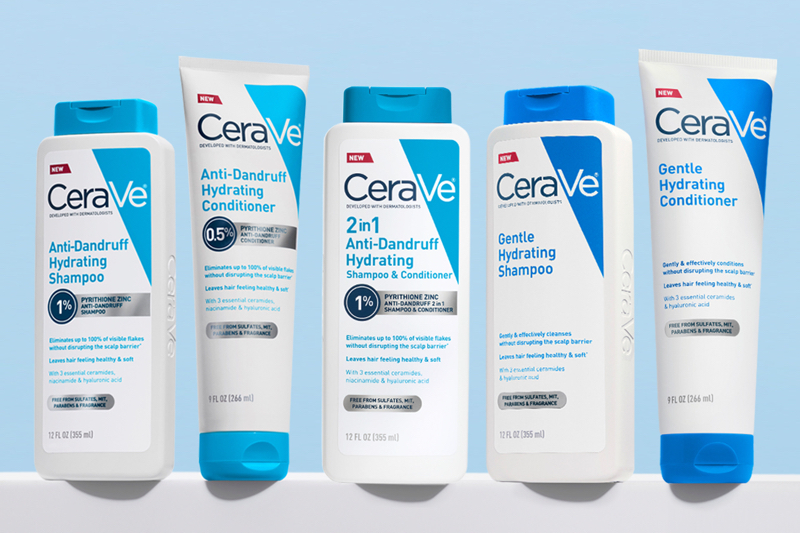
Cerave's recent entry into hair care (products pictured) has helped renergise the brand
“While still early days, skin care started to benefit from new launches like L’Oréal Paris Revitalift Filler Glass Skin Liquid Cream and Garnier Dry Touch Cream.” the company said.
Regional skin care brands Thayers and Mixa also delivered “exceptional results, both showing strong double-digit growth.
Mixa, a French pharmacy brand, is being rolled out across more European countries.
The impact of Middle East conflict on L’Oréal
“Despite current geopolitical and macroeconomic uncertainties, we are optimistic about the outlook for the global beauty market,” said Hieronimus.
Speaking on a call with investors, the CEO said he was wary around the conflict in the Middle East.
“I am conscious of the uncertainties that lie around the conflict,” he said, with the impact so far “manageable” in March.
“What we do not know is whether durable inflation on cash prices will impact consumer behaviours.
“So far, and we are monitoring this very closely, we have seen absolutely no reduction of consumption in our markets, whether it is Europe, North America or SAPMENA [South Asia Pacific, Middle East and North Africa].
“Should the conflict last longer, this will have an impact on the price of the brand, [and] will have an impact on our sourcing, on our logistics.
“We are all waiting to see the resolution of this conflict. So, that leads us to a certain level of carefulness.”
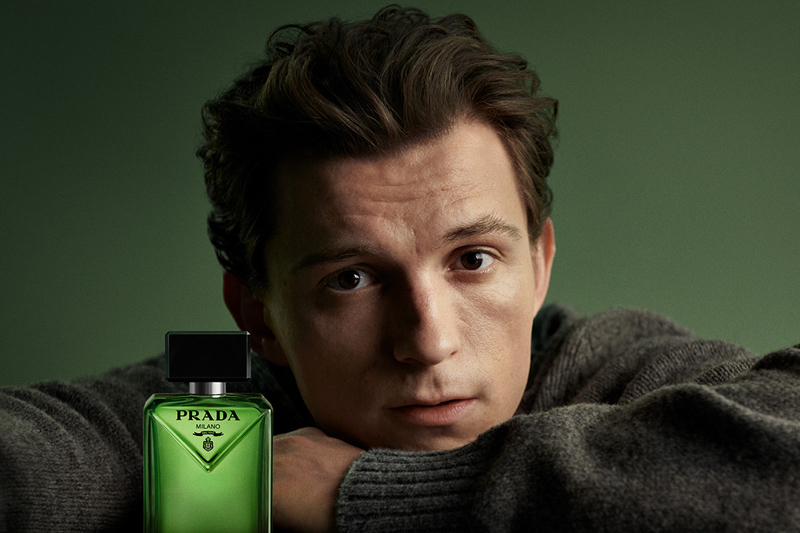
Prada Beauty brought on actor Tom Holland (pictured) to be the face of new fragrance Paradigme
SAPMENA was L’Oréal’s fastest-growing region in Q1, with sales up 15.4%.
However, the region accounts for less than 3% of L’Oréal’s sales, said Hieronimus, and it is less exposed to the region than other companies in the luxury space.
A still manageable impact is likely to be seen in L’Oréal’s Q2 results, depending on how long the conflict lasts.
“It is really more both the tourists visiting the big mall, Dubai Mall and the travel retail that is going to impact business more than any other division,” he said.
“So, I would say it will have an impact, but it will really depend on how long the conflict lasts and whether, particularly tourists and travellers, are confident to go back to this region.”


