
As the beauty industry shifts its focus from corrective care to prevention with longevity science, a new frontier is emerging within hair care: hair longevity.
Once dominated by repair-led solutions and cosmetic benefits, the category is now increasingly being reframed around long-term scalp health, follicle function and preventative maintenance.
Hair longevity, once a niche concept, is now gaining traction as brands and consumers adopt a more proactive approach to hair health.
This mirrors a wider industry movement, which sees longevity evolving from a skin care-centric trend into a broader, cross-category priority.
The Cosmetics Business Innovation Awards aim to recognise breakthroughs across the entire beauty supply chain, from raw materials to logistics. With transparent judging and expert commentary, the programme offers rare insight into what true innovation looks like today. Entries open now!
As previously reported by Cosmetics Business, the industry is undergoing a tonal shift towards health span-focused approaches, with hair now following suit.
This shift is already being reflected in both scientific research and product development.
LVMH’s latest research into hair ageing biology, alongside a wave of launches from brands such as Vichy Laboratoires and Kérastase, signals growing investment in the space.
It is also playing out commercially, with the global hair care market projected to grow by US$18.28bn from 2025 to 2029, according to market research company Technavio, driven in part by increased demand for scalp health and longevity-led solutions.
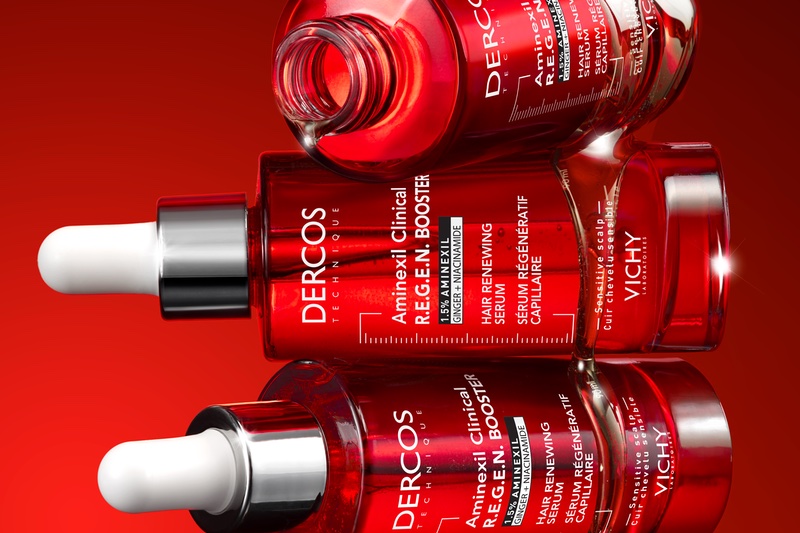
Vichy Laboratoires Dercos Aminexil Clinical R.E.G.E.N. Booster
From repair to prevention
At its core, hair longevity represents a shift from reactive to preventative care.
“Brands are positioning hair longevity as a shift away from purely cosmetic and more toward preserving scalp health, follicle function and fibre integrity over time,” says Daphné Hahn, Assistant Brand Manager at The Red Tree, who tells Cosmetics Business that hair care is increasingly being treated more like skin care.
This includes a focus on barrier support, microbiome balance, inflammation control and oxidative stress.
“This ‘skinficiation’ of hair is reframing routines from quick-fix solutions into long-term maintenance strategies,” adds Hahn.
The biology of hair reinforces the need for this approach.
Hair care is becoming more clinical, more scalp-first and more prevention-oriented
Each strand can remain in its active growth phase for between two and six years, while shedding between 50 and 100 hairs per day is considered normal, according to Johns Hopkins Medicine.
Over time, however, these cycles become less efficient, contributing to visible signs of


