

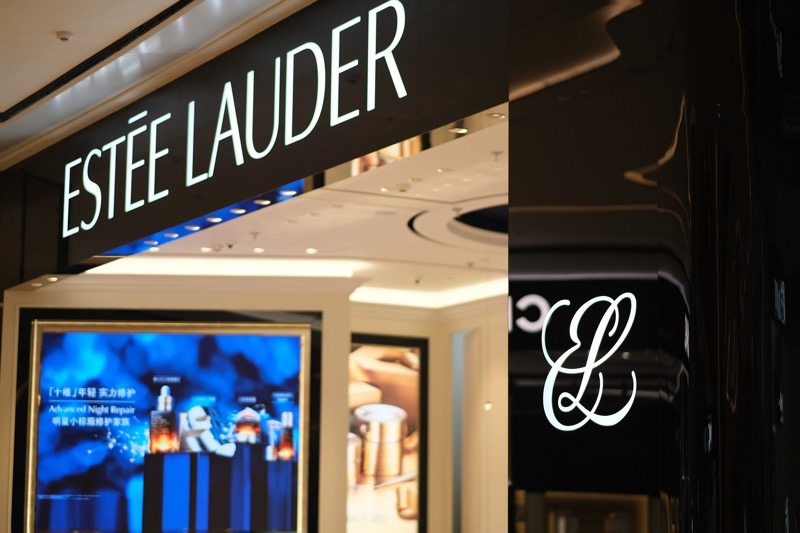
Estée Lauder Companies (ELC) shares plunged in early trading on 5 February following the release of its Q2 2026 trading update, despite posting bumper sales growth.
Stocks in the MAC Cosmetics-owner dropped by more than 20% as US President Donald Trump’s global tax hikes and the company's investments led to a more cautious outlook for the full year.
Despite the double-digit share drop, net sales at the beauty conglomerate increased 6% to US$4.2bn for the quarter ending 31 December 2025.
Gross profit also increased by 6% to $3.2bn, and as reported operating margin was 9.5%, an improvement from the loss of 14.5% in 2025.
Bolstering growth during the quarter was a second consecutive quarter of double-digit retail sales boost and continued share gains in mainland China – a beauty market that has struggled to recover in the wake of Covid-19.
China’s growth was driven by each of ELC’s core categories – skin care, make-up, fragrance and hair care – and led predominantly by brands La Mer, Tom Ford and Le Labo.
Japanese beauty sales also supported ELC’s overall performance in Asia, particularly in fragrance, as Le Labo, Kilian Paris and Editions de Parfums Frédéric Malle drove demand.
“We delivered excellent second quarter results to solidify a strong first half of fiscal 2026,” said Stéphane de La Faverie, ELC President and CEO.
“In this pivotal year, ‘Beauty Reimagined’ [ELC’s turnaround plan] has invigorated our business as we execute the biggest operational, leadership and cultural transformation in our history.”
ELC’s category performance broken down
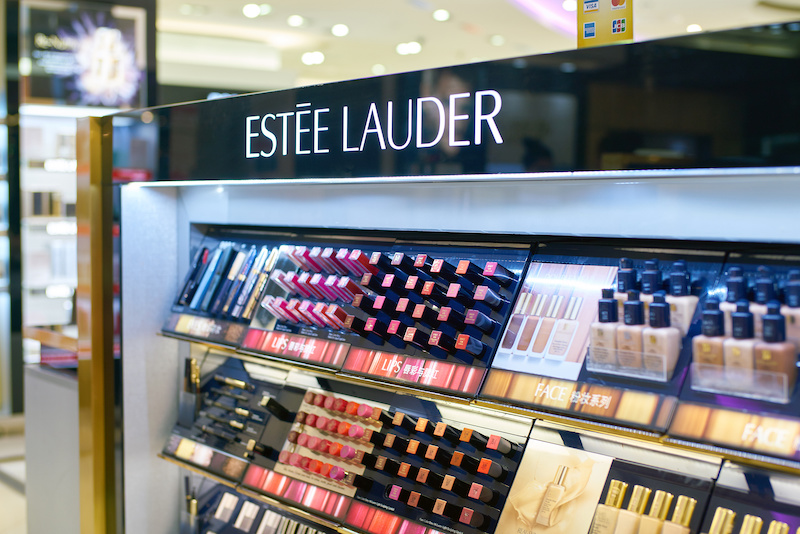
Estée Lauder sales struggled during the quarter
Skin care net sales increased 6% on the back of bumper sales at La Mer, Estée Lauder and The Ordinary.
La Mer benefited from the key trading during the 2025 holiday trading period, which was supported by increased consumer-facing investments from ELC.
Estée Lauder, meanwhile, also saw strong Christmas trading, along with new innovations across its Revitalizing Supreme+, Re-Nutriv, and Advanced Night Repair product franchises.
Net sales from The Ordinary rose as a result of targeted expanded consumer reach and existing distribution growth, as well as consumer activations.
Hair care net sales returned to growth during the quarter, increasing 5%, thanks to The Ordinary’s Multi-Peptide Serum for Hair Density.
The category also benefited from the launch of Bumble and Bumble at SalonCentric Stores across the US.
The hair care brand’s products became available at SalonCentric’s more than 850 stores across the country, as well as its website saloncentric.com and mobile app, in February 2026.
Make-up net sales fared worse during the quarter and decreased 1%, as Estée Lauder braced against the accrual for estimated returns of existing Double Wear Stay-in-Place.
This follows ELC launching a reformulated version of its hero long-wear matte foundation in February to better meet “evolved” consumer needs.
Lagging cosmetics sales were partially offset by MAC Cosmetics, primarily driven by initial shipments for the March 2026 launch in select US Sephora locations, as well as online and in Sephora at Kohl’s.
The growth also reflected success from the brand’s lip subcategory, fueled by its hero product Lip Pencil as well as Lipglass Air.
Fragrance net sales increased 6%, driven by high-single-digit growth from the company’s Luxury Brands Tom Ford, Le Labo and Kilian Paris.
A weaker-than-expected outlook
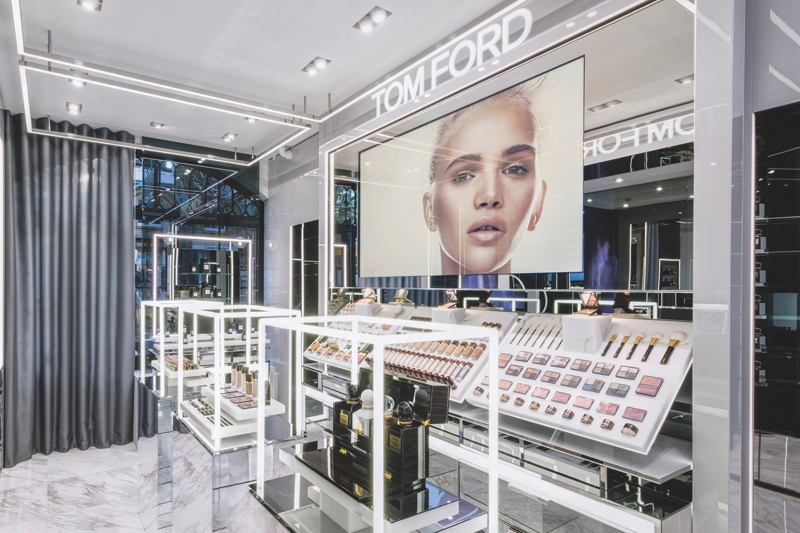
Tom Ford saw strong demand in China
Despite the positive quarterly results, investor confidence in ELC remained low on the back of its financial guidance update for the remainder of 2026.
ELC has raised its fiscal 2026 full-year outlook, reflecting the solid performance in the fiscal 2026 first half, and expects organic net sales growth to range between 1% and 3%.
However, it remains cautious amid ongoing macroeconomic uncertainty and continued headwinds in key areas of its business.
The brand owner expects tariff-related headwinds to impact fiscal 2026 profitability by approximately $100m, mostly in the second half of the year.
ELC said in a statement: “The company continues to closely monitor evolving trade policies and enacted tariffs, actively evaluating developments and mitigation strategies to reduce the potential impacts of tariffs.
“The company has implemented a range of actions, including leveraging available trade programmes and further optimising its regional manufacturing footprint to bring production closer to the consumer – including through its facility in Japan.
“These efforts, combined with increased supply chain agility, are helping to offset more than half of the expected impacts and better position the company to adapt quickly as trade policies continue to evolve.”
An update on ‘ELC’s ‘Beauty Reimagined’ turnaround plan
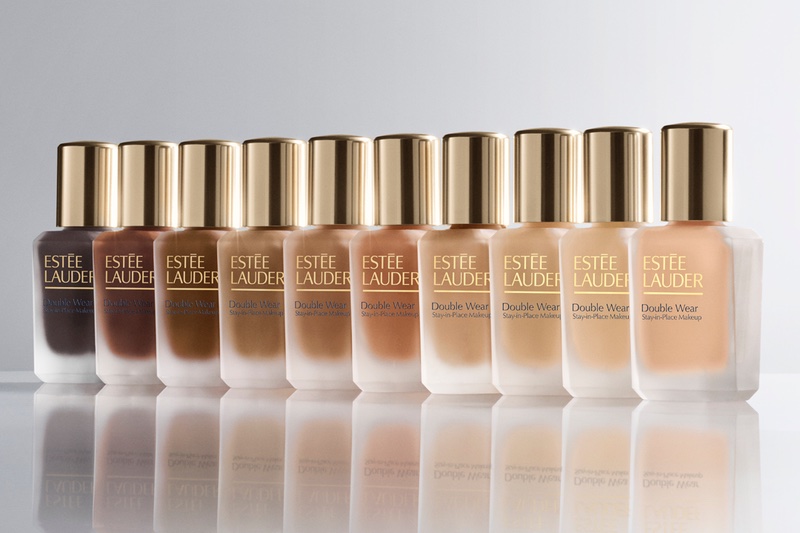
ELC launching a reformulated version of its hero long-wear matte foundation in February 2026
ELC is currently undertaking its ‘Beauty Reimagined’ turnaround scheme, initiated by de La Faverie following his appointment in January 2025.
It has been described as a “bold strategic vision to restore the company’s sustainable sales growth and achieve stronger profitability”.
‘Beauty Reimagined’s main action plans include accelerating ELC’s “best-in-class consumer coverage”.
This essentially means the business will be expanding its portfolio in favour of demand-led products and categories.
ELC will also increase its visible advertising spending, as well as optimise marketing programmes and eliminate low-return marketing activities.
Other changes include fuelling sustainable growth through “bold efficiencies” and addressing the impact of further volume declines.
The business claimed it would achieve this by adopting a more competitive approach to procurement by further consolidating spending.
It will also strategically evaluate key supplier relationships and aims to improve its supply chain network efficiencies.
However, as of the Q2 2026 update, ELC still expects to take restructuring and other charges of between $1.2bn and $1.6bn.
So far, ELC has spent an estimated $1.14bn so far, but expects to ultimately yield annual gross benefits of between $0.8bn and $1bn, before taxes, through the scheme.
This will help restore operating margin and also fuel reinvestment in consumer-facing areas to drive sustainable sales growth.
ELC also still estimates a net reduction in positions of 5,800 to 7,000 – and is also allegedly looking to sell three brands within its beauty portfolio: Dr. Jart+, Too Faced and Smashbox.
De La Faverie added in the Q2 2026 financial update: “On its one-year anniversary, we raise our fiscal 2026 outlook confident in the strength of our turnaround, even as our second half reflects previously-expected headwinds and now-greater consumer-facing investments, as we expect to restore organic sales growth and expand our operating margin for the first time in four years.”
Related content:
- Note: backlink to all of today’s financial stories here please
- Estée Lauder Companies fined $750,000 over environmental law violations
- Estée Lauder Companies’ Q1 sales beat estimates as turnaround takes hold in ‘pivotal year’
- Leonard Lauder’s family to sell $1 billion worth of Estée Lauder Companies shares
- Analysis: Estée Lauder Companies’ underperforming brands amid portfolio review


