

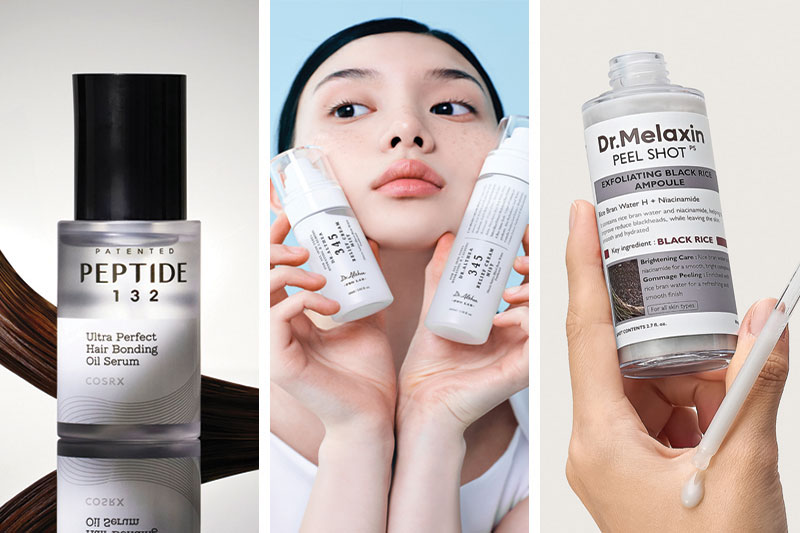
This article was originally published in the K-beauty Trend Report. Receive your copy here
K-beauty has come of age, maturing from niche phenomenon to a global titan of the beauty industry.
Not only is it setting consumer expectations, Korean beauty is leading product innovation in the West too – and brands, including the beauty giants, are playing catch up.
K-beauty is still known for its social virality and eye-catching textures and ingredients, but in 2025 it has turned into an established beauty category.
Growing by 53% globally in the year ending January 2026, and by 131% over the past two years according to data in NielsenIQ’s K-Beauty Goes Global Report, 2026, K-beauty is outperforming the wider beauty market.
“The K-beauty category is entering a new phase of global maturity in 2026,” Dino Ha, founder and CEO of Memebox, an incubator of K-beauty brands including Kaja Beauty, tells Cosmetics Business.
“For many years, K-beauty was primarily associated with innovation, novelty, and fast-moving trends.
“Today, it has evolved into a mainstream category that plays an increasingly important role in the global beauty industry,” he adds, noting that consumers increasingly view Korean brands as trusted sources of product innovation and quality.
Kaja Beauty’s Double Kiss Bento cheek and lip duo launches this month exclusively at Ulta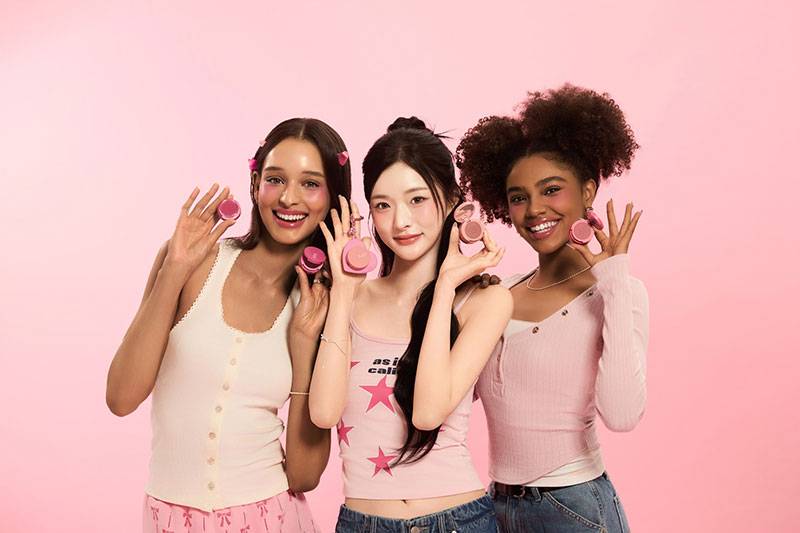
In the UK, K-beauty sales have grown by 65% in value terms, according to Circana, outperforming the skin care category which grew by 12% (year ending March 2026), with factors including the strong consumer adoption of new formats and a compelling value-for-money positioning.
Emma Fishwick, UK Account Director of Circana says: “There is also a clear resurgence in demand for ingredient-led, technologically advanced formulations, which Korean brands are well positioned to deliver.”
There is “strong momentum” in essences (+72%), milk formats (+128%) and also facial devices (+34%) says Fishwick.
Products such as acne patches, toner pads and barrier repair creams have also shifted into daily habits, while the latest wave is coming from advanced skin technology and specialised ingredients like PDRN and spicule-based serums.
Several K-beauty brands have recently announced high profile brand ambassador signings together with campaigns focusing on their new PDRN innovations – reflecting the significance of the investment in the ingredient as well as the market success of these brands.
Anua announced Kendall Jenner as the face of the brand and a global campaign centred on its PDRN Collagen Glow Facial Serum Spray.
Purito Seoul’s new signing, actor Natalia Dyer, features in a campaign for its newest launches which include Multi PDRN Collagen Real Glow Mask
Kendall Jenner fronts Anua’s PDRN Collagen Glow Facial Serum Spray campaign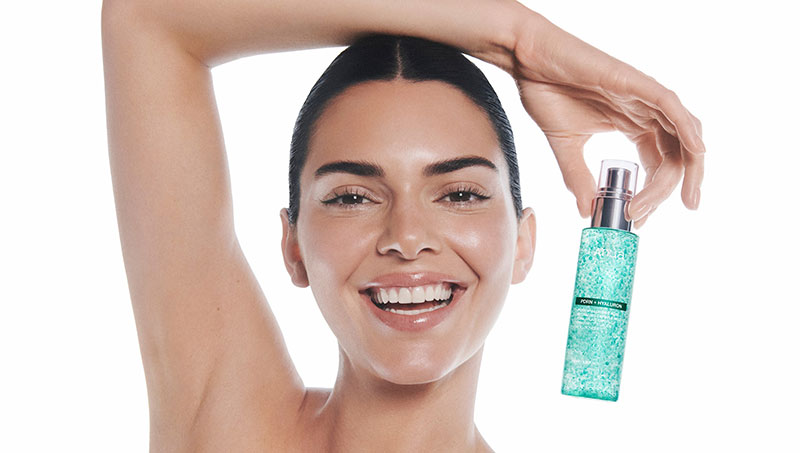
Melody Yuan, founder of K-beauty retailer Skin Cupid explains that the reason PDRN, along with exosomes, peptides and advanced barrier supporting complexes, are generating significant interest is “because they bridge the gap between cosmetic skin care and professional treatment inspired results.
“K-beauty has always excelled at translating clinic-led innovation into accessible consumer products, and that trend is accelerating.”
At the same time, Korean skin care is moving in the direction of verified expertise.
Simon Comins, Chief Operating Officer at Superdrug, which has just expanded its K-beauty offering with brands including Dr. Reju-All and Dr. Ceuracle says: “K-beauty continues to evolve towards more targeted, science-led solutions, with a strong focus on skin-barrier health, hydration and gentle yet highly effective ingredients.
“Consumers are looking for products backed by efficacy, driving demand for ingredient transparency and formulations that deliver results without compromising skin health.”
K-beauty’s maturity, however, has also been driven by its success in evolving beyond the category that originally drove its notoriety: skin care.
Ha says: “Korean beauty brands are successfully expanding across categories including lip care, make-up, personal care, and hybrid beauty products, reflecting a broader shift in consumer demand.
“Skin care is now mature in terms of K-beauty influence,” agrees Fishwick. “The next wave of disruption is emerging across adjacent categories where treatment-led innovation remains underdeveloped.”
This includes K-beauty hair serums, which are growing by 80% year-on-year in the UK – compared with total hair care at 18% – indicating strong consumer appetite for more advanced solutions.
K-beauty’s growing maturity has also been fuelled by the expansion of brands into retailers globally, including Ulta, Target, Boots and Superdug, as well as through Sephora’s partnership with Olive Young, and Olive Young’s new standalone US stores.
So what’s next for K-beauty? “The year ahead will reinforce K-beauty’s role as a trend creator rather than a trend follower,” says Yuan.
“The industry is increasingly shaping global beauty conversations, and that influence is likely to continue growing as consumers seek out new technologies, ingredients and approaches to skin health.”
Trend 1: K-beauty hair care
K-beauty is now coming for scalp and hair care, and it’s a category on the verge of exploding.
According to brand performance software firm Launchmetrics, media impact value (MIV) jumped from $23k in Q1 2025 to $1.2m in Q3 2025, demonstrating a surge in consumer interest, with COSRX and La’dor leading the charge.
La’dor’s December 2025 announcement of BTS star Jimin as its global brand ambassador generated $1.2m in MIV in one week alone.
But what’s behind this obsession with K-hair care? This trend explores how the trust that Korea has built as a category leader in skin innovation, as well as consumers’ ingredient literacy from K-beauty skin care, is ready to transfer into scalp and hair care.
Trend 2: Inspired by K-beauty
K-beauty’s impact on the global beauty industry has been recognised for over a decade, but in 2026, a fascinating shift is taking place as its influence on Western beauty product innovation scales new heights.
Leading Western beauty brands including L’Oréal Paris, Nivea, YSL Beauty and Maybelline New York are not only launching products inspired by K-beauty trends, they are openly referencing Korean innovation in their marketing.
Now recognised as a genuine innovation machine by international brands, Korea is shaking up the product launch playbook in the West.
This trend explores what this means for the global beauty industry and for Western brands.
Is this a ‘reverse dupe’ scenario, or a competitive catch-up?
Trend 3: Collagen masks: An unstoppable trend/ and their unstoppable boom
From overnight hydrogel treatments to viral sheet masks promising firmer, plumper and more radiant skin by morning, collagen has become the ingredient of choice for brands seeking to tap into the booming demand for instant results.
They may not be new, but collagen face masks remain one of K-beauty’s biggest skin care trends in 2026. Google data reveals that ‘collagen mask for face’ global searches grew by 50% over the past three months and 80% over the past year, with ‘best collagen face mask’ searches up 50% globally over the past year.
The reason for their continued success is refreshingly simple: users find they work.
And now brands are turning to trending ingredient PDRN and new mask technologies to build on those results.
Trend 4: K-pharmacy: Clinically-backed skin care
K-pharmacy: if you haven’t come across this term before, you will soon see it everywhere.
Used to describe clinically-backed skin care brands from Korean pharmacies, K-pharmacy is a breakout K-beauty trend that is seeing growing demand and interest from consumers.
“K-pharmacy represents the next wave in the ongoing evolution of Korean beauty,” explains Grace Vernon, Head of Boots Ignite, Foresight and Trends at Boots.
“Korea has become synonymous with ingredient-led and efficacy-driven skin care. K-pharmacy is a natural extension of that, bringing together a clinically positioned skin health-led approach.”
This article reveals which brands are at the forefront of K-pharmacy and why it’s being hailed as a durable trend with soaring potential.
Trend 5: Move over glass skin, bloom skin is here
The glass skin aesthetic – the high shine, almost reflect skin glow – has been mainstream around the globe since emerging in the 2010s.
A social media-friendly skin goal, it spawned products such as hydrogel sheet masks, double-cleanse and layering essences as well as propelling snail mucin into the mainstream.
However, overcomplicated routines (sometimes doing more harm than good) and products designed for surface shine are now making way for those focused on longer-lasting skin health for a more lit-from-within glow.
Enter bloom skin, a trend that has seen Google Trend searches increase by 800% over the past year, and searches for ‘bloom skin care’ up 5000% to the year ending July 2026.
This will explore the brands, ingredients and formats aligned with this breakout trend and where the opportunities are for brands.


