

Unilever’s beauty and personal care brands, led by Dove and Vaseline, boosted sales at the consumer goods giant in 2025, as it increased its exposure in these higher-performing divisions and moved away from food.
Sales grew 3.5% across the business in the year to 31 December 2025, which came from 3.5% volume growth and 2% from pricing.
Growth picked up in the last three months of the year to 4.2%, marking its strongest quarter of the year, despite slowing markets.
Underlying operating profit in 2025 was €10.1bn, down 1.1% on the previous year, with currency headwinds offset by operational performance.
Unilever’s Power Brands – a group of 30 core brands which contribute 75% of sales – delivered growth of 4.3% for the year, with 2.2% coming from volume growth.
Personal Care sales grew 4.7%, driven by “market share gains, premium innovations, and commodity-driven price increases”, Unilever said in a statement.
Sales in the division, which includes Rexona (Sure in the UK) deodorant and Axe (Lynx in the UK) fragrance, also picked up in the fourth quarter with growth of 5.1%.
Beauty & Wellbeing sales grew 4.3%, led by double-digit growth in wellbeing as well as the performance of Dove and Vaseline.
Momentum also picked up in the division in the fourth quarter with growth of 4.7%, driven by a stronger delivery in Asia Pacific and Africa, which offset slower growth in the wellbeing market.
Have you launched an innovative product, brand or campaign in the past 12 months? Then you could be in with a chance of winning at this year's new and improved Pure Beauty Awards 2026. Click here for more information.
Within beauty and wellbeing, hair care grew in the low single digits across the year, as positive price partially offset negative volume.
Dove hair care grew in the double digits, driven by the launch of its new fibre repair technology range.
However, that was partially offset by softness in some emerging markets, impacting hair care brands Sunsilk and Clear.
Core skin care grew in the mid single digits, led by Vaseline, which delivered growth in the double digits for the third consecutive year.
Nutrafol and Liquid I.V. supplements delivered double-digit growth within wellness, and Olly grew in the high single digits, “supported by premium gummy innovations”.
Prestige Beauty delivered growth in the low single digits, driven by price, and led by make-up brand Hourglass and hair care line K18, which both experienced strong double-digit growth.
Skin care brands Dermalogica and Paula's Choice returned to growth in the second half of the year, Unilever said.
Annual turnover across the business was down 3.8% on the previous year to €50.5bn
This was largely from currency contributing a 5.9% decline, which was driven primarily by Latin American currencies, the Indian Rupee, the US dollar, and the Turkish Lira depreciating against the Euro, as well as a 1.2% drop from disposals net of acquisitions.
Unilever’s reorientation around beauty and wellbeing saw the company acquire men’s grooming brand Dr. Squatch in North America, where overall sales grew 5.3%, and refillable deodorant brand Wild in the UK last year to enhance its premium portfolio
The acquisition of actives-led beauty brand, Minimalist, in India in April 2025 was also part of plans to evolve its portfolio “towards higher growth and demand spaces” in the country, which saw overall sales grow 4%.
Meanwhile, Unilever completed the spin-off of its ice cream business at the end of the year, and it also sold off a number of food brands, including Asian food brand Conimex, plant-based meat brand The Vegetarian Butcher, and snack box line Graze.
In beauty, Unilever sold off underperforming brand Kate Somerville and closed “clean” beauty brand REN Clean Skincare.
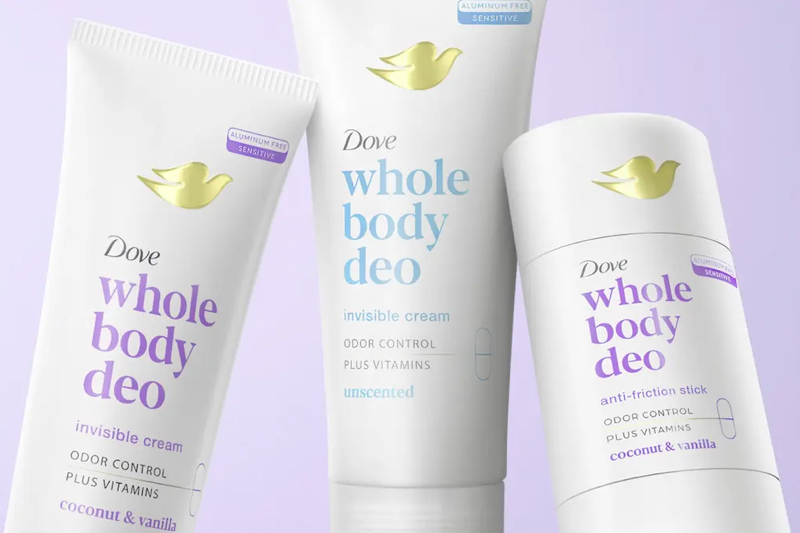
The company also highlighted its expansion of whole body deodorants and Wonder Wash across new variants and new markets, as well as its accelerated “shift to social-first demand generation”, with brands such as Dove and Vaseline “embracing creator-led content and always-on digital engagement”.
“In 2025, we became a simpler, sharper, and faster Unilever, delivering our commitment to volume growth, positive mix and strong gross margin,” said Fernando Fernandez, Unilever CEO.
“Our underlying sales growth improved throughout the year as we landed a strong innovation plan, drove improvements in key emerging markets and successfully completed the Ice Cream [business] demerger.
“We are moving at speed to build a business that drives desire at scale in our brands, execution excellence across all channels and cost discipline.
“We have set clear priorities for growth – building a brand portfolio for the future, with more Beauty, Wellbeing and Personal Care, prioritising premium segments and digital commerce, and anchoring our growth in the US and India.
“Despite slowing markets, our sharper focus and disciplined execution underpin our confidence for 2026 and beyond.”
Underlying sales growth is expected to be within the range of 4% to 6%, with at least 2% from volume growth, however, this reflects slower market conditions and is at the bottom end of the range.


