

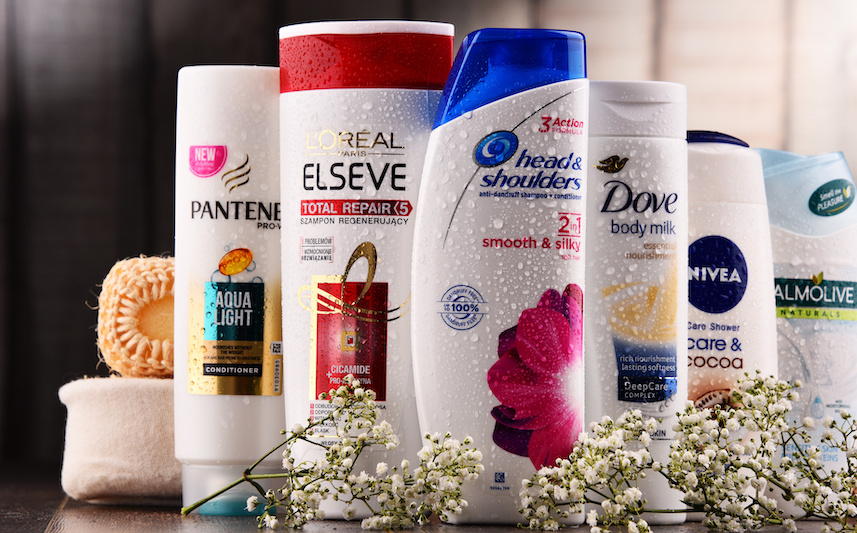
Unilever has maintained its reputation as an absolute powerhouse in virtually the core retail categories for nearly a century, but now it is doubling down on beauty alone.
The Dove-owner’s monopoly on everyday cleaning products, beauty and, most prominently, food items used by millions seemed unshakable, so why would anything need to change in such a firmly future-proofed and versatile business model?
But this is exactly what Unilever had decided to do in 2026, after confirming a US$44.8bn deal to offload its food business to American food company McCormick & Company, following much speculation.
The Cosmetics Business Innovation Awards aim to recognise breakthroughs across the entire beauty supply chain, from raw materials to packaging. With transparent judging and expert commentary, the programme offers rare insight into what true innovation looks like today. Entries open now!
In its place, the consumer goliath is pivoting its focus solely on beauty, personal care, wellness and home care to solidify its future.
This business shake-up is part of Unilever’s commitment to accelerate its beauty, wellness and personal care divisions, which accounted for 25% of its business turnover last year.
But can the consumer giant thrive as a sole beauty player, and what risks does this strategy hold for the British consumer goods giant?
Why Unilever is going all in on beauty in 2026
Unilever has been slowly exiting the food industry for about ten years, which included the demerger of its ice cream business in December 2025 after more than a year-and-a-half of negotiations.
But why exactly has Unilever been so adamant in ditching food?
One answer is the impact of increasing wars cropping up across the globe, including the most recent conflict in the Middle East, said Diana Gomes, Senior Industry Analyst at independent research platform Bloomberg Intelligence.
Gomes explained: “Unilever's slower growth foods unit is particularly vulnerable to war-led demand pressure, which likely prompted the mostly stock deal with McCormick and broad hiring freeze.”
On top of this, Gomes claims that a “sharper portfolio” could also “accelerate medium-term growth, after clearing anti-trust hurdles”.
The move should not be viewed as a “reckless bet” either, said Lee Bryan, founder and CEO of regulatory consultancy and software firm, Arcus Compliance.
He added: “Beauty offers stronger margins, more premiumisation opportunities, and greater room for innovation than many legacy food categories, so the logic is clear.”
That said, simplification does come with inherent trade-offs.
Bryan continued: “Food may be slower-growing, but it can provide resilience.
“Beauty is more dynamic, yet also more volatile and heavily scrutinised.
“The real gain is focus.
“The real test is whether Unilever can turn that focus into faster innovation, better execution and tighter compliance control as the portfolio becomes more concentrated.”
The decision also reflects the wider consumer backdrop that favours categories with “pricing power, premium ladders and stronger digital discovery economics”, said Bryce Quillin, an economist and co-founder of luxury strategy agency It's A Working Title.
“Food remains more exposed to commodity swings and lower growth demand,” he added.
“Although the decision to pivot away from food has been going on for a long time at Unilever, the commodity price volatility experienced so far in 2026 reinforces the strategic advantage in pivoting away from product categories with more direct input-cost sensitivity."
Is Unilever too big to fail?
The potential for Unilever’s future as a streamlined beauty business is apparent, but this will take time and is not without risks, said Carol Osborne, Partner and Global Department Leader at global law firm BCLP.
“The narrowing of the focus may create some near-term risk in their financial performance,” said Osborne.
“It is going to take time, [particularly if they have ambitions], to muscle out players such as L’Oréal.
“They are not going to be viewed at that level in premium beauty for a while."
Although Unilever’s move has been made in part to avoid the vulnerability of the food market amid wars, beauty is also not exempt from the current Middle East conflict’s impact on the global economy either.
A prolonged oil shock could drive volume consensus downgrades for home and Personal care makers in 2027, said Gomes, as margin squeeze limits room for promotions and support for innovation across price points.
Ultimately, there is always a possibility this could all fail, despite Unilever’s size, because “no company is too big to fail strategically”, said Bryan.
Unilever will likely keep looking for brands with strong identity
“Scale can be a strength, but it can also create bureaucracy, slower decision-making and more complicated integration when portfolios shift.
“This strategy fails if Unilever mistakes category attractiveness for guaranteed performance.”
Beauty is a strong sector, but it is also unforgiving, said Bryan.
He added: “Brands have to stay culturally relevant, products have to perform, claims have to stand up and compliance has to be watertight.
“A large company can survive mistakes longer than a smaller one, but it is not protected from them.”
A separate risk is also this exact new concentrated focus.
Quillin explained: “With a more focused portfolio, underperformance in any one part of the business could have a more pronounced impact than before.
“Food has historically provided defensive cash flow and a degree of earnings stability when demand for premium or discretionary products softened.”
What does Unilever stand to gain with this strategy?
Let us step away from all the doom and gloom for a moment and consider what exactly the future holds for Unilever with this new direction.
Bryan has predicted more targeted innovation and more selective acquisitions in premium beauty, personal care and adjacent wellbeing categories.
He added: “Unilever will likely keep looking for brands with strong identity, digital momentum and room for international scale.
“The opportunity is clear.
“A more focused portfolio should allow the business to move faster and invest more confidently in product development.”
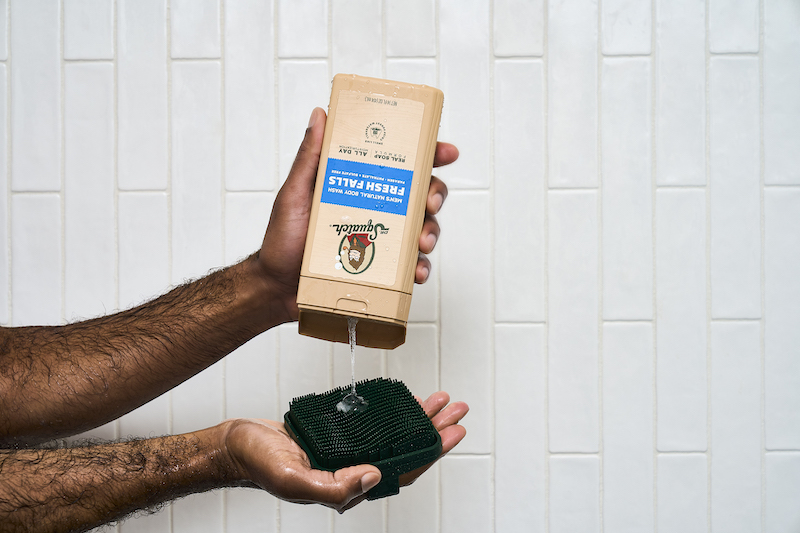
Last year, Unilever snapped up refillable personal care brand Wild and male grooming brand Dr. Squatch – an early signal of the conglomerate's plans to reinforce its position in the personal care space and shake-up its portfolio.
Regarding Dr. Squatch in particular, Osborne noted the opportunities for Unilever to advance men's personal care and wellness.
She continued: “There is a whole segment that has been overlooked, and I think men want some wellness and attention themselves.
“I think they could also succeed in wellness, supplements and injectables, as all of that is going to be an area that they could explore, particularly with their food and ingredient expertise.”
Quillin concluded: “It should mean a heavier bias toward science-led innovation, premium form factors, and faster renovation cycles across skin, hair, wellness and adjacent personal care.
“In terms of R&D, management is moving towards artificial intelligence (AI)-led design capabilities and targeting around €1.5bn a year in acquisitions, implying continuing external portfolio building rather than pure organic expansion.”
Related content:
- Unilever on boosting its personal care strategy for 2026 and beyond
- Why whole-body deodorants are elevating the category to fresh heights
- Unilever completes $44.8 billion deal to sell food business amid hard pivot towards beauty
- Unilever acquires Wild as ‘strategic addition’ to its personal care portfolio
- Unilever to pay $1.5 billion for men's grooming brand Dr. Squatch
- Unilever to acquire viral men’s grooming brand Dr. Squatch
- Analysis: Unilever’s acquisition of Dr. Squatch will pivot the future of M&A


