

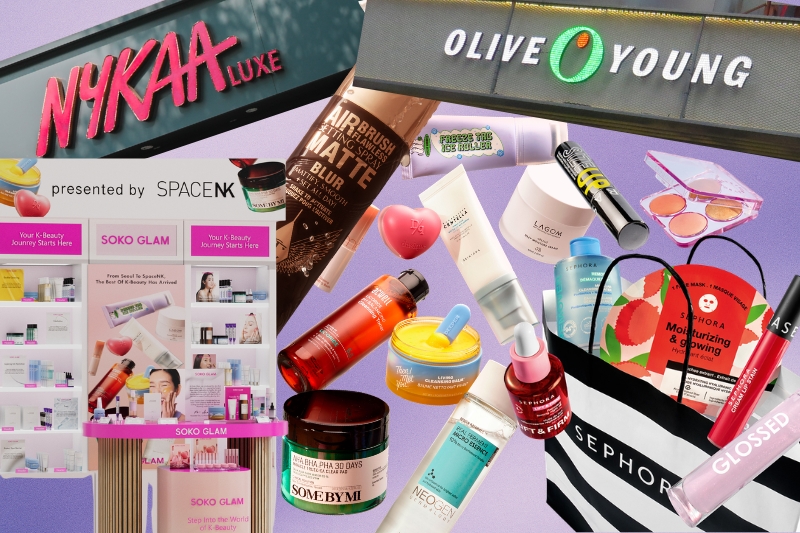
Beauty retailers are taking a new approach to expansion as they team up with each other to launch shop-in-shops, standalone stores and widen their retail offering.
It is happening across the globe, from Korean beauty retail giant Olive Young’s strategic partnership with Sephora stores to Indian retailer Nykaa offering a springboard for Charlotte Tilbury to open its first flagship boutique in the region.
Meanwhile, Ulta Beauty-owned British retailer Space NK has partnered with US-based K-beauty retailer Soko Glam, while UK-based K-beauty retailer SkinCupid has announced a new partnership with department store John Lewis, rolling out online from this month and in stores later in the year.
While these retail partnerships are ramping up, Jacqui Burchell, CCO of the British Beauty Council, notes that “retail partnerships are not new”.
Burchell says: “Think of Sephora and JC Penny, Ulta Beauty and Target, and Boots brands in Target as examples.
“This demonstrates a true understanding of partnership and what each party can deliver.”
Have you launched an innovative product, brand or campaign in the past 12 months? Then you could be in with a chance of winning at this year's new and improved Pure Beauty Awards 2026. Click here for more information.
However, the retail partnerships of 2026 are bigger than ever before, going deeper than simply offering some floor space to an external brand.
“In the past, retailers worked with brands directly, now they are partnering with other retailers who have deep-rooted ownership into a category,” explains Burchell.
The driving forces behind beauty retail partnerships
Several elements have led to retailers investing in these partnerships, including social-media led discovery, category fragmentation and, perhaps most importantly, consumers seeking out launches and technologies from across the globe.
Collaboration is becoming less of a marketing tactic and more of an operating model
“There have been huge shifts in the way we consume [beauty], and globalisation has removed barriers to access, which means that curation and trust are key elements for retailers to differentiate,” explains Nick Vaus, co-founder and Managing Partner at brand elevation agency Free The Birds.
“Alongside this, there is discovery through social platforms, where trends move faster than any single retailer can keep pace with, and collaborations become a strategic shortcut to relevance.
“Retailers are partnering not just to sell more, but to stay culturally and commercially agile in a hyper-competitive, attention-driven landscape.”
Janet Milner-Walker, founder and managing director of beauty consultancy Bespoke Advantage, adds that “collaboration is becoming less of a marketing tactic and more of an operating model”, as retailers “rely on partnership to navigate


