

Minimalist make-up, science-led skin care and that shade of pink have long been at the forefront of the beauty industry’s output for a millennial consumer, but recent mismatched campaigns and unexpected ambassadorships are signalling that the generation is often overlooked and misunderstood when it comes to beauty brands.
This situation leaves a huge market somewhat up for grabs, with millennials (born between 1981 and 1996) struggling to truly connect to brands despite being the US’s biggest beauty spenders, with social media marketing agency Sociallyin reporting an average annual spend of US$2,670.
This puts this demographic ahead of trend and discovery drivers Gen Z, and means they spend 5.4% more than boomers ($494 per year).
But the money and effort invested into capturing this audience signals that the industry is neglecting nurturing millennials despite their clear affinity with beauty and wellness.
Why millennials are misunderstood
While beauty brands are constantly investing in marketing skewed towards Gen Z, and more mature lines to appeal to a Gen X and baby boomer customer base, millennials feel almost overlooked as slathering a campaign in ‘millennial pink’ is no longer enough to garner engagement.
Have you launched an innovative product, brand or campaign in the past 12 months? Then you could be in with a chance of winning at this year's new and improved Pure Beauty Awards 2026. Click here for more information.
Retail expert Wizz Selvey explains that this is “because millennials are harder to ‘market’ in a headline”, and the breadth of age can straddle different life stages.
Selvey adds: “Gen Z brings cultural relevance and virality. Boomers bring wealth and longevity.
“Millennials sit in the middle and that makes them less obvious, but not less valuable.”
Because millennials often sit in this grey area, brands struggle to know the best way to reach this audience, and often rely on tactics skewed towards younger generations.
For this audience, connection does not come from who is most famous, it comes from who feels most real
“It is harder because millennials do not respond to influence in the same way younger generations do, and many brands are still applying a Gen Z playbook to a millennial audience,” says Selvey.
“Millennials are digitally fluent, but they did not grow up performing their identity online in the same way Gen Z has.
“Social for millennials started as documentation, Facebook albums, early Instagram – not as a constant, edited, monetised form of self-expression.
“That fundamentally changes how they perceive ambassadors.
“They are more sceptical, more attuned to what feels transactional, and far less likely to buy into someone purely because they are visible or viral.”
Missing the mark with brand ambassadors

Brand ambassadorships positioned to bring in a millennial audience often fall flat
Ambassadorships between celebrities and beauty brands have long been seen as a strong way to build relationships with existing customers, and bring in new consumers, with companies investing big bucks to onboard ambassadors they feel fit and reflect their product lines.
More often than not this proves successful, with celebrity partnerships a great way to engage consumers and create conversations, but brand ambassadors selected for millennial consumers consistently seem to miss the mark.
Selvey explains: “The bigger challenge is cultural misalignment.
“Millennials do not necessarily want hyper-relevant, internet-native creators.
“But they also do not automatically connect with nostalgic celebrity choices either.
“Campaigns like legacy television tie-ins or ‘safe’ celebrity casting often miss because they feel commercially forced, rather than reflective of who millennials are today.”
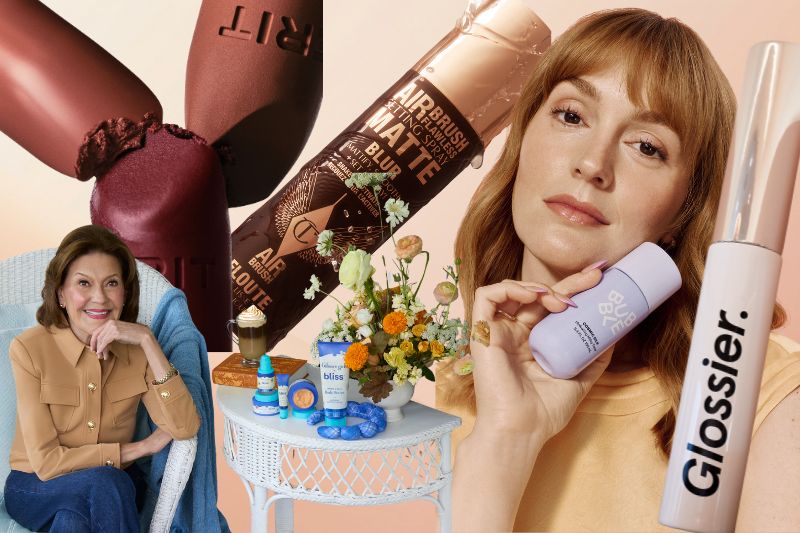
Bliss Skincare lead with a nostalgia-fuelled campaign targeting both millennials and Gen X, spotlighting Gilmore Girls star Kelly Bishop to lead a limited edition collection marking the show’s 25th anniversary.
While the show was a core memory for many millennials, the star selected to appeal to the age group did not feel reflective of the demographic, leaving space for a disconnect between the consumer and the brand.
For companies working on next-generation beauty solutions, the Cosmetics Business Innovation Awards provide an industry-wide platform to showcase and explain meaningful innovation. Entries open now!
Similarly, Bubble Skincare’s attempt to age up its products with the appointment of Gossip Girl star Leighton Meester as its first-ever ambassador – in an effort to reach a ‘wider audience’ through the actress.
While both selections do tap into a sense of nostalgia, both representatives are not reflective of the 2026 millennial, highlighting a missing link between millennial wants and needs and brand’s output.
Millennials are the ones turning products into habits
“Brands go wrong by choosing celebrities based on recognition rather than relevance, influencers who feel overly polished or sales-driven, or talent that does not align with the product’s actual role in daily life,” explains Selvey.
“The result is content that feels staged rather than lived-in, which immediately breaks trust.
“The brands that get it right tend to move away from the idea of a single ‘face’ of the brand, and instead build a network of credible voices, experts, founders, real customers and creators who reflect different versions of millennial life.
“Because, for this audience, connection does not come from who is most famous, it comes from who feels most real.”
A distinctly millennial approach to beauty shopping
Another aspect often overlooked by brands is the way that millennials shop, with the age group straddling between digitally-focused Gen Z and in-store shoppers Gen X.
“Millennials sit in a very specific middle ground: they adopted digital as they were growing up and online shopping launched in their era,” says Selvey.
“They are digitally native, but not digitally naïve, yet value the physical shopping experience.”
For millennials, shopping for beauty is not solely based on trends and influencer recommendations – these instead provide a base ground for them to do their own research before heading to the checkout.

Millennials favour in-store experiences and the opportunity to learn before investing in brands
“Millennials research heavily (often online and in store), compare options and expect proof before purchasing, but they are also willing to spend when they see value,” explains Selvey.
“They are less impulsive than Gen Z, yet can be less brand-loyal than boomers, but when a product earns trust, they convert into high-value, repeat customers.”
Keith Kakadia, CEO of Sociallyin, stated in a recent analysis how “the beauty market is about what sticks”.
She explains: “Millennials are the ones turning products into habits.
“They are not just trying something once because it went viral; they are building it into their routines.
“That is where real revenue comes from.”
For Alice Crossley, Deputy Foresight Editor at strategic foresight consultancy The Future Laboratory, this distinctly millennial approach to shopping goes beyond where purchases are made, with a focus that goes further than product performance.
She says: “They really care about packaging and design.
“Millennials place the highest value on strong visuals (75%), compared to 65% of Gen Z and 50% of baby boomers, and creative packaging regularly inspires millennials to make a purchase (43%), according to [creative and digital software company] Adobe.”
This can be seen reflected in the marketing and packaging produced by millennial-favourite brands, with Crossley adding that the demographic “grew up in the so-called ‘Girl Boss Era’ and are sold by motivational messaging, such Charlotte Tilbury’s ‘Instant Magic Confidence, Bottled’.”
Resurfacing trends and trust in experts

While a minimalist approach from the likes of Merit has long worked for millennial audiences, many are now broadening their beauty horizons
While Merit’s minimalist approach to make-up and Glossier’s millennial pink-clad storefronts long cemented them as leading beauty destinations for millennials, this generation is now splitting as many choose to leave behind the ‘clean girl’ aesthetic – which beauty and wellness platform Fresha reports has dropped in popularity by 60.8% – to return to their roots of maximalist make-up and bold beauty.
Beyond nostalgic make-up trends, this age group is also responding well to brands that bring in an element of education deeper than a surface level influencer review.
Millennials require a balance of logic and emotion, more than any other generation
Millennial-favourite MAC Cosmetics recently fed into this with the revival of MACzine via a new digital iteration of its seasonal publication, reintroduced nearly a decade on from its last issue.
Selvey notes that “millennials require a balance of logic and emotion, more than any other generation.
“Education-led content works, alongside expert voices, such as dermatologists and founders, and ‘this works in real life’ positioning such as user-generated content (UGC), where they can relate to the person they are watching and see themselves in their position and stage of life.
“They do not want to be entertained into buying, they want to be convinced.”
A forward focus on fitness and wellness
Beyond traditional beauty, millennials also have a keen interest in engaging mind, soul and body, with many switching mojitos for marathons, palomas for pilates, and shots of Fireball for facials.
Strategy and consultancy firm McKinsey & Company reported that, despite Gen Zers and millennials making up just over a third (36%) of the adult population in the US, they drive more than 41% of annual wellness spend.
As a result, brands that add a holistic, fitness or recovery aspect to their approach can tap into this 360-degree approach to wellness.
Crossley explains that: “Millennials in the US spend three times as much on fitness as boomers, and are big drivers of the recovery trend (hot and cold therapy), according to the Bank of America.
“They have lived through the beauty boom, and the influx of products from the Covid at-home labs era to the celebrity skin care craze.
“Now, millennials have disposable income and are maybe more concerned by ageing, they are turning their attention to professional services for assured results.
“I also think the millennial opportunity is in meeting them at their love for fitness and recovery – for instance, post-sauna serums or moisturising creams for post-long run leg recovery.”
Overall, it is clear that this generation is one with so many aspects waiting for beauty brands to tap into them – with the race now on to win back the millennial shopper.
Related content:
- 2026 is the year the boomer beauty economy takes centre stage
- What Gen X really want from beauty in 2026
- Skinimalism on the rise as elder millennials and Gen X yearn for simpler skin care routines
- The ‘little treats’ economy: Inside Gen Z’s budget beauty splurges
- Analysis: Why Glossier is in need of a major reset – and can it succeed?
- Elevated daily essentials are luxury beauty’s next big category
