

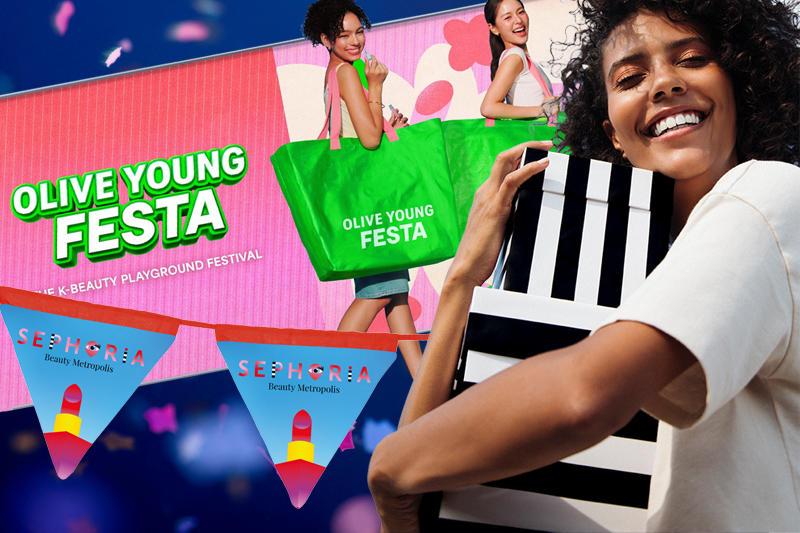
There is a pattern emerging in retail, and it is not a coincidence: the future of market entry amplification for big beauty retailers now looks like a festival.
Two of the world’s most powerful beauty retailers – Sephora and Olive Young – have, within a couple of weeks of each other, announced that they are bringing their flagship consumer festivals to precisely the markets they are fighting hardest to win.
Sephora is bringing its global beauty experience, Sephoria, to London, UK, this October (its first European edition), just as the LVMH-owned retailer accelerates its UK store rollout.
Olive Young, meanwhile, is staging its signature K-beauty festival in Los Angeles, US, in August (its first-ever American edition), and this is months after opening its first two standalone stores in the region.
Neither of these festival moves is a marketing afterthought – both are market entry strategies dressed up as a party, and the industry should be paying close attention.
Consider the choreography.
Sephora relaunched into the UK in 2023 and has been opening stores at pace ever since, aiming to have 20 in the region by the end of 2026, building back a presence in a market it famously exited two decades ago.
Due to demand, the entry deadline for the Pure Beauty Awards has been extended until 24 July! Don't miss your chance to gain recognition from industry experts and consumers alike. Click here for more information.
Now comes Sephoria Europe, a two-day ticketed takeover of 180 Studios on the Strand, London, built around a new ‘Beauty Metropolis’ concept.
This is a concept of themed London city districts, immersive brand activations, masterclasses, creator appearances and previews of brands not yet stocked on its shelves.
Crucially, it will also crown the winner of Sephora’s first European beauty incubation prize – designed to discover and scale promising beauty brands across the continent – alongside a dedicated showcase for emerging European brands.
Retailer Olive Young’s K-beauty festival launching in America mirrors this plan almost exactly.
Korea’s dominant beauty retailer opened its first US stores in Pasadena and Century City, California, earlier this year, and also announced an omnichannel partnership with Sephora to further fuel its plans to crack America.
The retailer’s Olive Young Festa LA 2026 festival, staged within KCON LA at the Los Angeles Convention Center, will recreate four of Seoul’s most famous shopping districts across roughly 50,000sqft.
This is with 55 Korean beauty and lifestyle brands, skin analysis services, a stamp rally and a mock Olive Young store at its heart.
It has even built in a networking lounge and speaker programme to help smaller Korean brands navigate US market entry.
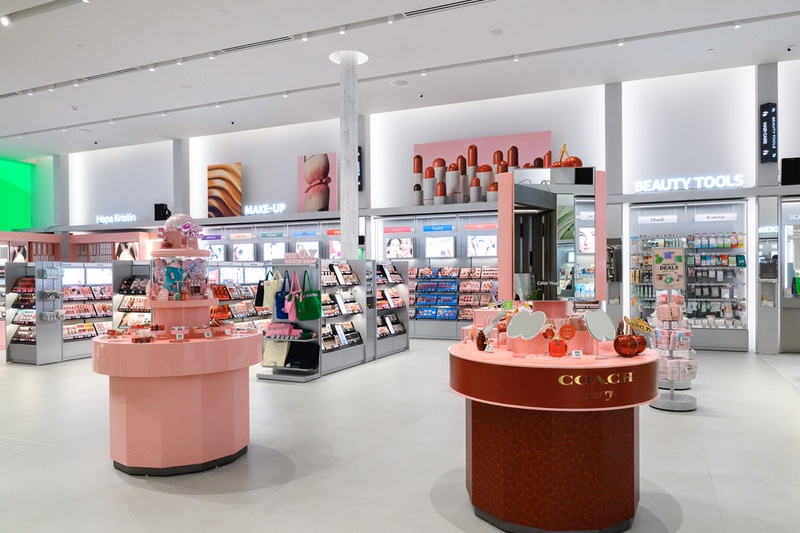
Olive Young has opened its first standalone stores in the US this year
When retail becomes a festival
But beauty retailers are arriving late to this festival party.
Gaming, streetwear and fitness brands, as well as fan culture, proved more than a decade ago that a brand or retailer could own a pilgrimage: think Comic-Con, Sneaker Con, ComplexCon, the CrossFit Games or TwitchCon.
Beauty had early festival energy through creator-led events, such as Beautycon, or brand experiences like Benefit Cosmetics’ Good Ship Benefit in 2016, but those were media or brand plays rather than retail ones.
Neither of these festival moves is a marketing afterthought – both are market entry strategies dressed up as a party
The category’s retailers stayed wedded to counters, trade shows and press days.
Sephoria only launched in Los Angeles in 2018, but what we are watching now is beauty retail catching up at speed, and doing so with unusual commercial precision.
So, why a festival, and why now? The answer lies in what a festival does that a store opening cannot.
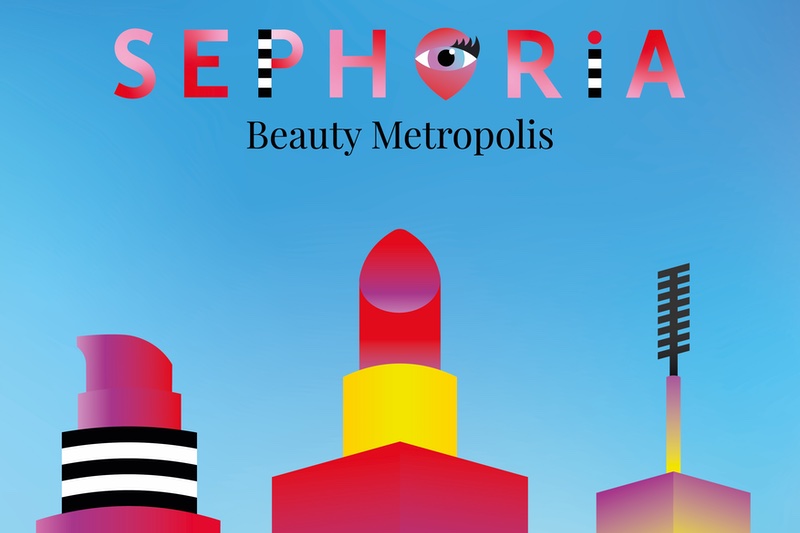
Sephoria Europe is a two-day ticketed takeover of 180 Studios in London, UK
Firstly, a festival compresses brand education into experience, as entering a new market is fundamentally a storytelling problem.
British consumers do not yet have the muscle memory of what Sephora means the way American shoppers do; while most American consumers have never wandered the aisles of an Olive Young in Myeongdong, Seoul.
So, why a festival, and why now? The answer lies in what a festival does that a store opening cannot
A festival lets a retailer stage its entire universe in one weekend: the curation philosophy, service model, community and sense of discovery.
It teaches a market how to shop with you before you have the store estate to do it street-by-street.
Olive Young recreating Seoul’s most popular neighbourhoods in Los Angeles is not set dressing; it is transplanting a retail culture wholesale, and inviting consumers to fall in love with it.
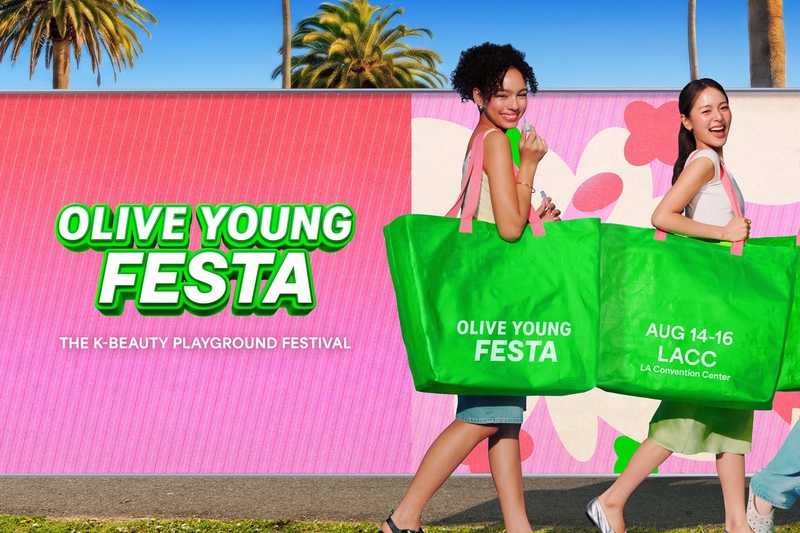
Olive Young is bringing its K-beauty festival to the US for the first time
How festivals can be an investor in a growth story
Secondly, festivals convert customers into a community, and community is the currency of modern beauty.
Sephora’s Global Chief Marketing Officer, Deborah Yeh, has framed the new Sephoria festival in the UK as a deliberate shift away from a model centred on the haul towards one rooted in experience, connection and entertainment.
That language matters. The haul was the transaction era of beauty retail.
What retailers are building now is belonging: ticketed events people queue for, photograph, post and remember.
US retailer Ulta Beauty’s equivalent event in Orlando, Florida, this spring, Ulta Beauty World, reportedly saw around three million people join the ticket queue for a few 1,000 public tickets, which sold out in just over an hour.
A festival lets a retailer stage its entire universe in one weekend: the curation philosophy, service model, community and sense of discovery
Those figures translate directly into social reach, first-party data and emotional loyalty in exactly the demographic these retailers need.
Thirdly, these beauty festivals reveal retailers repositioning themselves as platforms rather than distributors.
The Sephora Prize and ‘The Next Big Thing’ area at Sephoria Europe are incubation infrastructure.
Meanwhile, Olive Young’s ‘Future Connect Lounge’ and its brand-led talks are, in effect, an export accelerator for Korean indie beauty.
The message to founders is unmistakable: the retailer is no longer simply the shelf you fight for – it is the gatekeeper, the amplifier and increasingly the investor in your growth story.
For emerging brands, being selected for these stages may soon matter as much as a retail listing itself.
Hannah Belsham
There is a competitive subtext, too.
Sephora arriving in force in the UK puts pressure on other British retailers, such as Boots and Space NK, and the department store beauty halls of Selfridges and John Lewis, to answer with experiences of their own.
Olive Young planting a flag inside KCON, with its ready-made audience of Korean culture devotees, shows how shrewdly K-beauty is riding the wider Hallyu wave – the massive global explosion of South Korean popular culture that began in the early 2000s.
Both are lessons in reading cultural momentum and building commerce on top of it.
None of this means the traditional retail store is dead, but quite the opposite; both retailers are opening physical doors as fast as they can, but the sequencing has changed.
Festivals convert customers into a community, and community is the currency of modern beauty
The festival now arrives as the overture, generating desire, data and headlines that the store network then converts.
It is brand-building and demand creation running ahead of distribution, rather than trailing behind it.
For anyone building or advising a beauty brand today, the implication is clear.
The question is no longer: how do we get stocked? But, how do we show up when retail becomes theatre?
The big beauty retailers have decided that the future of market entry looks like a festival.
Brands that learn to perform on that stage, with experiences worth queuing for and stories worth retelling, will be the ones the community remembers long after the tote bags have gone home.
This article is written by Hannah Belsham, founder and Principal of Belsham Consulting.
 An extra point of view
Camilla Craven, Beauty FCMO and Advisor, weighs in on the topic…
"What is interesting is that this is not really a new playbook for beauty – it is a new playbook for retailers.
Beauty brands had to build community because shelf space alone was never enough; even if you had hundreds of stockists, you are still one counter among dozens competing for the same customer.
Retailers are only now embracing the same mindset because they have traditionally been the destination brands fought to get into.
The best beauty brands understood this years ago. Benefit's Good Ship Benefit event (which took place in 2006) and Charlotte Tilbury's House of Rock 'n' Kohl experience (2013) invested in moments people wanted to be part of, not just products they wanted to buy.
UK retailers like Space NK, Superdrug and Selfridges have also been steadily building this muscle through pop-ups and experiential events, just on a smaller scale.
That is why festivals are such a powerful market entry tool.
Sephora and Olive Young are not simply importing an event; they are accelerating years of community-building in a matter of days.
In a world where consumers are overwhelmed with choice, product alone is not enough.
The brands and retailers that win are the ones creating communities, giving people reasons to connect in real life and turning customers into advocates.
Festivals are not just marketing moments, they are strategic investments in brand equity, loyalty and long-term growth.
The retailers who get this right will not just compete on shelf space; they will compete on cultural relevance."
Related content:
- Olive Young is bringing its K-beauty festival to the US for the first time
- Sephora is bringing its Sephoria beauty festival to the UK for the first time
- How Olive Young’s debut US stores have performed in numbers
- Sephora launches prize for European beauty incubation to fill support ‘gap’
- Sephora enters ‘strategic’ partnership with Korean beauty retailer Olive Young
- Sephora UK MD ramps up expansion plans: 20 UK stores by the end of 2026


