


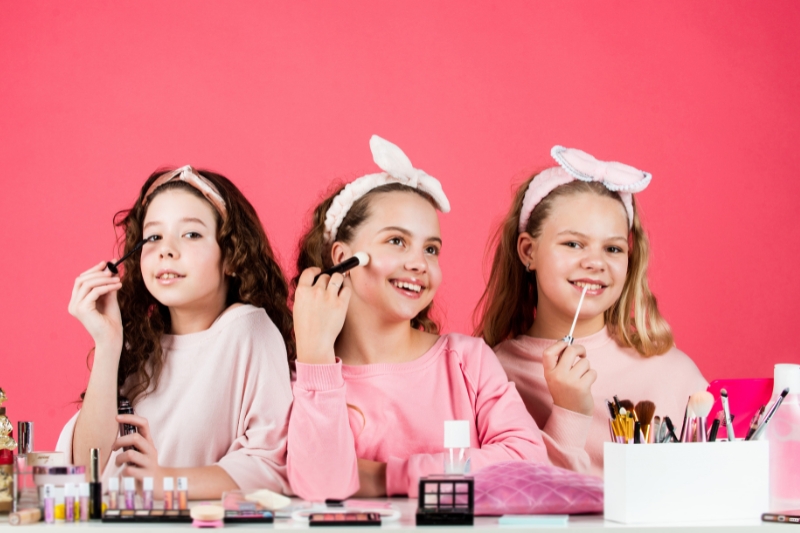
Ulta Beauty has partnered with consumer intelligence firm NeilsenIQ on a study which explores how Gen Alpha is navigating beauty and wellness in a world increasingly driven by artificial intelligence (AI).
The US retailer’s Smart Beauty: AI, Personalization & the Gen Alpha Consumer report has spotlighted insights into the generation’s approach to beauty purchasing, revealing an affinity for in-person shopping while embracing technology.
The report, conducted between April and May 2026, discovered that while 78% of Gen Alpha consumers discover beauty products through at least one online source, nearly just as many (77%) seek “real-world validation”.
This validation comes through visiting stores to try products in person (37%), asking family or friends how to use products (37%), and discussing products with peers (36%), found the report.
Have you launched an innovative product, brand or campaign in the past 12 months? Then you could be in with a chance of winning at this year's new and improved Pure Beauty Awards 2026. Click here for more information.
For Gen Alpha shoppers, heading to bricks-and-mortar retail locations is preferred to online product discovery, with the age group citing the top reasons as being able to take products home immediately (43% to 51% across categories) and discovering or exploring new products in person (33% to 49% across categories).
This generation is using AI to support and reinforce the in-person shopping experience, with the study revealing that those utilising AI tools for product discovery are more likely to visit stores than non-AI users (57% versus 36%).
A key driver of Gen Alpha’s beauty shopping choices stem from the desire for personalisation within beauty discovery, with nearly three quarters (73%) using personalisation tools.
The report also revealed 35% turn to tailored product recommendations, with 31% utilising AI-powered search results and 29% taking suggestions from the internet.
AI-users among Gen Alpha are said to feel more confident in their product choices, with the report revealing consumers who use AI shopping assistants are significantly more likely to say personalisation makes beauty feel more relevant (44% versus 24% of non-AI users), more fun and engaging (42% versus 27%), and more efficient by helping save time while shopping and exploring products (42% versus 29%).
Teenage boys are, perhaps surprisingly, emerging as early AI beauty adopters, with more than a quarter (26%) using AI shopping assistants, found the report.
Meanwhile, it seems mother still knows best as 98% of Gen Alpha parents state they play an “active role” in what beauty and personal care products are purchased by their children.
Parental input is the biggest influence for Gen Alpha (41%), outranking both social media (34%) and friends (29%), discovered Ulta Beauty.
“What stands out in these findings is the clear convergence of digital and physical behaviours,” said Jacqueline Flam, Managing Director, Beauty and Health, at NeilsenIQ.
“Gen Alpha is highly fluent in AI and personalisation, but they are using these tools to enhance discovery and build confidence, not to replace in-store experiences.
“For brands and retailers, this means creating connected journeys that link digital influence with real-world engagement.”
Lead image credit: Adobe Stock/be free
Related content:
- Analysis: How are Gen Alpha navigating beauty in 2026?
- AI is strengthening its grip on beauty in 2026. Here's why…
- Inside the modern beauty discovery dilemma and how brands can beat it
- Ulta Beauty sales top $3 billion in Q1 2026 as Space NK acquisition pays off
- Gen Z are still the most sought-after beauty demographic, but for influence, not spend
- Sephora bets on artificial intelligence with ChatGPT app launch


