
Looking at today’s pop culture landscape, one common theme stands out: nostalgia reigns supreme.
Film and TV are dominated by sequels, remakes and reboots, with blockbuster 1980s and 1990s sequels Top Gun: Maverick and Jurassic World: Dominion topping the box office, and Stranger Things taking over TV screens.
Consumers seem more eager than ever to return to the past, whether that be to their childhoods or before their time – and this is very much mirrored in the world of fashion and beauty.
Powered by the likes of TikTok, the last few years have seen a plethora of vintage looks making a comeback, from crimped hair and low rise jeans to brown lipstick and blue eyeshadow – and one of the most noticeable recent examples is the Y2K aesthetic.
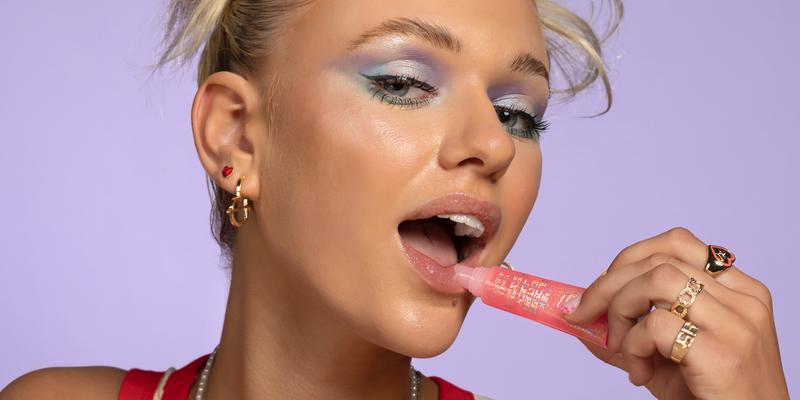
Harking back to the early 2000s heyday of flip phones, boy bands and pop princesses, social media and beauty launches alike have been awash with pastel eyeshadows, butterfly hair clips and lashings of glitter and lip gloss.
“We know fashion works in 20 to 30-year cycles, so it makes sense that we’re seeing this resurgence in beauty,” Emma Ralphs, Brand Strategist at design agency Butterfly Cannon, tells Cosmetics Business.
“These aesthetics have been popularised through
social media, through seeing influencers and celebrities adopting styles that would have been popular in the late 1990s to 2000s.”
Dola Adegboye, NPD Manager at Gen Z-targeted make-up brand Lottie London, adds: “Y2K is inspiring all genres across popular culture: TV shows, films, fashion, and we are especially seeing it in make-up looks and innovation.
“Gen Zs in particular are seeing Y2K as a new trend that they want to experience, with fashion and through their make-up.”
With nostalgia trends, the appeal for consumers is some form of familiarity
“On one level, these trends are about reassurance and comfort – reviving those simple times of the nineties and noughties,” says Ralphs, suggesting that this may be because Gen Z consumers want to “relive their childhood – those carefree days before they discovered what taxes were – so these trends are a form of escapism from the not-so-great current climate we’re living in.”
And for beauty brands, there is a growing opportunity to utilise these nostalgic aesthetics to differentiate themselves and connect with consumers in an increasingly saturated market.
“I think with nostalgia trends, the appeal for consumers is some form of familiarity,” Nick Vaus, Partner and Creative Director at creative agency Free the Birds, tells Cosmetics Business. “We gravitate towards things that make us smile, ultimately.”
Furthermore, he notes that consumers are “quite fickle, particularly in beauty… we want to try new things, we're quite magpie-ish with design. There isn't a huge amount of brand loyalty”.
“So when everyone's claiming the same thing, and the formulations are pretty similar, nostalgia brings that familiarity, there is that warmth, that connection.
“And anything that can remind us of a certain time, I think, brings you closer towards a brand.”
So how can brands conjure that nostalgic magic through every part of their product, from shade names through to their packaging?
True colours
The rapid rise of Y2K and nostalgic beauty “speaks to a growing movement towards maximalism that we’re seeing across Gen Z and millennials”, says Butterfly Cannon’s Ralphs, with bold and playful colours taking centre stage.
“Y2K and other nostalgic trends are playful. It’s colourful, it’s bright, it’s eye-catching – what’s not to love?
“It fits into our aesthetic-led lifestyles, where what we buy is a form of self-expression – it reflects who we are. It’s a reminder of the simplicity of childhood without being deep about it.”
The Y2K aesthetic is commonly characterised by “vivid colour palettes, especially pink – think Barbie pink – and candy-coloured pastels”.
“We’ve also seen shiny holographics, almost ‘futuristic-retro’ across packaging that speaks to this trend,” adds Ralphs.
Lottie London’s Y2K collection, released in September, embodies these trends with its The 2000s Are Calling eyeshadow palette, which features packaging designed to resemble a holographic flip phone.
The 12-shade palette features highly pigmented shades including baby blues, mint greens and purples, and was developed by analysing trends on platforms such as TikTok and Instagram to see what consumers are buying, Adegboye tells Cosmetics Business.

Lottie London's Y2K palette resembles a pink flip phone
“It’s about reviving the past, rather than reliving it. So brands that play into these trends are a form of freedom and fantasy,” says Ralphs.
“It evokes the fun you had when you were younger when you would play around with make-up unselfconsciously.”
In addition, Butterfly Cannon’s research revealed that “the more saturated the colour is, the more it is associated with excitement and stimulation”, she adds.
“This explains why the brighter palette of Y2K is having such an uplifting effect.
“Nostalgia can be evoked through all the senses, especially taste and sight. So seeing colours, patterns or even a font that reminds you of the past can evoke positive nostalgic feelings.”
Sparkle & shine
“The consumers embracing the Y2K trend are obsessed with packaging that dazzles and sparkles, often with a tech-inspired/futuristic aesthetic,” Cheryl Morgan, Creative Marketing Manager at HCP Packaging, confirms.
“We’ve seen a trend for brands requiring large format eyeshadow palettes, with lots of pans for a wide selection of colours.”
Rebecca Goswell, HCP’s Global Design Director, adds: “In terms of packaging aesthetics, brands are looking for clear and tinted packs with ‘colour float’ aesthetics – where an inner part is moulded in a vivid hue and appears suspended within the transparent outer parts.”
HCP offers a variety of eyeshadow palettes including its Radii Grande, Radii Square, Fusion Rectangular and Manhattan Quad palettes, available in a variety of finishes including holographic and iridescent effects that are prominent in the Y2K trend, as well as its Glitter Storm top which features a blend of sequins and glitter suspended in liquid.

HCP offers packaging for cosmetics with sparkly and iridescent finishes key to the Y2K trend
“Ease of application and multi-use products are also popular with the younger consumer who buys into the Y2K trend, such as versatile solid-stick formats for multi-products like cheek/lip balms,” says Morgan.
The packaging for pop star Ariana Grande’s REM Beauty’s 2-in-1 Eclipse Lip & Cheek Stick, manufactured by HCP, features a custom matte silver twist-up stick with a turbo-mechanism that is said to boast strong bullet-retention and a smooth swivel torque.
The balm, which is said to provide a healthy flush of natural-looking luminous colour to cheeks and lips, is topped off with a transparent domed cap, providing shade ID while tying in with the brand’s space-inspired aesthetic.
The return of lip gloss has also been a notable development across the last few years – particularly in its more sophisticated lip oil format.
“We’ve seen a huge resurgence in gloss – but now with better and more effective non-sticky yet high-gloss formulas, plumping effects and large, dramatic particles of glitter or chromatic effects,” says Goswell.
For brands seeking a high-gloss effect, HCP offers a range of lip gloss packs and applications, such as its Jumbo Lip Gloss with Megalips flocked applicator, which is said to offer generous loading and a soft, pillowy application.
The Y2K trend is also seeing a rise in different types of lip gloss formula, allowing for more creativity and customisation, such as “hot pour formats combined with toppers – dustings of glitter, or two-tone lip products in compacts”, adds Morgan.
For these more varied lip formulations, HCP offers its Double Ended Lip Gloss packs that can be used to combine matte and gloss lip formulas, or combine two colours for an ombre lip effect; the 13mm Fusion Midi Lip Gloss pack, meanwhile, can also be used for shimmery or highly pigmented liquid eyeshadows.
Talk to the brand
In addition to colour, brands should not underestimate the power of words in evoking nostalgic themes, including “big, funky typography that borders on retro”, says Ralphs.
This can be seen in singer Iggy Azalea’s Y2K-inspired Totally Plastic line, created with Revolution Beauty-owned brand BH Cosmetics, which features bold typography and throwback shade names.
The collection includes three 9-pan eyeshadow palettes – Blue Fur, Purple Platforms and Pink Sunglasses – featuring blues, purples, pinks and neutrals with glittery plastic packaging.

Iggy Azalea's colletion with BH Cosmetis features throwback shade and product names
“Language is a really interesting one, what we're calling the ranges, or the products, or the brand names,” adds Vaus.
This is a recurring theme across Y2K-themed collections, often drawing on popular phrases, film or TV quotes of the era for shade and product names.
BH’s Totally Plastic features four Oral Fixation lip glosses, with tongue-in-cheek names including Is It 2004 Yet?, I’m Psychic, That Was Sexual and Sex Sells in baby pink, bubblegum pink, clear and peach shades.
Meanwhile, Lottie London’s Y2K range “encourages our consumers to join in the Y2K trends across both the packaging, and product names”, according to Adegboye.
In addition to its flip phone palette, the collection also features two Gloss’d Extra Juicy shimmer lip glosses named after 2000s slang, Like Totally (clear) and Over It (pink).
Lottie London also drew inspiration from another of its throwback collaborations from earlier this year, Adegboye reveals: the Lottie London x Gossip Girl collection, a team-up with the 2000s teen drama which saw a reboot last year.
The line includes two liquid blushes named Say It and Yours, paying homage to the iconic line spoken by Blair Waldorf to Chuck Bass: “Three words, eight letters. Say it and I'm yours.”
“You spend your time laughing at some of the things that we used to say,” says Vaus, “but I think language is so important.”
“I think that's the beauty of nostalgia, that those phrases alone can make us like, ‘oh my god, do you remember that?’ So there's an instant connection, there's an instant bond with that brand.”
Greatest hits remixed
But while trends may now be moving faster than ever, nostalgic beauty is not necessarily a linear progression.
“Maybe traditionally, there was this time continuum of ‘we're all done on the 70s, we're moving into the 80s’,” says Vaus.
“[But] now it feels like you can dip into any of those particular decades and take influences. I think it's all up for grabs.”
Tapping into an expansive spectrum of nostalgia is Urban Decay’s Decades collection, which features four eyeshadow palettes themed after the 1970s, 1980s, 1990s and 2000s to provide a throwback for all consumers no matter their preferred style or era.
The collection includes the 1970s-inspired Boogie Mini Eyeshadow Palette, with disco-inspired metallic shimmer shades in gold and silver sequin-print packaging.
For 1980s beauty enthusiasts there is the Pop Queen palette, with bright blues, pinks and metallics and packaging stylised like a cassette in neon rainbow hues, a nod to the technology of the era similar to Lottie London’s Y2K flip phone.
Representing the 1990s beauty aesthetic is the 1993 palette, with shades including Beep Me, Seattle, *69, Collect Call, Totally Rad and Grunge and a plaid packaging design.
Finally, also taking it back to the 2000s, but drawing inspiration from the decade’s hip-hop and R&B scene, is the Soundtrack palette, with platinum, gold and copper shades – an alternate take on the Y2K era to the ubiquitous pastel colour palette.
It's about taking cues from the past, but but making them relevant, and appropriate, for now
But as nostalgic launches become more frequent, it is important for brands to find a fresh angle that expresses their own brand identity and values to connect with consumers.
“There is a fine line between cool and cliché. It’s about taking cues from the past but making them relevant, and appropriate, for now,” says Ralphs.
“There’s no point in taking inspiration from these aesthetics if it doesn’t fit into your brand story. Gen Z will see right through it.”
Vaus agrees, saying: “When you lean into any particular nostalgia trend, you are really taking the best, the most disruptive and the most interesting things.
“You're taking the things that really resonate with, or what's right for your particular brand.
“You can dip in and out of those particular trends – patterns, colours, artists or typography – but the rest really has to reflect your brand.”
For example: “We’ve just been working on a beauty brand where the client really wants to bring the brand into a 90s vibe and 90s trend.
“We linked into the 90s trend because that's her favourite decade, and it was something that was really meaningful for her.”
Staying in the 1990s, Butterfly Cannon’s Ralphs cites US make-up brand Youthforia as an inspiration for brands looking to tap into this trend.
“What stands out is how the visual identity of the brand irreverently mixes and matches across all brand touchpoints, from packaging through to photoshoots and digital design, to create a look and feel that takes you right back to the excitement of getting ready for a night out with friends,” she says.
“They look to evoke playful nostalgic sentiments of teenage experiences.”
A never ending story?
With consumers’ appetite for nostalgia showing no signs of slowing down, what remains to be seen is how future trends will evolve – from Y2K and beyond.
“The Y2K trend is a trend with staying power and we don’t see this changing any time soon,” says Lottie London’s Adegboye.
“We are certain that we’ll be seeing Y2K come through in make-up, fashion and other popular culture moments for a while yet.”
Indeed, the brand recently launched its Lottie London x The Vampire Diaries collection, tapping into another hit 2000s TV show, which Adegboye notes is gaining popularity with a new audience on TikTok thanks to streaming services.
“As people become more conscious of the money they spend, it is even more important for brands to answer this want for small moments of joy through fun and colourful packaging,” adds Butterfly Cannon’s Ralphs.
However, brands must also balance meeting the growing appetite for maximalist beauty with demand for sustainable packaging solutions – something that consumers were much less aware of in decades past.
Morgan predicts that the coming years will see “products and packaging that displays well in the metaverse but with a Y2K inspired aesthetic, and transparency by brands and suppliers as to how to address sustainability – the eradication of greenwashing”, as a raft of beauty brands including Kim Kardashian’s SKKN and L’Occitane have recently come under fire for their ‘sustainable’ packaging.
“We see minimalism as more eco-friendly,” says Ralphs; however, she observes that this does not mean statement packaging cannot be sustainable, citing skin care brand Byoma, with its “bright, bold and confident packaging” made from recyclable, monomaterial plastic and designed to be refillable.
“So clearly there is a place where the world of sustainability can meet the big, bold and colourful world of Y2K nostalgia.”
While turbulent times may continue, there looks to be no shortage of throwback launches providing consumers with nostalgic warmth and comfort of escaping to happier times – because no matter how the colours or phrases of the season may change, feeling good never goes out of style.