
Analysis: ‘Sephora Kids’ is not to blame for Drunk Elephant’s woes, chasing virality is

Amid lagging sales and a backlash from tweens’ newfound obsession with the brand, can this once mighty skin care start-up regain its former glory?

You need to be a subscriber to read this article.
Click here to find out more.

Drunk Elephant, one of beauty’s previously reigning skin care titans, has found itself up against the wall in 2025. 

The prestige skin care brand saw sales plummet by 65% in the first quarter of the year, which was reported in parent company Shiseido’s recent Q1 2025 financial update. 

It was an impact so significant that it contributed to a 19% slump in income for the Japanese beauty giant’s US operating region. 

The sales crash is just the latest hurdle faced by Drunk Elephant, in what has been a challenging year for the brand.

Sales declined 25% in 2024, which was attributed to “temporary declines in production and shipments in the first half of the year” last year.

Shiseido has been notably reserved about why exactly Drunk Elephant struggled during its first quarter this year, and has not mentioned specific reasons in its financial update. 

However, the NARS-owner made it explicitly clear that it is not giving up on the brand just yet. 

Shiseido is “striving for a swift turnaround” for the embattled business, which includes plans to drive consumer engagement by educating beauty advisors at retail touchpoints. 

While it is reassuring to see Shiseido having Drunk Elephant’s back, the situation is still tinged with sadness for the beauty trailblazer. 

How exactly did Drunk Elephant end up in its current situation, and can it pull itself out of the mire and make a comeback?

The timeline 

Drunk Elephant saw sales crash 65% in Q1 2025

Drunk Elephant saw sales crash 65% in Q1 2025

Drunk Elephant is the brainchild of Tiffany Masterson, a Texas-born mother of two who wanted to create a skin care business free of confusing terms that used simple ingredients. 

The business made its official debut in 2013, before finding its way to become a Sephora mainstay shortly after. 

And it quickly became a smash hit, riding the wave of the ‘clean’ skin care boom happening during the early 2010s. 

Drunk Elephant was one of the “loudest voices” during this period of time, Brand Consultant and Fractional Marketing Director, Mei Grandell, told Cosmetics Business

The brand would go on to make its UK debut in 2018, partnering with Space NK on a pop-up to showcase its products to the new beauty market. 

But its journey was not without controversy. 

In 2016, natural skin care manufacturer Green Heart Labs took Sephora and Drunk Elephant to court over trademark infringement. 

The case was voluntarily dismissed by the complainant, but just two years later L'Oréal sued Drunk Elephant for a violation of a patent concerning L-Ascorbic Acid, a form of Vitamin C.

Despite these hurdles, the brand was still considered a hot commodity and caught the eye of a number of beauty giants looking for a piece of the pie. 

This would see Shiseido fight off competition from Estée Lauder and Unilever to acquire the cult skin care start-up in 2019. 

A year later, Drunk Elephant was throwing its weight into the hair and body care categories.  

But cracks were beginning to emerge, and while ‘clean’ beauty had originally propelled the brand, it came back to bite it

Grandel said: “The higher you climb, the farther you fall, and when the debate and eventually backlash against ‘clean’ grew, along with an ever more results-driven, science-seeking skincare consumer.

“Drunk Elephant inevitably came somewhat in the firing line as a poster child of the movement.”  

This still was not enough to make a dent in the brand’s reputation, and it continued to grow over the coming years until hitting a strange peak in 2024. 

This is when Gen Z and Gen Alpha locked eyes on the brand, propelling it to become a monstrously viral hit last year. 

A double-edged sword

Drunk Elephant was founded by Tiffany Masterson

Drunk Elephant was founded by Tiffany Masterson

Enter the ‘Sephora Kids’ drama, a period last year which saw tweens rampaging through US Sephora stores trying and buying goods and leaving chaos in their wake. 

Drunk Elephant, along with Bum Bum cream legend Sol de Janeiro, were the most sought-after goods by younger shoppers during this time.  

Online searches for Drunk Elephant exploded in January 2024, jumping to 100  on Google Trends – a figure representing the peak interest for that term during the specified timeframe. 

Just one year later, however, it is a vastly different story for the brand. 

“When you market your product to ‘all ages and all skin types’, you are asking for trouble,” Jade Lucinda McArdle, Specialist Consultant for beauty and fashion brands said. 

“The youthful, playful packaging aesthetic lured teens in and made the brand a phenomenon, but trends do not last. 

“Now the brand is struggling to understand who its core consumers are, how to cater for them and how to speak to them.” 

This has caused millennials and older shoppers to see the brand as a ‘tween’ option, said Lucinda McArdle, and added: “They do not take it seriously, and I think social media is a huge part of the problem. 

“Without the surge on TikTok the ‘Sephora tweens’ wouldn’t exist, but you also can’t bite the hand that fed you.” 

Virality is double-edged, and Alice Clapp, Strategy Director, Design Bridge and Partners, said Drunk Elephant provides a “cautionary tale of going viral for the wrong reasons”. 

Drunk Elephant needs to restructure its identity
Jade Lucinda McArdle, Specialist Consultant for beauty and fashion brands

“Short-term growth can be unprecedented, but a shake-out is likely,” added Clapp. 

“Savvy brands treat virality as a call for immediate strategic assessment, not just celebration.

Asking: How did we achieve this visibility? Are we going viral for the right reasons? How can we mitigate risks and prepare for the potential ‘winter’? 

“Drunk Elephant should have let virality happen around them, never distracting from their core identity. 

“They should have doubled down on their brand philosophy, target audience, and distinctive assets.”

Instead, Clapp said Drunk Elephant rode the wave, leaning further into traits that appealed to a tween/teen audience. 

“More recent products even look like they were designed for this audience,” she continued. 

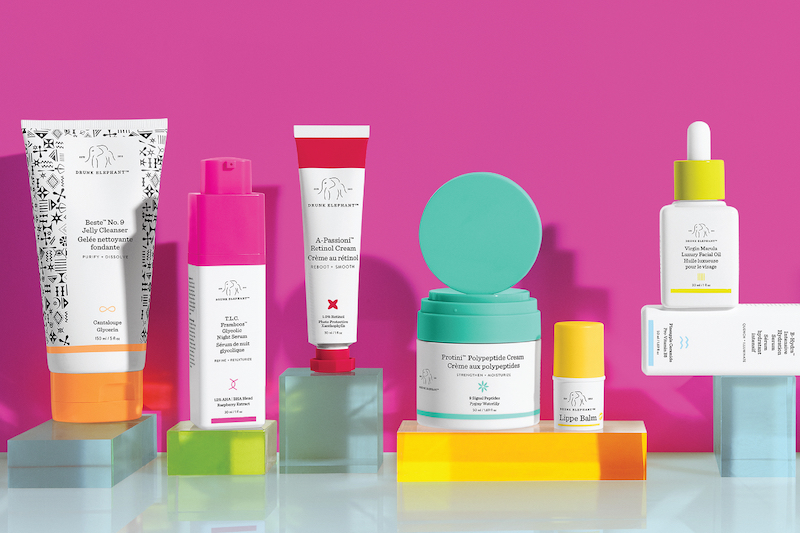
“What was once an elegant monochrome brand with pops of colour is now a saturated rainbow brand.”

Although it had found favour among the youth, debates raged in the wake of ‘Sephora Kids’ on whether children should be using products with strong actives

Even Drunk Elephants' attempts to clarify the age range reinforced the youthful perception, only exacerbated the situation, said Clapp. 

She added: “Compare this to the Kiehl’s and The Ordinary campaigns, which were strongly against children overusing skin care.” 

One among many 

The brand rode the wave of the 'clean' skin care boom in the early 2010s

The brand rode the wave of the 'clean' skin care boom in the early 2010s

The reaction to Drunk Elephant’s sales loss has been understandably loud, but Nick Vaus, co-founder and Managing Partner of brand agency Free The Birds, said ‘Sephora Kids’ is not to blame alone.

“I do not believe [Drunk Elephant] are alone in facing this kind of downturn, and what we are seeing is not just a single brand stumbling, it is the start of a broader reset,” said Vaus.  

“Beauty has been operating in a state of inflated growth for years, fuelled by trend cycles and constant churn.” 

Vaus believes the bubble is finally “beginning to burst”.

He explained: “Drunk Elephant originally found success because it delivered efficacious, accessible products that resonated with millennials and younger Gen Xers. 

“It was not built on gimmicks, it was built on trust. 

“But as the brand became a viral sensation among Gen Alpha and tweens, that core audience may have started to feel edged out. 

“Add to that the influx of cheaper dupes and constant hype, and the value proposition starts to slip. Accessibility – once a strength – becomes compromised.

“This is a familiar cycle. A brand gains cult status, becomes overexposed, and suddenly it is no longer the insider favourite – it is mainstream. And once the masses move on, what are you left with? 

“We queue for the hot restaurant, rave about the latest accessory, obsess over the newest brand, until we do not. The brands that survive are the ones that build beyond the moment.”

If your growth is driven by hype, you are building on shaky ground
Nick Vaus, co-founder and Managing Partner of Free The Birds

Vaus continued: “The brands that have built their identity with a strong foundation that has an understanding of its customer base, and delivers for them consistently and authentically with every new product expansion.

“It is not built off a micro trend moment, it is true to their purpose and their voice. 

“It is tempting to point the finger at TikTok, but I think that misses the bigger picture. 

“Yes, Drunk Elephant may have seen a spike driven by younger audiences on social platforms, but I don't believe this drop is due to some consumer ‘backlash’. 

“The danger is relying too heavily on channels designed for short-term virality. If your growth is driven by hype, you are building on shaky ground. 

“TikTok can shift warehouses full of products, but does it build loyalty? Does it build brand equity? For most, the answer is no.” 

Can it come back? 

Despite all of these challenges, the industry cannot ignore the social surge which boosted the brand’s visibility.

However, Lucinda McArdle said to revitalise revenue and find its place in the highly competitive market, the Drunk Elephant needs to “restructure its identity”. 

“The USP and the price point are aimed at an older demographic with specific skin care interests; they need to take that and make it their focus,” she added. 

“Older consumers tend to be focused on results-driven products due to ageing.” 

Vaus added: “You need to build substance, authenticity, consistency and emotional connection.

“If Drunk Elephant can re-anchor itself to the values that made it successful in the first place, there is no reason it cannot weather this.

“But the takeaway for the wider industry is clear: this is not a blip. It is a reckoning.”

With Shiseido at its back, the industry will be watching with bated breath to see whether this once mighty brand can turn its situation around. 

Related content:

Trending Articles

  1. You need to be a subscriber to read this article.
    Click here to find out more.
  2. You need to be a subscriber to read this article.
    Click here to find out more.
  3. You need to be a subscriber to read this article.
    Click here to find out more.

You may also like