

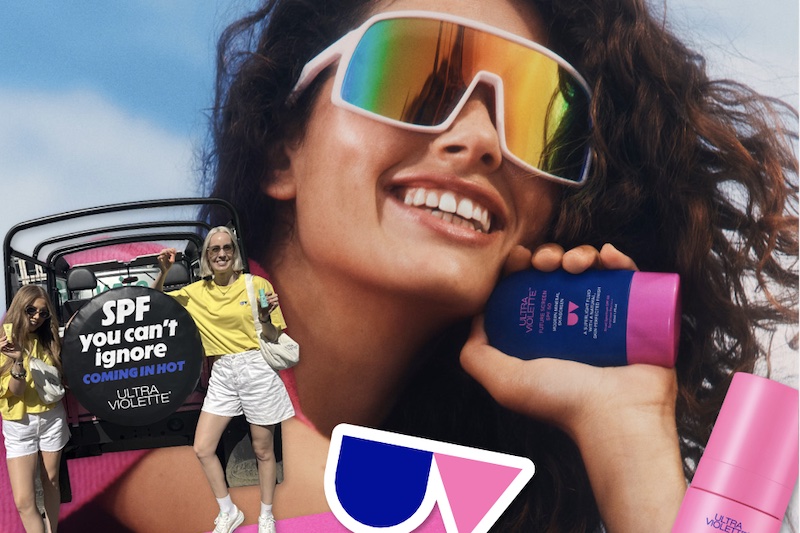
Ultra Violette, the Australian SPF brand, has launched its first global sunscreen marketing campaign in the UK to raise awareness of sun safety.
The ‘Coming in Hot’ campaign began in July, and will see a branded Land Rover Defender drive around London and other UK cities to hand out more than 25,000 samples of Ultra Violette’s hero sunscreens.
The marketing effort has also seen Ultra Violette partner with popular podcasters Ally & G, who will appear at key stops to hand out samples and meet fans.
“We started Ultra Violette to make it easier for women everywhere to wear SPF – arguably the most important but least worn skin care step – by creating formulas that hydrate, prime and protect,” said Ultra Violette co-founder Ava Matthews.
“So, you can spend less time doing skin care and more time doing literally anything else.”
Ultra Violette was launched by Matthews and Bec Jefferd in 2019, and is best known for its Queen Screen Luminising Sun Serum SPF 50+.
The campaign comes after Ultra Violette pulled its Lean Screen Mineral Mattifying Skinscreen SPF50+ from shelves in 2025 after tests found a “pattern of inconsistency” in its SPF results.
This resulted in several more sunscreen brands pausing sales of some of their products in Australia last year, after an investigation by the Australian consumer watchdog Choice brought the issue to light.
Outside Beauty & Skincare, Aspect, Found My Skin and Endota were among the companies to act.
Since that time, Ultra Violette has implemented stricter dual-lab testing protocols and increased the rate of its regular retesting to 18 months rather than two years.
Related content:
- More sunscreen brands pause sales over SPF concerns following Ultra Violette
- FDA issues warning letters to Supergoop! and Vacation over mousse and ‘whipped’ sunscreens
- La Roche-Posay warns of dangers of viral ‘burn lines’ trend in new sun safety campaign
- Sun Protection Conference 2025 highlights: from testing breakthroughs to consumer confidence challenges
- How regulatory restrictions on UV filters are dampening competition in sun care
- Searches for 'reef safe spf' are up 86%, but are claims still misleading?


