
The Packaging and Packaging Waste Regulation (PPWR), Regulation (EU) 2025/40, entered into force on 11 February 2025, and its primary obligations will begin to apply from 12 August 2026. The old Packaging Directive — the framework the industry has operated under for over three decades — is being repealed. What replaces it is not an update. It is a rebuild.
Companies must be ready for new and far-reaching changes in respect of packaging design, sustainability and labelling by 12 August 2026. For beauty brands, that means every bottle, jar, tube, and airless pump currently in development is subject to a new legal standard — one with teeth.
Potential consequences for non-compliance include fines of thousands to millions of euros depending on violation severity, market bans, product recalls, and in serious cases, criminal charges.
What Changes, and When
12 Aug 2026 - Core PPWR obligations apply across all EU member states
12 Aug 2026 - Declaration of Conformity required for all packaging
Aug 2028 - Harmonized EU-wide pictogram labelling on all packaging
1 Jan 2030 - All packaging must meet Design for Recycling (DfR) Grade A–D
1 Jan 2030 - Minimum 35% PCR content required in most plastic packaging
The PPWR is a long-term regulatory roadmap, not a single deadline — it all starts in 2026, a major milestone, but not all technical details are fully defined.
Three Shifts Already Reshaping the Sourcing Floor
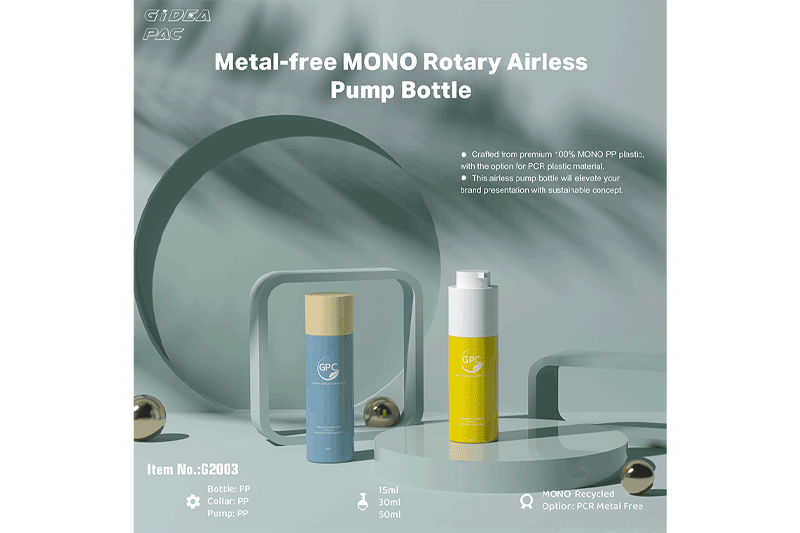
Mono-material is no longer niche. Pumps, airless systems, and closures are moving toward single-polymer builds to meet DfR criteria — and retailers are beginning to mandate it ahead of regulation.
Refillable is now a retail imperative. From 2030, large retailers must dedicate floor space to refill stations. Brands that haven't built refillability into their packaging architecture are already behind.
PCR content is becoming table stakes. Brand-owners of cosmetics that use packaging for their products must ensure compliance with the EU PPWR and draft a Declaration of Conformity. Those waiting until 2029 to start sourcing certified PCR material will face supply bottlenecks.
The Sourcing Decision Made Today Is the Compliance Story of 2027
The challenge for most brands is not understanding the regulation. It is finding a packaging partner whose material documentation, recyclability credentials, and product architecture are already built to meet it — before the deadline forces a costly redesign.
That is where the decision to invest in custom cosmetic packaging shifts from a procurement line item to a genuine strategic asset. Gidea PAC's platform covers mono-material formats, airless refillables, compostable biocomposites, and PCR-certified materials — with full turnkey capability from design brief to market-ready delivery.
The Regulation Does Not Punish Ambition. It Punishes Inertia.
With the PPWR set to apply from 12 August 2026, companies have a limited window to adapt — and even though some provisions won't be implemented until 2027 or 2030, many core obligations, including packaging design rules, registration, and reporting, require early planning.
The brands that treat August 12 as a design brief will emerge with a cleaner supply chain and a stronger shelf position. Those that treat it as an administrative deadline will spend 2027 catching up.
For press inquiries and editorial interviews:Cosmetic Packaging Solutions – Gidea PAC
FCE Cosmetique 2026 · São Paulo · Hall CH105 · June 1–3