
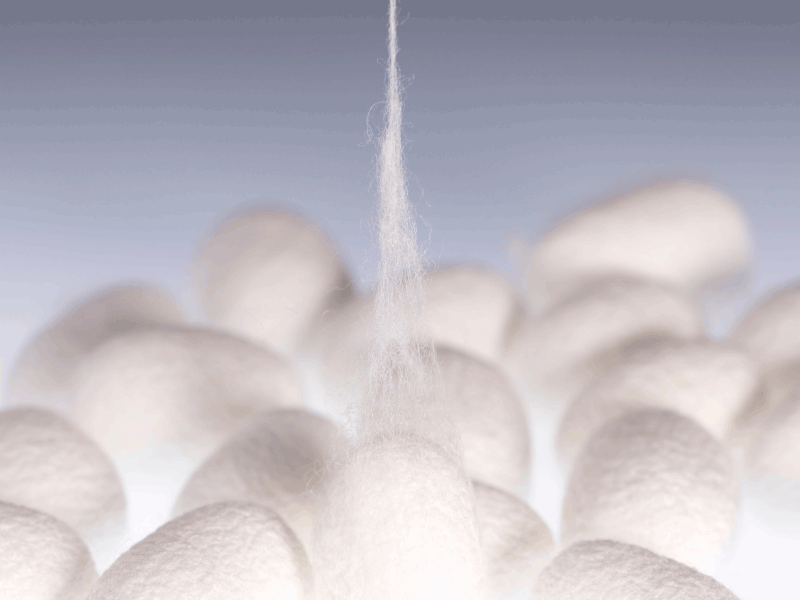
The silk cocoon: a natural model of resilience
For centuries, silk has been admired for its softness, strength, and lightness. But beyond its sensory qualities, it is first and foremost a survival structure. The silkworm builds its silk cocoon to protect itself during metamorphosis, creating a highly efficient biological shield. This structure helps regulate temperature, balance humidity, and defend against external stressors.
Its formation is equally remarkable. Feeding exclusively on white mulberry (Morus alba) leaves, the silkworm transforms plant-derived bioactive compounds into a fiber that is both flexible and resistant. The result is not just a barrier, but a responsive system designed for protection and adaptation. An elegant model of resilience designed by nature.
A new challenge for human skin
Today’s skin faces increasingly unstable environmental conditions. Rapid changes in temperature, humidity, pollution levels, and UV exposure can occur within a single day. These repeated stressors weaken the skin barrier, often leading to dehydration, sensitivity, and discomfort.
In this context, protection alone is no longer enough. Skin must also adapt continuously to its environment. Observing how the silkworm converts white mulberry leaves into an adaptive cocoon inspired Gattefossé’s researchers to explore a similar concept for human skin.
Silkaress™: an adaptive bioinspired approach
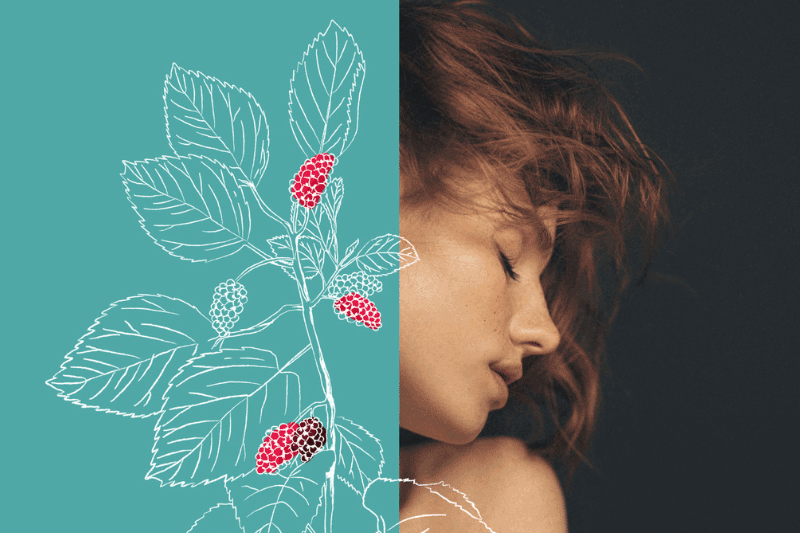
From this research, Silkaress™ was developed to mimic the cocoon’s protective intelligence at skin level. It supports key biological processes involved in epidermal adaptation, including phosphorylation pathways linked to cell cohesion, barrier reinforcement, and stress response.
By helping the skin better perceive and respond to environmental changes, Silkaress™ enhances its ability to maintain balance under daily climatic stress.
The result is skin that feels softer, stronger, and more resilient, as if wrapped in a comforting veil of protection.