Hijabistas and hair ‘skinification’: in-cosmetics Global trends round up

Cosmetics Business discovers new cosmetic ingredients launched at in-cosmetics Global 2022; in this first part, looking at different trends, we find out how hair and scalp care is diversifying to meet the needs of groups including hijab wearers and Gen Z

You need to be a subscriber to read this article.
Click here to find out more.

From scalp solutions for hijab wearers to temporary relaxers for those who like to change-up their style for Instagram, hair care is ever-more sophisticated with ingredient launches hinting at future directions for the category.

in-cosmetics Global 2022, taking place in Paris, France from 5-7 April, is a goldmine of new cosmetic ingredient launches and Cosmetics Business is walking the show floor to bring you a series of stand-out trends among this year’s batch of ingredient launches.

First up are four key themes in the hair and scalp care area:

Scalp soothing diversifies

In the past, scalp care meant anti-dandruff, with much focus on rebalancing the microbiome. But there are many reasons for scalp discomfort, as Magali Borel, Product Line Manager for Active Ingredients at IFF Lucas Meyer Cosmetics, tells Cosmetics Business.

“There are actually three categories of causes for [scalp] irritation: chemical irritation, with all the chemicals in dyes or relaxers, or standard hair care products; you have biological causes, so if you have a sensitive scalp naturally, or if you have a greasy scalp, or microbiota dysbiosis or dandruff – and most of the follicles market concentrates on these causes.

“But things like hijabs or helmets belong to the category of physical or mechanical causes.”

IFF Lucas Meyer won the Gold in-cosmetics Innovation Zone: Active Ingredient Award for its Wastar Pink Berry, one of two debut ingredients in its new Wastar line, which upcycles post-extraction waste products from its fragrance materials sister company, LMR Naturals by IFF.

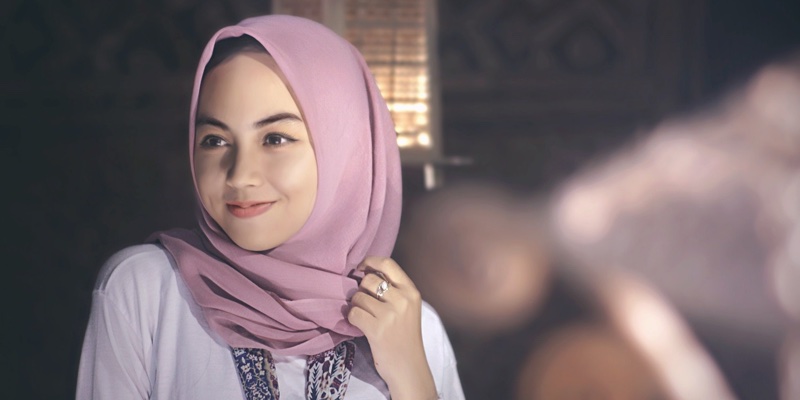
Wastar Pink Berry, while suitable for soothing any type of itchy scalp, has specifically been developed for hijab wearers and those who wear helmets, such as cyclists, motorcyclists and construction workers.

Borel says that while there is plenty of finished cosmetic product R&D catering to the hair needs of hijabistas, Wastar Pink Berry is one of the first active ingredients created for this market requirement.

The ingredient has an antioxidant, anti-inflammatory and anti-itching effect. It works at every level of sensory transduction, reducing the histamine-mediated TRPV4 activity, which causes that itching sensation. It also protects the hair follicle dermal papilla and the scalp dermis by decreasing ROS production and IL-6 and IL-8 production.

A clinical study on two panels – one on helmet wearers and another on hijab wearers, carried out in New Delhi, India, during the monsoon season (with humid weather exacerbating scalp irritation) – exhibited strong self-assessment results.

Among the hijab wearers, 100% agreed their scalp irritation was soothed, their scalp discomfort was relieved and their scalp felt less itchy after just seven days of 1% application as a leave-on gel.

Also targeting dry, itchy scalps, and particularly the unsightly dry flakes that accompany this is Givaudan Active Beauty’s new launch Patchoul’Up.

“This one is actually dedicated to what we call dry flakes – so, not the dandruff that appears on oily scalps, but rather the dry white flakes that you have on a very dry scalp,” says Mathias Fleury, Category Manager, Active Beauty at Givaudan.

Like IFF Lucas Meyer’s ingredient – and a lot of other launches at in-cosmetics 2022 – Patchoul’Up is derived from a resource that would otherwise go to waste.

“It's an upcycled ingredient from the patchouli leaves that our colleagues use in the fragrance side of Givaudan,” explains Fleury.

“On the fragrance side, they will take the essential oil and all of the aromatic compounds. And we then use subcritical water extraction, meaning that we will have access to different molecules which are still there in the leaves. Basically we extract a lot of polysaccharides and proteoglycans.

“What we demonstrated is that thanks to these molecules, we are able to recreate the barrier function to rehydrate the scalp, it relaunches the sebum production, because, actually, the dry scalp lacks sebum. So what we want to do is to relaunch that a little bit and normalise the sebum.”

In vivo, 87% of self-assessment candidates felt a reduction of the frequency of itching, 87% felt a reduction in the intensity of itching and 93% had no dry flakes on their clothes.

<i>in-cosmetics Global 2022 is currently taking place in Paris</i>

in-cosmetics Global 2022 is currently taking place in Paris

Silicone replacement

The move away from synthetic ingredients in hair care continues with in-cosmetics Global 2022 yielding ever more sophisticated options to fill gaps in the market for emollients.

Emogreen HP 40 from Seppic is an alternative to heavy silicones, in particular the dimethicone/dimethiconol blend so commonly used to impart sensoriality and heat protection.

“They [dimethicone and dimethiconol] have a really nice sensory, but their impact on the environment is quite bad, because they are not natural. Also the biodegradability is not good. That's why we really wanted to find a replacement ingredient, so we created Emogreen HP 40, which is based on a brand new molecule, hydrogenated polyfarnesene.”

With the INCI C15-16 alkane, hydrogenated polyfarnesene, Emogreen HP 40 is 100% of natural origin (from traceable sunflower oil and sugar cane) and offers a film forming effect comparable to dimethicone/dimethiconol, while preserving keratin under heat treatment +38% more than non-treated hair.

Texture turned up

The specific needs of textured hair have been spotlighted more in recent years.

However, according to Stephanie Neplaz, Global Marketing Innovation Director, Hair Care at Solvay, a lot of ranges tailored to textured hair get the approach slightly wrong, relying on the leave-on products alone to impart styling benefits and with an over-emphasis on fatty compounds for moisture.

“Most of the time, textured-haired consumers use 15-20 products,” she says. “They want that wash and good style, so zero to three products is not possible, but our routine is four to five products, because we are starting from the first product to develop and build new benefits. Everybody thinks that it’s the last product which does that, but that’s not true!”

Solvay’s line of prototype products for textured hair, developed to demonstrate its ingredients at in-cosmetics Global, includes shampoos, cleansing cream, moisturising conditioner, a mask and curl cream.

That said, some curly girls (and guys) want to change-up their hairstyle in an effective, but temporary way – and Allinea, the new launch from Brazil’s Chemyunion, allows them to do just this.

Thiago Duccini, Haircare Marketing and Product Manager at Chemyunion, says: “It's a concept for people who want to have straightened hair, but in a temporary way. Why? Because now we are living in the time of ‘expression moments’: why do you have to live with something forever, or for a long period? We can offer that flexibility.”

Allinea promotes alignment of the hair but in a temporary way.

The synergistic mix of alpha-hydroxy acids, ethyl esters, disaccharide, smectite clay, coconut triglycerides and lignin (upcycled from the paper industry) disrupts the weaker chemical interactions, such as hydrogen bonds, ionic and hydrophobic bonds, without breaking the disulfide bonds like those processes associated with permanent realignment.

It also protects hair from heat damage and seals the cuticles to minimise the effect of humidity.

A leave-in formulation test on hair strands with 5% Allinea resulted in a 58.6% reduction in volume and a frizz reduction of 30 times compared with placebo.

Duccini says the approach has been designed with Gen Z trends in mind.

“The Z Generation with Zendaya, for instance, she’s had a lot of different types of hair… so why not offer something whereby Gen Z can be like her? We want to deliver this flexibility.”

This is the first in a series of reports from in-cosmetics Global 2022 – keep reading for more ingredients insights.

You may also like