

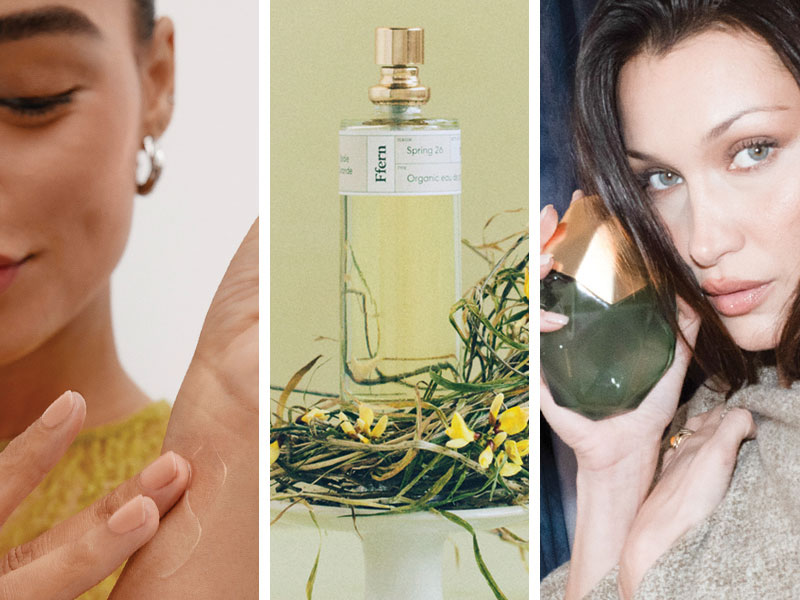
This article was originally published in the Fragrance Trend Report. Receive your copy here
If you’re tracking where beauty innovation is headed, the Cosmetics Business Innovation Awards offer a curated view of the ingredients, packaging, sustainability, digital tech shaping tomorrow’s marketplace. Entries close soon!
Storytelling has always been at the heart of fragrance, but its most recent story is arguably its wildest yet.
It is a tale of transformation. Over the past five years, fragrance has had the ultimate glow up.
The way consumers discover scent, the reason they wear it and how they wear it, has all changed.
“Fragrance has shifted from being a finishing touch to now a language for identity with self expression for all generations, especially the younger generations, and that has transformed our industry,” commented Vanita Sabnani Dalamal, Chief Consumer and AI Acceleration Officer at Puig, speaking at The Fragrance Foundation UK’s recent panel talk, The Future of Fragrance.
“Where it used to be more individual, it’s truly become social. People are talking about fragrance, dissecting it, discovering it.
“The conversation has exploded, so it’s become about community, but primarily it’s become a statement of identity, and that changes the game. It elevates it.”
The $80bn global fragrance market experienced rapid growth in 2025, up 8.8% according to Euromonitor International, and for consumers, fragrance has become “a symbol of self-expression,” Chriselle Lim, co-founder and Creative Director of Phlur tells Cosmetics Business.
“Beyond a signature scent, consumers collect scents, layer, and play, to create a true personal scent every single day to match that exact mood, moment, or emotion,” she says.
Trends of discovery
The trends around this answer consumers’ desire to create more unique scents, resulting in the ever-growing popularity of layering or ‘stacking’ scents to create fragrance ‘wardrobes’ or ‘libraries’.
At the heart of fragrance discovery today too are digital and social channels. Lisa Payne, Head of Beauty at Stylus, who was also speaking at the Fragrance Foundation event, noted that smelling a fragrance is not the only way to discover it today.
She said: “You can go online and the way that brands are creating a narration, a story and visuals to create a mood around fragrance – that is what’s selling.”
The past year has also seen the shift towards non-traditional formats move up a gear too, as consumers explore different ways to wear fragrance.
Body mists and sprays continue to be successful – across Europe they grew by 18% in value and 17% in units in 2025 according to Circana – and brand innovation remains strong.
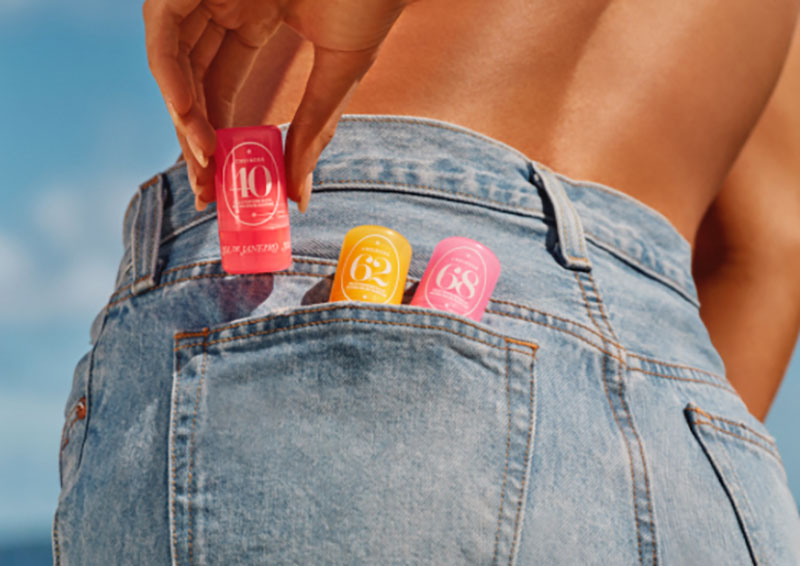
Sol de Janeiro’s Jelly Perfume Balm
Sol de Janerio hit upon another winning format this year, with its Jelly Perfume Balm launch, a solid format that responds to growing consumer demand for portable, swipe-based fragrances.
Formulated with concentrated fragrance oils, the premium scent is said to deliver up to ten hours’ of wear while sitting at an accessible price point.
Arnaud Guggenbuhl, Head of Global Marketing, Insight and Image, Fine Fragrances at Givaudan says: “Long lasting, high impact fragrances – the so-called ‘beast mode’ scents – continue to captivate perfume lovers seeking power and presence.”
He notes that, as a response, many brands are relaunching their most iconic creations in more concentrated and exclusive forms, “amplifying their leathery, ambery or musky facets to leave an unforgettable olfactory trail.”
New examples include Mugler’s Alien Pulp and the latest iteration of Marc Jacobs’ Daisy, Murakami Green Edp, which both feature musk at the base.
The role of fragrance
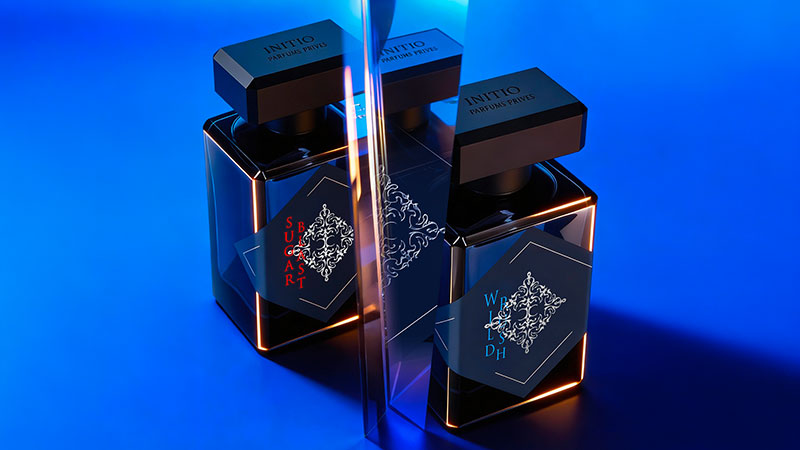
Initio’s Supercharged collection is designed to help the wearer feel joy
There is growing potential for brands to “talk to identity and emotion and bring that to life in a meaningful way for consumers,”said Annalise Fard, Director of Beauty, Home and Fine Jewellery and Watches at Harrods, “because soon we’ll become so algorithmic that people will shift to the other space and say, ‘I want to feel this and I want to experience it more’.”
The past year has seen a rise of fragrances that “do something for you at any given moment, so when you might need something that’s energising, or comforting or provokes joy,” said Payne, adding: “Joy is something we’ve been seeing a lot in terms of brand claims.”
In fact the new Supercharged collection from Initio Parfums Privés has been developed as a response to global studies that point to a ‘joy deficit’ around the world. 45% of people report that they haven’t felt genuine joy in over two years (source: Oracle x Gretchen Rubin, 2022).
The fragrances are Sugar Blast, an ambery gourmand designed to give an instant hit of dopamine and Wild Rush, an aromatic fougere to trigger confidence and energy, and both contain the brand’s Joydrop Complex, designed to stimulate joy. Fragrance may have had a wild period of transformation but as consumers increasingly
use it to reflect identity or change their mood, it is far from over.
Trend 1: Alcohol-free fragrances
Gen Z is avoiding alcohol. Young men and women are not just eschewing the booze their parents’ generation knocked back, they are also spearheading a revolution in the fragrance industry.
With some fragrance looking preferring lighter or more discrete scents and skin-friendly experiences, alcohol-free formats are being increasingly explored by both established and indie fragrance players.
From Dior Sauvage Eau Forte in 2024 to YSL Beauty’s Libre L’Eau Nue Parfume de Peau last year, designer brands have moved in, while new brand Orebella, founded by Bella Hadid, has entirely based around its proprietary alcohol-free fragrance base.
This trend article explores how alcohol-free fragrances are opening the door to new product categories, and what the challenges and opportunities are for perfumers.
Trend 2: Vanilla girl or granny chic?
‘Vanilla girl’ fragrances are still going strong, as are ‘clean girl’ (aka skin scents). But there’s also a raft of newer aesthetic trends like ‘gourmand girly’ (from honey scents
through to pistachio) ‘fruit girl’ (cue notes of raspberry, strawberry, cherry, peach and pomegranate), ‘granny chic’ (violet and lavender scents), and ‘whimsy girl’ (playful,
nostalgic fragrances).
Aligning fragrance with lifestyle aesthetics has become a highly effective storytelling technique in the digital world, fuelling not only the discovery of perfumes, but sales too.
This trend explores the commercial impact, the role that aesthetics played in developing the gourmand fragrance trend, and whether our olfactory language has been overhauled for good.
Trend 3: Scent stacking
From viral gourmand notes to rising interest in fragrance layering and context-specific scents, fragrance is becoming a form of self-expression and identity rather than a single purchase.
And fuelling consumers’ desire to experience a wider range of fragrances – based on mood and occasion – are mini fragrances and discovery kits.
According to Spate’s Global Beauty Insights report, ‘mini perfume’ is the number one trend not only in fragrance, but across the whole of beauty – and it is expected to see the highest growth in 2026 with a projected year-on-year increase of 78.4%.
They are also supporting the scent stacking trend. Olivia Houghton, Head of Beauty, Health & Wellness at The Future Laboratory, states: “Minis lower the barrier to entry in a way that makes experimental, multi-scent behaviour accessible to a much wider consumer base.”
Trend 4: The future of personalised fragrance
Consumers are becoming more savvy when it comes to both the science and art behind scents, however, there appears to be a shift from consumer discovery to consumer creation.
Lisa Payne, Head of Beauty at global trends intelligence business Stylus, explains: “What we are seeing now from younger fragrance consumers is a degree of curation that borders on creation, with tween boys especially seeking out rare, exclusive and niche scents that they layer together to create something entirely unique, and often gatekeeping their concoctions as to remain unreplicable among their peer group.”
This trend explores where the white space is in fragrance personalisation, and how brands can create more meaningful, tailored experiences in the future.
Trend 5: Slow perfumery
Whether it’s the flanker frenzy – with brands launching franchise additions from the most concentrated elixirs to light body mists – or the rapid development cycles of dupe brands as they keep up with the latest trends – the churn of fragrance launches is faster than ever.
It is little wonder, then, that there is a backlash of sorts, a counter-trend that is on the rise: slow perfumery.
According to fragrance supplier Carvansons, who highlighted the trend in its Fragrance Trends Spring-Summer 2026-27 report, slow perfumery “emphasises savouring moments, connecting with scent and respecting nature, leading to more complex, long-lasting perfumes with a story.”
This article will take a deep dive into the development of the slow perfumery movement, and its current momentum.


