
REN Skincare closure lesson: why beauty giants must bring scrappy indie agencies into the M&A mix

Following Ren Skincare’s closure this year, consultant Viola Levy argues why beauty conglomerates need to pay attention not just to indie brands, but to those indie agencies that helped build them

You need to be a subscriber to read this article.
Click here to find out more.

Beauty M&A has dominated industry headlines lately, with endless speculation about which indie brand will get snapped up next after L'Oréal's recent acquisition of Medik8 to e.l.f. Beauty's US$1bn purchase of Rhode.

But here is the challenge that is rarely discussed: how does a big corporation maintain these indie brands' cultural relevance and the fresh, authentic storytelling that made them worth acquiring in the first place?

Some companies keep original figureheads on board, as e.l.f. Beauty did with Hailey Bieber remaining as Chief Creative Officer of her beauty brand Rhode.

But when that is not possible, or sustainable in the long-term – many founders famously struggle in their brand's new corporate environment – there is a solution that often gets overlooked. 

When acquiring these buzzy indie beauty brands, corporations should bring equally buzzy indie creative agencies along for the ride.

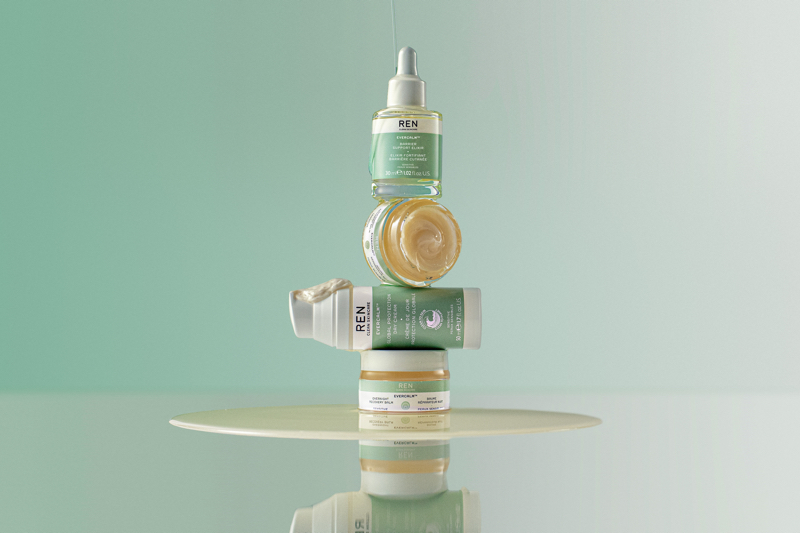
REN Skincare's closure by Unilever in May 2025, after a decade under corporate ownership, serves as a stark reminder of what happens when brands lose the creative storytelling DNA that made them valuable in the first place. 

Founded in 2000 and acquired by the consumer goods giant Unilever in 2015, REN Skincare pioneered ‘clean’ beauty long before it became mainstream. 

But after a decade under corporate ownership, the brand failed to evolve meaningfully in a market demanding unique storytelling and deeper community engagement. 

The Body Shop faced similar challenges, going into UK administration in 2024 before Auréa Group's rescue –, a rescue that succeeded precisely because it focused on preserving the creative DNA that made the brand valuable.

Common missteps 

e.l.f. acquired Rhode in May

e.l.f. acquired Rhode in May

This pattern reveals a critical blind spot in beauty M&A strategy. 

Indie brands do not just succeed on product innovation; they succeed on their ability to speak authentically to communities that legacy brands struggle to reach. 

When conglomerates acquire these brands, corporate procurement teams view creative partnerships as expendable vendor relationships, rather than strategic assets that preserve brand DNA.

The business case for acquiring creative partnerships alongside brands is compelling. 

Obviously, working with an indie agency as opposed to a larger, more established organisation can present its own challenges for a corporation – and there needs to be some give and take on both sides. 

But it is not insurmountable. If you want your niche brands to flourish, you need creative partners who speak their language.

The biggest challenge? 

Getting everyone on the same page when there are about fifteen different stakeholders with their own opinions. 

Another plus point is cost.

Indie agencies’ more agile and flexible processes often work out more cost-effectively than larger agency retainers. 

Instead of spending a substantial budget on retainer contracts, we can parachute in during the moments that really matter, such as brand repositioning, big campaign launches and during crisis management – closely auditing content to ensure everything lands sensitively and audiences don’t feel alienated.

The indie beauty revolution is not slowing down, and neither is the M&A appetite for these culturally relevant brands. 

The reality is you cannot buy authenticity, and you cannot manufacture cultural relevance in a boardroom. 

The magic happens in the creative partnerships that understand communities, speak their language and know how to evolve indie brand stories without losing their soul. 

Setting the foundations 

L'Oréal snapped up Medik8 in June after months of speculation

L'Oréal snapped up Medik8 in June after months of speculation

I launched my agency, Smart Beauty Creative, in direct response to the shift I was seeing in the industry. 

Having worked as a freelance journalist and trend forecaster for almost 20 years, I watched the indie beauty boom change the landscape from the inside-out.

Independent brands now represent $30.5bn in sales globally, according to marketing research firm NielsenIQ, outpacing total beauty market growth with a staggering 15.7% year-over-year growth versus 9.9% for the broader market.  

This explosive growth comes from social media-first marketing strategies that enable authentic storytelling and direct consumer engagement.

Ten years ago, I also began doing regular stints as a copywriter with cosmetics retailer Cult Beauty's team, which gave me an even better front-row seat to this transformation. 

I watched how their unique tone of voice and storytelling positioned and championed female-founded indie brands at the industry's forefront, many of which became household names before being snapped up by larger conglomerates. 

Cult Beauty itself was eventually acquired by The Hut Group (THG) for £275m in 2021.

I pitched the idea for a commemorative magazine to celebrate their ten-year anniversary and became its Editor-in-Chief, which really deepened my understanding of how authentic storytelling creates lasting brand value. 

This experience planted the seed for launching Smart Beauty Creative, specifically to work with the next generation of female-founded indie beauty brands.

Yet, as these indie brands scale and become acquisition targets, there is a troubling pattern that threatens their very foundation of success. 

Beauty M&A activity has surged 32.6% year-over-year, Capstone Partners reports, with prestige and luxury categories projected to grow 7% and 9%, respectively.

Beneath these bullish numbers lies a fundamental misunderstanding: conglomerates acquire indie brands for their cultural relevance and authentic storytelling, then systematically dismantle the creative partnerships that generated those qualities.

Sustainable choices 

Ren Skin is set to close after 25 years

Ren Skin is set to close after 25 years

I recently ran a workshop for The Fragrance Foundation aimed at corporate marketing executives called: ‘How to tell a story that sells’. 

The part that got everyone scribbling in their notepads? How storytelling actually drives revenue. 

The Lucidpress Brand Consistency Report found that consistent brand messaging drives 33% more sales, while Demand Metric research shows content marketing delivers three times more leads at 62% less cost than traditional advertising. 

Most compelling of all, Motista found that emotional brand connections boost customer lifetime value by up to 300% – and nothing creates emotional connections better than a compelling story.

As we have seen in the case of REN Skincare, the cost of getting this wrong is substantial. 

Conglomerates that recognise this and acquire the creative DNA alongside the brand will protect their billion-pound investments. 

Those that do not will keep adding to the growing pile of expensive cautionary tales. 

The choice is simple: preserve the magic that made these brands worth buying, or watch your premium acquisitions become tomorrow's REN.

This article was written by Viola Levy, an award-winning journalist and founder of beauty branding agency Smart Beauty Creative.

Trending Articles

You may also like