
Although many companies are aware of the regulation, there is still considerable uncertainty about who is responsible for compliance, which documentation will be mandatory, and when businesses need to be ready.
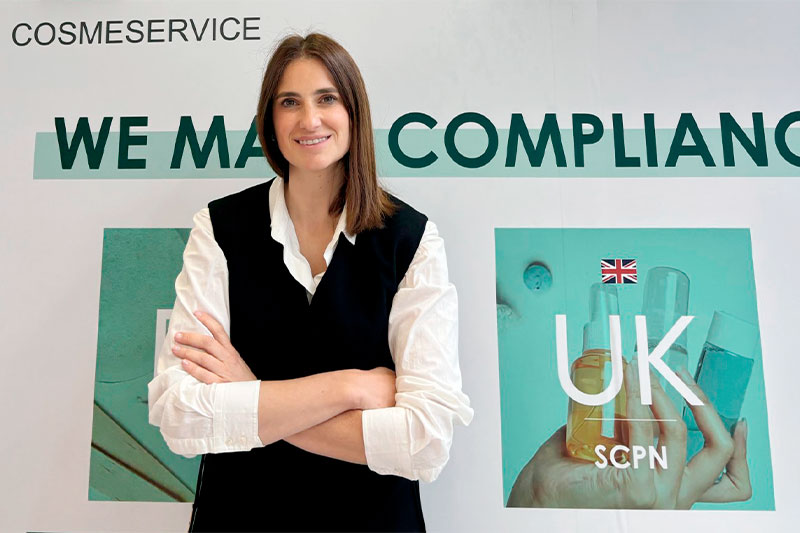
We spoke with Inma Gamero, Managing Director of Cosmeservice, an international consultancy specializing in cosmetic regulatory compliance and product safety, to clarify the most common questions and discuss how cosmetic brands can prepare before the first compliance deadlines arrive.
1. What exactly is the PPWR, and how does it apply to the cosmetics industry?
The PPWR represents one of the most significant regulatory changes affecting packaging in Europe in recent years. Its objective is to ensure that all packaging placed on the European market becomes increasingly sustainable, traceable, and circular.
Although the regulation will be implemented gradually, the first requirements will become applicable from August 2026. While this may seem some time away, preparing the necessary documentation requires gathering technical information from multiple suppliers and reviewing every packaging reference individually. For many businesses, this process can take several months.
Our message is straightforward: the earlier companies begin preparing for PPWR compliance, the easier the transition will be.
2. Many brands believe this regulation only affects the packaging manufacturer. Is that correct?
This is one of the most common misconceptions.
The regulation does not place responsibility solely on the physical packaging manufacturer.
Within the cosmetics sector, the company that determines which packaging will be used—and how it is designed—is typically considered the manufacturer for PPWR purposes.
In addition, there is the role of the producer, or the entity responsible under Extended Producer Responsibility (EPR), which is generally the business placing the product on the market in each Member State.
Understanding these responsibilities is essential because they determine who must prepare the technical documentation, who signs the Declaration of Conformity, and who is accountable to regulatory authorities.
3. What do you believe is the biggest misunderstanding among cosmetic brands today?
Some companies believe compliance simply means proving that they use recyclable materials.
However, the PPWR goes much further than that.
Each packaging reference must be supported by a conformity assessment based on technical evidence, documentation demonstrating compliance with regulatory requirements, and a signed European Declaration of Conformity.
In practice, this means creating a comprehensive technical file for every packaging type.
4. Which documentation will become mandatory?
Among other requirements, the regulation introduces two key documents.
The first is a Conformity Assessment, demonstrating that the packaging complies with the requirements established by the regulation.
The second is the European Declaration of Conformity, through which the manufacturer officially declares that the packaging complies with all applicable legislation.
Preparing these documents requires collecting technical information for every packaging component, verifying traceability throughout the supply chain, and ensuring that all documentation is accurate, consistent, and up to date.
It is a far more technical process than many companies initially expect.
5. What risks do companies face if they delay preparing for PPWR compliance?
The greatest risk is simply running out of time.
Many cosmetic brands have not yet requested the necessary information from their suppliers and are unaware that obtaining certain technical data can take considerable time.
Waiting until the last minute may result in incomplete documentation when regulatory authorities begin requesting proof of compliance.
Beyond regulatory consequences, there is also a commercial risk. Increasingly, distributors, retailers, and international business partners require documented evidence of compliance before agreeing to launch new products.
6. How is Cosmeservice supporting companies throughout this process?
We have developed a dedicated PPWR compliance service specifically designed for cosmetic companies.
Our process begins with a comprehensive assessment of the client's packaging portfolio to identify which regulatory requirements apply to each packaging reference.
From there, we develop an action plan, review all technical documentation, prepare the complete compliance file, and draft the European Declaration of Conformity ready for signature by the manufacturer.
We also provide ongoing regulatory monitoring to ensure documentation remains compliant as legislation continues to evolve.
Our objective is simple: clients should not need to interpret complex legislation themselves—they should have complete, compliant documentation ready whenever it is required.
7. Besides the PPWR, what else should brands review during this process?
This is an ideal opportunity to review all packaging communications.
Many companies will already be redesigning their packaging, making it the perfect time to ensure that environmental claims comply with the latest green claims requirements and that product labelling aligns with evolving regulatory standards.
Rather than managing multiple regulatory changes separately, we recommend conducting a comprehensive packaging compliance review that prepares products for future requirements.
8. If you could give cosmetic brands one piece of advice, what would it be?
Don't wait.
Achieving PPWR compliance is not a matter of completing a form a few weeks before the deadline. It requires gathering technical information, coordinating suppliers, reviewing documentation, and building robust compliance files.
Companies that begin preparing now will have sufficient time to complete the process efficiently and with confidence. Those that postpone preparation are likely to face significantly greater pressure.
When it comes to regulatory compliance, proactive preparation is always simpler, more efficient, and less costly than reacting once legal obligations become immediate.