
This article was originally published in the K-beauty Trend Report. Receive your copy here
K-beauty’s impact on the global beauty industry has been recognised for over a decade, but in 2026, a fascinating shift is taking place as its influence on Western beauty product innovation scales new heights.
L’Oréal Paris’ new Infallible Fresh Wear Cushion Foundation launch features prominently in its product communication that it is “inspired by K-beauty”.
Nivea Sun’s Silky UV Stick SPF50+ packaging features a ‘New from Korea’ label on the cap, with the Beiersdorf-owned brand citing that the product uses “state-of-the-art Korean stick technology.”
YSL Beauty provides another example. The marketing for the luxury brand's new Skin Affair Soft Glow Cushion Foundation says that it leverages “advanced Korean cushion technology”.
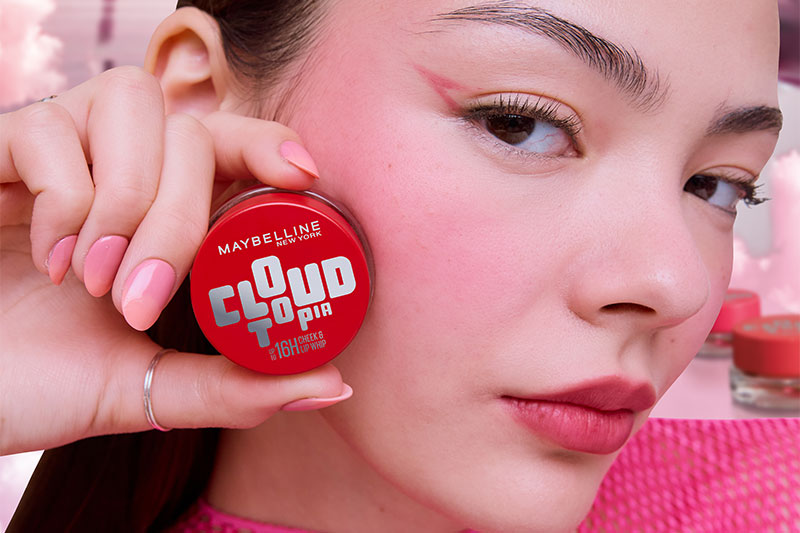
Meanwhile drugstore player Maybelline New York proudly references its viral Cloudtopia Cheek and Lip Mousse line as being “born in New York, made in Korea” with a whipped, airy consistency that replicates K-beauty’s blurred, soft-focus blush aesthetic.
Leading Western beauty brands such as these, and many more, are no longer just launching products that are inspired by K-beauty trends, they are directly referencing Korean innovation in their marketing.
Tickets are now available for the 25th anniversary of the Pure Beauty Awards, taking place on 15 October 2026 at the Grosvenor House Hotel in London, UK. Join the beauty industry for an evening of recognition and celebration as this year’s winners are revealed. Click HERE to secure your place.
K-beauty's innovation machine

Dua Lipa for YSL's Skin Affair Soft Glow Cushion Foundation
“Many of the beauty concepts that have shaped the global industry over the past decade originated in Korea, from cushion foundations and sleeping masks to glass skin, toner pads and advanced sunscreen technologies,” says Melody Yuan, founder of Korean skin care retailer Skin Cupid.
“What has changed is that international brands are now openly acknowledging that influence.”
Now recognised as a genuine innovation machine by international brands, Korea is shaking up the product launch playbook in the West.
At the root of this is a significant, fundamental shift in how K-beauty is perceived globally, explains Dino Ha, founder and CEO of US-based brand incubator Memebox, with a portfolio of K-beauty brands including Kaja Beauty, I Dew Care and I’m Meme.
“Ten years ago, Korean beauty brands were often seen as fast followers of global beauty trends. Today, K-beauty has become one of the industry’s most influential sources of innovation, with global brands increasingly looking to Korea for new product concepts, formulations, and consumer engagement strategies.”
Yuan agrees that this has been a reversed scenario: “Rather than K-beauty responding to global trends, we are seeing global brands respond to trends that emerge from Korea,” she says.
“That is a significant shift in perception and reflects the growing credibility of Korean beauty research, product development and consumer insight.”

Nivea Sun’s Silky UV Stick SPF50+ packaging features a ‘New from Korea’ label
Speed of innovation has been an important factor here.
Korean brands are known for their ability to identify emerging consumer behaviours and bring products to market quickly, and Yuan says “this allows them to act as trend incubators for the wider industry.”
Ha has seen evidence of this first hand, when the Memebox team attended TikTok Shop’s K-Beauty Collective event in Dallas, US, where “creators, retailers, and industry partners were increasingly looking to Korean brands for insights into product development, content commerce, and consumer engagement.”
What international brands are now reacting to is the Korean manufacturing philosophy, with its different approach to texture and ingredient work.
Terry Chen, CEO of Taiwanese OEM manufacturer TJ Enterprise comments: “Things like cushion technology, multi-layer ampoule textures, or the kind of lightweight, skin-feel-first formulation Korea is known for, that comes from factories organised around texture and sensory experimentation as a core R&D discipline, not an afterthought to the active ingredient.
“Western manufacturing has traditionally been built the other way round, efficacy and stability first, texture treated as a formulation constraint to manage rather than a feature to design for.
“So when a Western brand launches something ‘Korean-inspired’, what they’re really doing is trying to borrow an approach to formulation, not just a finished format.
“That’s a much bigger shift than chasing a trend. It’s an admission that the way Korea approaches R&D produces a different, and often better, outcome for the consumer.”
Borrowing a formulation approach
Chen says that these are manufacturing capabilities that took Korean factories years to scale, and for the Western brands that are tapping into these, it’s a “competitive catch-up”.
Retailers including Boots and Superdrug, which continue to expand their K-beauty brand selections, are also seeing the scale at which it is changing Western brand innovation.
Grace Vernon, Head of Boots Ignite, Foresight & Trends at Boots tells Cosmetics Business that while brands initially took inspiration from individual products such as sheet masks, we are now seeing a much broader adoption of Korean skin care philosophies, including a focus on skin barrier health, lightweight layering, and prevention-led skin care routines.
“The fact that major beauty brands are now openly referencing K-beauty in their marketing reflects how consumers increasingly recognise Korean skin care as a benchmark for innovation rather than simply a passing trend.
“We expect that influence to continue, giving consumers greater access to some of the most exciting skin care innovations from around the world.”

Collection's new Glass Skin range at Superdrug
Superdrug’s Chief Operating Officer Simon Comins adds that the glass skin trend is a clear example, having originated in K-beauty since becoming a mainstream beauty concept.
“We’re now seeing this influence reflected across the industry, including through launches such as Collection’s new Glass Skin range at Superdrug,” he says.
The Glass Skin range includes a primer, setting spray and setting powder.
“We expect to see more brands drawing inspiration from K-beauty as its influence continues to grow,” adds Comins.
A ‘reverse dupe’ effect?
The past few months has seen a proliferation of gloss-to-tint lip stains, cushion compacts or bouncy mousse-like lip and cheek pots that are proliferating among brands such as Maybelline New York and e.l.f. Cosmetics, which begs the question, is there a ‘reverse dupe’ phenomenon going on where K-beauty innovation is being copied by Western brands?
Earlier this year creator duo The Lipstick Lesbians posted a TikTok stating that “Kiko is duping Fwee”, citing the launch of Kiko Milano Hug Couture Cloud Tint Lips and Cheeks as a dupe of K-beauty brand Fwee’s Lip & Cheeky Blurry Pudding Pots.
However industry experts such as brand strategist Sam Murton, push back on ‘reverse dupe’ as the full picture.
“A dupe usually means matching a formula or effect at a lower price point. What’s happening here is closer to format and positioning adoption, Western brands taking the textures, delivery systems and skinimalism philosophy that Korea popularised and building their own versions at their own price point, often at a premium, not a discount,” says Murton.
“So it’s less ‘copying to undercut’ and more capitalising on innovation and cultural credibility that’s already proven itself in the market.
“This is a commercial opportunity being seized, not flattery.”
“It’s an admission that the way Korea approaches R&D produces a different, and often better, outcome for the consumer – Terry Chen, CEO, TJ Enterprise”
Chen agrees: “Western brands aren’t stealing a recipe, they’re trying to access a manufacturing capability they don’t have in-house.
“The honest read is that this is brands going shopping for capability, wherever it exists in the world, and right now a lot of that capability sits in Asia. That’s not a dupe, that’s supply chain reality.”
Benefits and risks
But for Western brands that do reference K-beauty there are both benefits and risks.
Mallory Huron, Beauty and Wellness Director at Future Snoops explains: “The very words Korea and K-beauty are becoming a marketing term, that signifies a level of quality and on-trend innovation to the consumer, the same way that perhaps 50 or 60 years ago ‘made in Paris’ might have conveyed a certain type product quality, exclusivity or glamour.
“However as with other marketing terms that have become ubiquitous, like ‘clean’ beauty, or the words ‘wellness’ or ‘longevity’ in beauty, the risks are the same.
“You could get a product that’s made in Korea and advertised as such, and it very may very well be made in Korea, but it might not be great, and so it’s these pitfalls that might dilute or damage that reputation.”
Chen adds: “If a brand leans on “Korean-made” without genuinely understanding or communicating what that manufacturing partnership involved, ingredient sourcing, regulatory testing, formulation IP, it can come across as thin once a more informed consumer starts asking questions.
“Manufacturing provenance only works as a claim if the brand can actually speak to it with substance.”
There is clearly a need for Western brands to stay relevant amid the seismic change that K-beauty is bringing to the market, heeding the ‘ignore at your peril’ warnings that are clearly there.
But there is also another point to consider. Päivi Korvela founder of Silta Social, says: “I'm sure all the marketing departments in the big Western-based beauty companies, are trying to figure out what is their take on Korean beauty.
“But at the same time, the brands, and especially the big houses with all the R&D power and resources they have, should be asking, what can we innovate that is completely new?”