
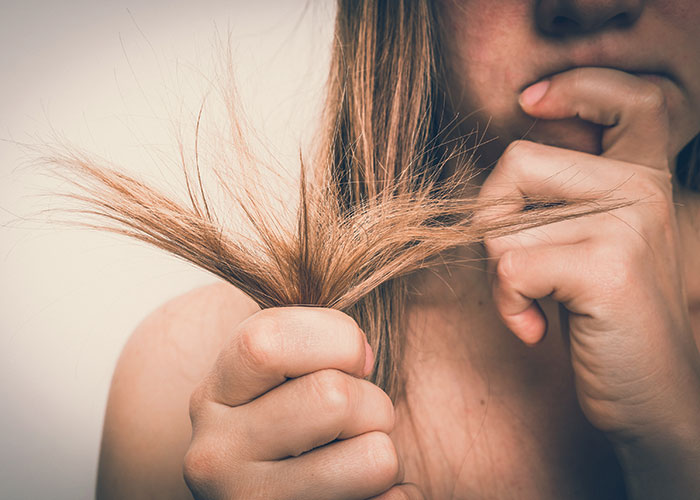
It is well known that many cosmetic products used on the hair can lead to ‘damage’. The concept of damage may seem simple enough to define, but unfortunately this is not necessarily the case. A scientist might define hair damage as an effect that results in the chemical or physical properties of hair becoming altered in a detrimental fashion with repair being defined as the reverse process back to the original state. Marketers looking for claims support and the hairdressing industry often think differently.
Natural, undamaged hair has a set of very desirable properties. It is very strong, flexible and hydrophobic. It protects the scalp from the adverse effects of the sun and it helps to keep you dry. However, in its natural state hair will contain a level of internal and external lipids/oils. Free external oils are produced as sebum and, in excess, this is the first property that is perceived as undesirable by many people.
In many cultures we often wash our hair with shampoo. Non-reactive products such as shampoos will wash away dirt and surface lipids. They may also remove lipids and other materials from inside the hair. This starts the process of altering hair from its natural state. But can we call this damage?
Hair washed with a simple non-conditioning shampoo may start to develop an electrostatic charge which results in flyaways. We might say now that the hair is in a ‘damaged’ state. This will occur particularly if the hair is fine and has been affected by exposure to sunlight. Sunlight can cause oxidation reactions to occur and at the surface of the hair this may result in the cleavage of thioester bonds which hold 18-methyl eicosanoic acid to the hair’s surface. The result of this reaction is the loss of lipids and the production of a sulfonate group, commonly known as cysteic acid. The chances of flyaways will increase with the creation of these negative sites on the hair surface.
We can increase the rate and extent of damage to the hair by the use of products which contain reactive chemicals
Flyaway hair can be treated with conditioning products which impart a layer of (cationic) hydrophobic material to the hair surface. This helps to nullify temporarily the negative charges on the hair and reduces flyaways, as well as improving the overall appearance of hair. We might say therefore that we have ‘repaired’ the damaged hair. This effect is the basis of many marketing claims. However, as no broken bonds have been repaired, the effect is temporary.
Agents of damage
We can increase the rate and extent of damage to the hair by the use of products which contain reactive chemicals. These include permanent waving products, hair straighteners, oxidative hair colouring products and hair lightening/bleaching products. The mechanisms of damage (both chemical and physical) caused by these products differ in some respects and are as complex as the nature of hair itself. Neither is fully understood at a detailed level.
The majority of reactive hair colouring, lightening and bleaching products rely upon oxidative processes to function. The one chemical that is ubiquitous in these products is hydrogen peroxide. This is the main cosmetic oxidising agent and has a reasonably acceptable safety profile when handled and used correctly. All these products tend to work best at higher pH values. However, hydrogen peroxide has a tendency to decompose to oxygen and water. This occurs very slowly at low pH values and far more quickly at high values. It is sensitive to the presence of metals, eg copper, iron and silver, which catalyse the decomposition.
The effectiveness of hydrogen peroxide to lighten hair increases with pH – as, unfortunately, does its tendency to damage the hair. A good material to use to increase the pH of a lightening product is ammonium hydroxide. This increases the lightening power of the system while keeping hair damage and irritation in check. One of the advantages of ammonia is that it is volatile and thus the pH on the scalp will drop faster than with non-volatile alkalis. The disadvantage is that ammonia smells nasty and thus it has gained an unwarranted reputation as being ‘harsh’ to the hair compared with other alkalis.

An ammonia/hydrogen peroxide/ persulfate mix lightens hair but can effect the properties of hair
The ammonia/hydrogen peroxide mixture will lighten hair, but only perhaps up to five levels. In order to increase the level of lightening another oxidising agent containing persulfate is used. Using this three-component system, black hair could be lightened to white. However, this process is not recommended due to the level of damage that can be done to hair and potentially to the scalp. The ammonia/hydrogen peroxide/persulfate combination, if formulated and applied correctly, is perhaps the most efficient way that currently exists of lightening hair while imparting the lowest possible damage level. However, this lowest damage level may result in significant detrimental effects to the physical properties of the hair and its appearance. When we wish to lighten the hair, we want to attack and destroy the melanin, which is located within the cortex of the hair leaving uncoloured degradation products. Melanin is a large, conjugated (and thus coloured) organic molecule, which comes in at least two forms.
As it is located within the hair shaft, which itself is made up mainly of organic material, it is easy to see how the structure of hair itself may also be attacked and altered.
Historically, several approaches have been adopted to maximise decolouration while minimising hair damage and these are:
- Careful formulation to achieve just enough lightening;
- Careful application and usage – these are easy products to get wrong;
- Elimination and control of metalions;
- And use of conditioning ingredients before, during and after application.
The main cause of hair structural degradation during oxidative treatments is the cleavage of covalent bonds within the hair. The best known of these reactions is the attack on disulfide bonds, which play a large part in holding separate protein chains of hair together. However, it is also possible to cleave amide bonds, which hold the amino acid residues together in the main protein chain. Thioester bonds bind lipids to protein chains within the hair structure as well as on the hair surface.Certain amino acid side chains containing reactive groups may also be affected by oxidative processes. The end result of all this is that the hair structure starts to lose its physical strength and integrity as it is treated with oxidising agents.
A market sector known as ‘bond builders’ has developed; this was largely created by the introduction of Olaplex by Liqwd
The search for products that will react with hair (forming new bonds) and improve its properties after it has been (usually oxidatively) damaged has gone on for many years. Much knowledge originally came from research into wool. However, many of the reactive chemicals that have effects on wool cannot be used in cosmetics generally due to adverse toxicological affects. Real bond repair is made difficult as, when the disulfide bond is oxidatively attacked, the end result is two sulfonate groups. These groups are quite stable and resist chemical conversion to anything else, eg back to the disulfide bond, under conditions that can be used on people.
Bond building
So, is it possible to create a cosmetic product that rebuilds covalent bonds that have been oxidatively broken in hair?
In the last few years, a market sector known as ‘bond builders’ has developed. This was largely created by the introduction of Olaplex by Liqwd. These product types are also widely known as ‘plexes’. Currently many companies claim to have products which fall into the bond builder/plex area. Olaplex may be added to any oxidative colour or lightening product and claims to work “by finding single sulfur hydrogen bonds and crosslinking them back together to form disulfide bonds before, during and after services”. I have yet to see any scientifically-based evidence that this reaction back to the disulfide bond can actually occur.
It is clear that Olaplex, as well as some other plex-type products, does actually improve the condition of the hair (from what might have been expected) after it has been through an oxidative treatment (sometimes known as a ‘service’).
The original idea for Olaplex seems to have arisen from the knowledge that certain short chain molecules with reactive end groups can be used to crosslink protein chains. As this chemistry requires the presence of the reduced sulfhydryl group (-SH), this would seem unlikely where the hair has been oxidised. So, if real reformation of -S-S- links is unlikely then why do these plex-type products have a useful effect on the hair? The active ingredient in the starting Olaplex is a hydrogen maleate. This small unsaturated dicarboxylic acid is partially neutralised in the Olaplex product with a particular diamine. When the product is added to a mixed oxidative system at pH10 the acid will become completely neutralised to the maleate.
Bond building products certainly seem to do something advantageous to the hair in oxidative systems
In response to the success of Olaplex a range of other plex-type products have been launched. All those products from major players also contain dicarboxylic acids – and a summary of a few of these can be seen in the table below.
There is no published data as to whether all these products work to the same extent. However, it seems unlikely that these major companies would launch significantly inferior products into the plex market, and hearsay evidence suggests good performance with some products.
Maleic acid contains a double bond which is important for its proposed ability to react with sulfhydryl (or other organic) groups. However, both malic and succinic acid do not contain this group. Early patents from Liqwd and some marketing information suggest that the bis-amino function in the base is important in forming an ionic crosslink within the protein structure; however, the Smartbond product does not contain this material. It could be suggested that the dicarboxylic acid nature of the material is a factor. If this is the case then one possibility is that these materials can act as chelating agents.
It is known that metal ions (especially copper and iron) can catalyse and accelerate the oxidation reaction. Control of this reaction could be important in moderating damage to the hair structure. This has been shown by a series of patents and peer reviewed publications from Procter & Gamble. In these, the case for copper being a significant factor in hair damage has been clearly established. In a range of P&G products control of metal ions is achieved by the use of ethylene diamine disuccinate, a chelating agent with a high affinity for copper.
An alternative (or perhaps complimentary) mode of action might be proposed and this is the known ability of small carboxylic acids to affect the properties of hair. This behaviour has been reviewed recently by Trefor Evans of TRI Princeton. The mechanism of action of these materials is not clear, but may be related to their ability to penetrate into the hair shaft and block sites that might otherwise be occupied by water. This seems to happen well at lower pH values. Whether this can also happen in high pH oxidative systems has yet to be revealed.
A further interesting possibility relates to the ability of persulfate to initiate the polymerisation of certain materials with double bonds such as maleic acid and in the presence of PVP. This has been reported in literature and is the subject of a patent application. Creation of a polymer within the outer layers of the hair could well lead to changes in physical behaviour. This does not help to explain how saturated acids function.
These bond building products certainly seem to do something advantageous to the hair in oxidative systems. However, the mode of action of this type of this type of product has yet to be demonstrated unambiguously, and is an area that awaits a systematic and sensible study.
Table 1: The Chemistry of 'plex' products
