
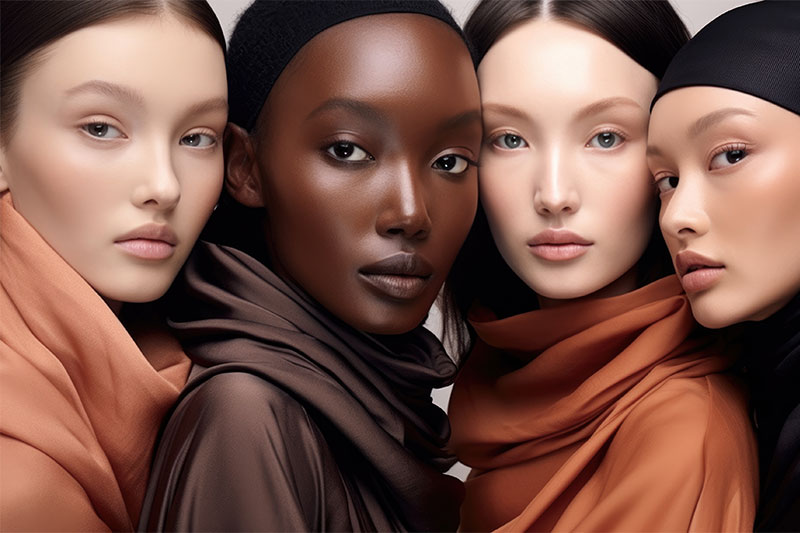
Today, advanced AI-powered foundation shade match technologies are transforming this experience, helping shoppers find their exact match with confidence while boosting conversions for brands.
Let’s explore which shade finders stand out and how they compare based on features, accuracy, and overall performance.
5 Foundation Shade Finders
According to research by Dataintelo, the foundation shade finder market shows strong global growth momentum. The market was estimated at $5.8 billion in 2025 and is projected to reach $12.4 billion by 2034, growing at a CAGR of 8.8%.
This growth is driven by increasing demand for personalised beauty experiences, wider adoption of AI and AR in cosmetics retail, and the rapid expansion of online and direct-to-consumer beauty channels worldwide.
1. Inference Beauty - Foundation Match Technology
A B2B-grade AI foundation shade finder that analyses skin tone and leverages cross-brand data to deliver precise shade recommendations.
Key Features:
- Cross-Brand Matching: Matches shades across thousands of foundations using a 140,000+ SKU database, identifying the closest equivalents within a retailer’s assortment.
- Multi-Factor Shade Precision: Recommends shades based on depth, undertone, coverage, and individual skin needs.
- Personalised PDP Integration - Seamlessly integrates into product detail pages with a customisable one-step quiz that identifies the ideal shade using a vast product database, delivering instant results.
- Personalised Complexion Recommendations: Suggests complementary products like primers, concealers, highlighters, and powders.
- Plug-and-Play Integration: Easy to implement with no developer dependency.
- Real-Time Analytics: Provides actionable insights by analysing customer preferences, behaviour, product performance, and cross-matched brands, helping you understand your customers’ skincare needs, pricing preferences, and which products perform best.
- 112 Skin Tones Covered - Covers a wide range of skin tones, from fair to deep and cool to warm, ensuring accurate matching for diverse customers.
Best For: Beauty retailers and brands offering multiple foundations with 10+ shades, looking to improve conversion, reduce returns, and drive cross-brand selling.
|
|
|
|
|
|
|
|
|
|
|
|
|
|
|
|
|
|
|
|
|
Website: https://inferencebeauty.com/foundation-finder/
2. Findation
Recommends matching shades using data collected from users and a proprietary algorithm.
Key Features
- Covers over 104,000 shades across 11,000+ products and 1,486 global brands, making it one of the largest foundation shade databases.
- Uses data collected from 148 million users to generate shade recommendations based on real usage patterns.
- Allows users to enter previously used foundation shades to receive matching equivalents across other brands.
- Combines crowd-sourced data with lab-based colour analysis, using spectrophotometry to deliver scientifically verified shade matches.
- Enables quick setup by integrating directly into product pages with a single line of JavaScript, along with a flexible API for more advanced implementations.
Best For: Retailers looking to help customers find matching foundation shades using existing shade data and improve purchase confidence.
Website: https://findation.com/
3. Match My Makeup
A scientifically and mathematically developed foundation shade matching tool backed by an independent lab, ensuring accurate colour matching.
Key Features:
Uses a quiz-based system where users provide their current shade or answer questions to discover the best match.
Matches shades across 150+ foundation brands, helping users find their ideal match quickly and conveniently.
Supports over 20 languages, making it accessible to a global audience.
Enables omni-channel retail experiences with QR codes for instant in-store access and SDK integrations for mobile apps.
Supports easy integration with customisable options, allowing brands to tailor the tool to their specific business needs.
Each match is verified by a team of makeup artists, adding a human layer of validation alongside scientific analysis.
Best For: Retailers looking to offer an accurate, science-backed foundation shade finder that builds customer confidence and enables seamless discovery.
Website: https://matchmymakeup.com/
4. FoundationMatcher
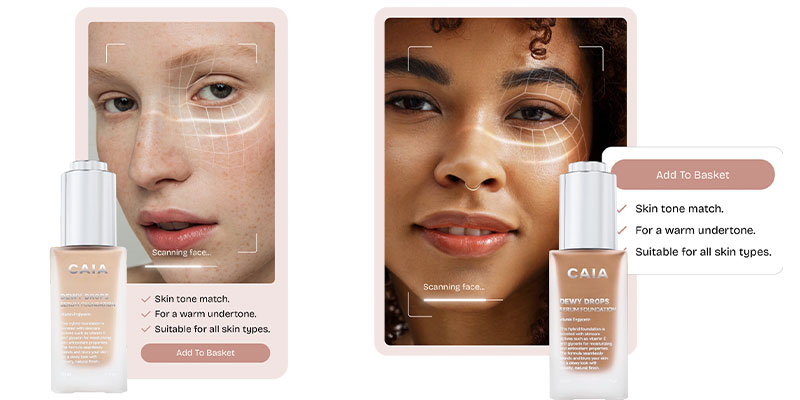
An AI-powered foundation shade matching tool that uses photo analysis to deliver fast, accurate recommendations tailored to individual skin tone and unique skin needs.
Key Features:
- Delivers personalised foundation matches within seconds across multiple brands and price points.
- Covers 120+ brands, including both luxury and drugstore brands, in a single experience.
- Ensures strong privacy by analysing photos in real time and deleting them immediately after use.
- Provides a fast, seamless experience that helps users find their foundation match without sign-up or friction.
- Fully GDPR compliant, ensuring secure and responsible handling of user data.
- Leverages advanced AI colour detection to improve precision across different lighting conditions and skin variations.
Best For: Consumers looking for a fast, accurate, and privacy-focused foundation matching solution with instant results.
Website: https://foundationmatcher.com/
5. Arbelle AI Shade Matching
An AI and AR-powered foundation shade matching solution that delivers real-time virtual foundation try-on and highly inclusive recommendations.
Key Features:
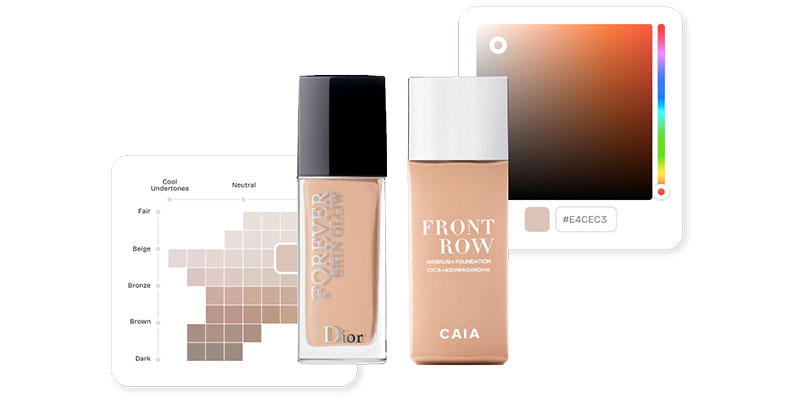
- Uses live camera and selfie-based AI analysis to detect skin tone and deliver instant, personalised shade recommendations.
- Built on an advanced skin tone framework (Monk Skin Tone Scale) to ensure accurate matching across diverse skin tones.
- Works seamlessly across web, mobile, and in-store environments with flexible integration options.
- Provides real-time analytics and insights into customer behaviour, shade demand, and product performance.
- Allows customers to virtually try on recommended shades in real time, helping them make more confident purchase decisions.
Best For: Beauty brands looking to deliver immersive, AR-driven shade matching experiences with strong inclusivity and data-driven insights.
Website: https://arbelle.ai/
How do leading foundation shade-matching platforms compare in capabilities?
|
|
|
|
|
|
|
|
|
|
|
|
|
|
|
|
|
|
|
|
|
|
|
|
|
|
|
|
|
|
|
|
|
|
|
|
How Foundation Shade Matching Technology Works
Shade-matching technologies are typically integrated digital tools used by beauty brands and retailers. They combine AI, user inputs, and large shade databases to help customers find their most suitable foundation match across brands.
Step 1: Collecting Skin Information
The process starts by understanding the customer’s skin tone. This can be done by analysing a selfie, asking a short quiz, or using a known foundation shade. Some advanced tools combine multiple methods for better accuracy.
Step 2: Creating a Skin Profile
Next, the system builds a skin profile based on the input. It identifies key details such as skin depth, undertone (warm, cool, or neutral), and other visible traits, such as redness or olive undertones. More advanced systems convert this into measurable colour data for precise matching.
Step 3: Matching with Product Database
The skin profile is then compared with a database of foundation shades. Each product has defined colour values, and the system finds the closest matches. Larger and more detailed databases usually give more accurate results.
Step 4: Showing Recommendations
The best-matched shades are shown to the user, usually ranked by accuracy. Many foundation finders also include product details, shade names, undertone information, and direct links to purchase. Some also adjust results based on skin type or coverage preference.
Step 5: Improving with Feedback
Over time, the system learns from user behaviour. If a product is kept, it confirms a good match. If it is returned, the system uses that feedback to improve future recommendations. This helps make results more accurate over time and also helps brands identify gaps in their shade range.
How do leading foundation shade finders differ in integrations & technical features?
|
|
|
|
|
|
|
|
|
|
|
|
|
|
|
|
|
|
|
|
|
|
|
|
|
|
|
|
|
|
|
|
|
|
|
|
Trends in Foundation Shade Matching Right Now
1. AI Photo Analysis is replacing quizzes
Traditional shade quizzes are being replaced by AI tools that analyze a simple selfie. A short image can reveal far more accurate skin tone and undertone information than long question-based forms, making the process faster and easier for users.
2. Inclusivity is now a basic expectation
Modern tools are designed to work across a wide range of skin tones, not just limited segments.
3. Cross-brand matching is becoming essential
Shoppers no longer stick to one brand. They expect tools that can find their shade across multiple brands, helping them explore different products without confusion or guesswork.
4. Shade data is becoming a business asset
Retailers are now using shade-matching data to understand customer behavior, popular skin tones, and gaps in their product range. This helps improve inventory planning and product strategy, not just recommendations.
5. Shade matching is expanding beyond the foundation
Once users find their foundation match, they often look for matching concealer, powder, and other complexion products. Foundation shade matchers that support full routine recommendations are seeing higher basket sizes and stronger engagement.
6. Privacy is becoming a trust factor
Users expect their photos and personal data to be handled safely. Platforms that process images in real time and delete them immediately are building more trust and stronger user confidence.
Conclusion
Foundation shade finders have become a core part of online beauty shopping, not just an optional feature. These tools are now widely used by brands and customers, helping reduce confusion and improve buying confidence.
For beauty retailers, the choice depends on business needs. Some tools are better for large-scale cross-brand retail, others focus on scientific accuracy, speed, simplicity, or inclusivity.