

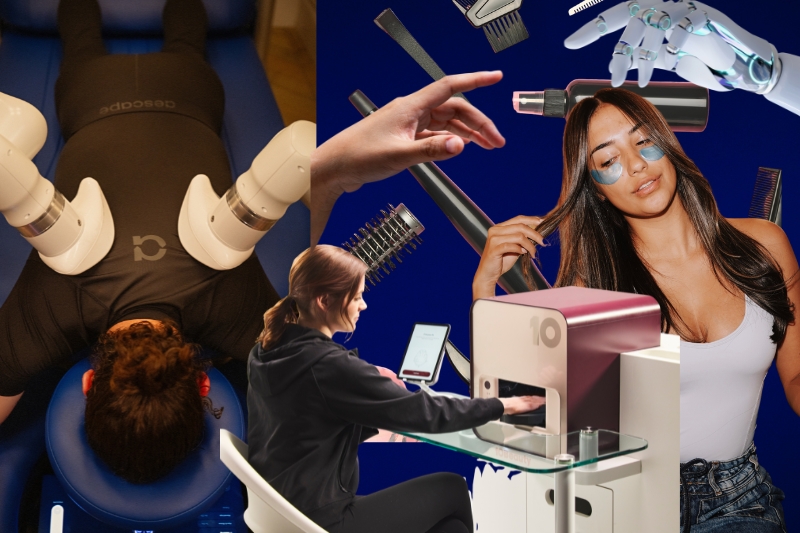
Artificial intelligence (AI)-led consultations, mirrors with built-in filters to try-before-you-buy, and robot manicures and massages are taking over the professional services side of the beauty industry.
It is unsurprising given the evolving landscape these service-led businesses sit within, but the challenge comes as beauty salons and clinics look to integrate these advancements into their offering without taking away from what makes them unique in this technology-centered world: human touch.
“One misconception is that technology and traditional beauty services are competing with each other,” explains Eve Oxberry, Head of Editorial for the Professional Beauty Group’s professional-focused titles: Professional Beauty, Hairdressers Journal International and Aesthetic Medicine.
“In reality, they are increasingly working together.
“The beauty industry has always embraced innovation, whether that is new treatment devices, formulations or consultation methods.
“AI and automation are just the next chapter in that evolution.”
Katherine Ledesma, founder of boutique marketing consultancy Atelier Skye, argues that the best salons and clinics will use technology to support “better consultations, education and personalisation, while allowing practitioners to spend more time doing what technology cannot – building trust, reading emotion and creating meaningful experiences.’
She adds: “Beauty has always been personal.
“Technology can enhance the experience, but expertise is still what earns a client's trust.”
How the landscape has changed
Like the rest of the world, beauty services have had to keep up with change or risk getting left behind, especially as consumers seek out experiences more curated to their individual needs.
“One of the biggest changes has been the move from reactive beauty treatments to more personalised, data-driven experiences,” explains Oxberry.
Beauty has always been personal
“Tools such as AI-powered skin analysis in beauty salons, scalp scanning in hair salons, advanced body composition technology in wellness spaces, and hormone testing in aesthetic clinics are helping beauty professionals understand clients in far greater detail than before.”
Ledesma agrees, noting how techno


