

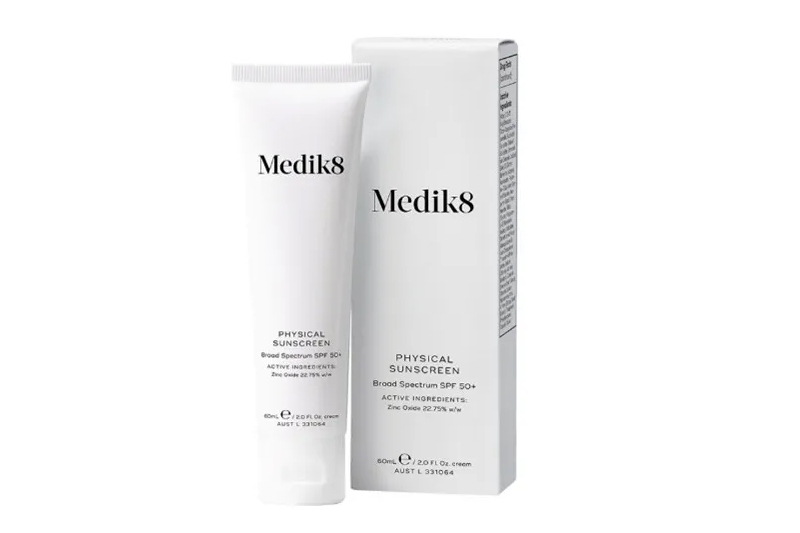
Medik8 has recalled several batches of its Physical Sunscreen SPF50+ in Australia and New Zealand over concerns that the products do not meet the stated level of SPF.
Five batches across three products have been recalled, according to a notice issued by Australia's Therapeutic Goods Administration (TGA).
There is a risk that a lower than labelled SPF rating may increase the risk of sunburn during use and reduce the long-term effectiveness of preventing skin cancer, the regulator said in the notice.
The affected products were sold between August 2023 and March 2026, according to a recall notice on Medik8’s website.
“Independent testing has shown the product is unlikely to meet the SPF 50+ rating stated on the label,” Medik8’s statement said.
“The formula is safe to apply, but some batches may offer lower than labelled SPF protection.”
The affected products are:
- Physical Sunscreen SPF50+ Professional 60ml: batch A1798B with August 2026 expiry, and batch A2651A with April 2028 expiry
- Physical Sunscreen SPF50+ 60ml: batch A1798B with August 2026 expiry, and batch A2651B with April 2028 expiry
- Physical Sunscreen SPF50+ Try Me 15ml (also included in Medik8 Post Treatment Kit): batch A1798A with August 2026 expiry, and batch A265 with April 2028 expiry.
Cosmetics Business has contacted Medik8 for comment.
Medik8 is the latest beauty brand to recall some sunscreen products over lower than labelled SPF levels.
An investigation by the Australian consumer watchdog Choice last year found that 16 of 20 brands that it tested failed to provide the level of sun protection factor advertised on their bottles.
The results prompted a number of brands to pull some of their products from shelves, and the TGA launched an investigation which raised concerns around the reliability of testing.
Last week the TGA launched a consultation to improve the regulation of sunscreens in the country.
The proposals include improving reliability and transparency of SPF testing, as well as strengthening oversight of testing laboratories.
The regulator has also suggested enabling new testing technologies to be adopted in a more timely manner.
Other proposals include enhancing lifecycle quality assurance – including periodic testing and ingredient standards – as well as updating Good Manufacturing Practice (GMP) guidance to improve manufacturing quality, and simplifying SPF labelling.


