

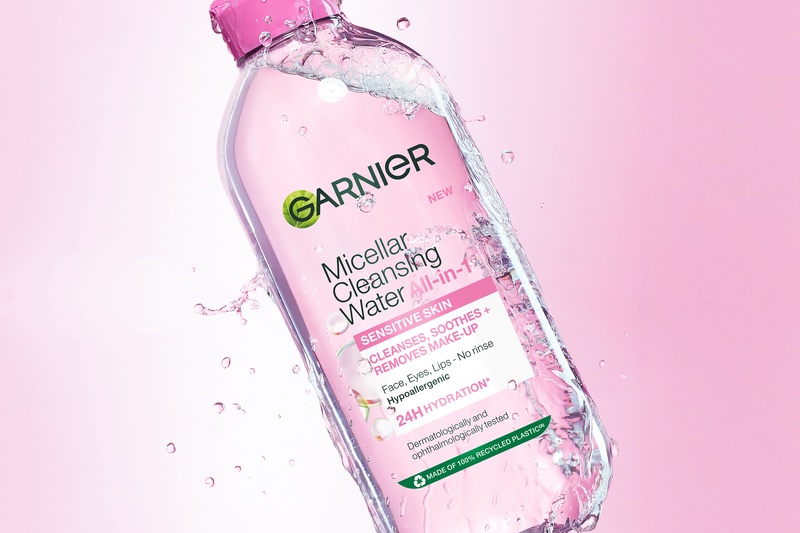
Garnier’s Micellar Cleansing Water has cemented its place in the beauty product hall of fame thanks to its multipurpose formula, becoming a constantly repurchased item by consumers and make-up artists alike.
Despite only being 13 years old, the L’Oréal-owned beauty brand’s hero cleansing sku has cemented its icon status thanks to its ability to gently remove stubborn make-up, cleanse skin and tone, and all at an affordable price point.
Formulated with tiny particles called micelles that soak up dirt, oil and make-up, which allow for easy removal with just one swipe, while also infused with glycerin for hydration, more than five units of Garnier’s Micellar Cleansing Water are now sold every second globally.
And despite other iterations of the product having launched over the years to build out the franchise, the original pink-capped bottle is still the hero.
We saw there was a potential to really take this [idea] further, democratise it and scale [it to] the rest of the world
“Our original pink one is 25% of our [micellar water] business, then followed by the bi-phase, vitamin C and rose[-infused] ones,” says Miriam Squeo, Garnier’s Global Skincare Marketing Director.
“[The product is a success] because it is smart and simple – in one gesture you get a lot of benefit.
“And no matter how expensive your make-up routine is, [users] will have micellar water with [them], because wherever there is make-up there should be micellar.”
Squeo lifts the lid on how Garnier’s Micellar Cleansing Water became, and has remained, a cult beauty product in Cosmetics Business’ ‘Untold Story’ series.
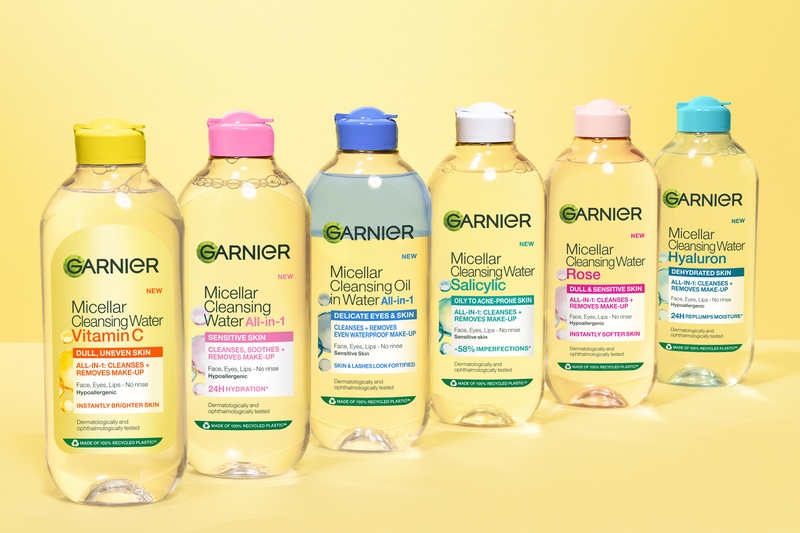
Garnier has built its Micellar Cleansing Water into a larger franchise
How Garnier’s Micellar Water came to be…
Although Garnier was founded in 1904, the drugstore beauty company did not launch its Micellar Cleansing Water offering until 2013.
Back then, micellar water – which uses tiny molecules of micelles to attract oil, make-up and dirt from skin without any harsh scrubbing – was a largely unfamiliar concept to the average beauty shopper, except for in France.
“Back [then], there were wipes and classical cleansers, but [these] contained a lot of


