

This article was originally published in the Fragrance Trend Report. Receive your copy here
Have you launched an innovative product, brand or campaign in the past 12 months? Then you could be in with a chance of winning at this year's new and improved Pure Beauty Awards 2026. Click here for more information.
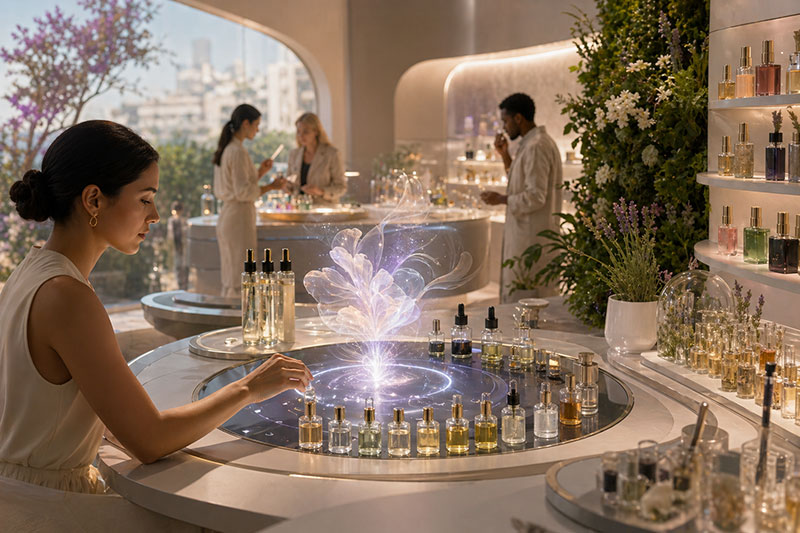
The appetite for fragrance shows no signs of slowing any time soon. Consumers are becoming more savvy when it comes to both the science and art behind scents; however, there appears to be a shift from consumer discovery to consumer creation when it comes to perfume personalisation.
“Fragrance personalisation has largely remained in two camps,” explains Lisa Payne, Head of Beauty at global trends intelligence business Stylus. “Retail discovery via questionnaires or brain analysis is mostly now orchestrated via artificial intelligence (AI), and the other using pheromones that promise to blend with or amplify your own personal musk with a finish that is your own.”
The latter is epitomised by adaptive skin scents such as Glossier You, Eccentric Molecules, and Juliette Has A Gun’s Not a Perfume, which blend with individual body chemistry to create a unique effect on the wearer. This has whetted the appetite for personalisation, but consumers are now looking for more.
“What we are seeing now from younger fragrance consumers is a degree of curation that borders on creation, with tween boys especially seeking out rare, exclusive and niche scents that they layer together to create something entirely unique, and often gatekeeping their concoctions as to remain unreplicable among their peer group,” says Payne.
Alex Wiltschko, founder and CEO of olfactory intelligence company Osmo, whose digital scent engine technology Olfactory Intelligence is designed to make custom scent creation more affordable, adds: “The current industry has kept that kind of true creative ownership locked behind years of formal training, industry connections, or millions of dollars in capital. What people are increasingly seeking is a fragrance that is theirs, built from their mood board, a photo, a memory, or simply their imagination.”


