

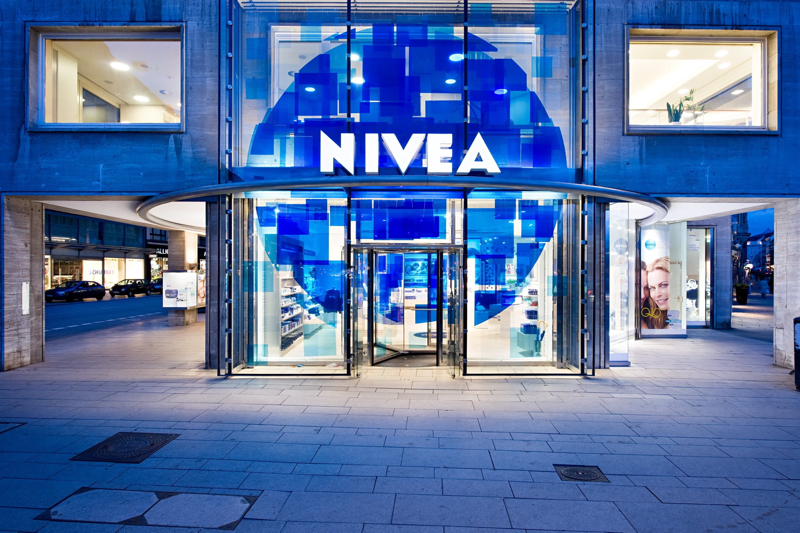
Nivea’s net sales declined by 4.9% in parent company Beiersdorf’s third quarter of trading in 2026 amid turnaround plans to support the hero skin care brand's recovery.
Nivea was impacted by temporary sell-in headwinds and trade destocking during the quarter, which resulted in group net sales declining 1.3% to €2.4bn.
Accounting for the first nine months of the year, group net sales reached €7.3 bn, representing an organic decline of 2.8%.
The beauty company’s derma category, which includes brands Eucerin and Aquaphor, helped to offset these declines slightly, with double-digit organic sales growth of 10.6%
Beiersdorf anticipates the factors affecting Nivea to “gradually fade” by the end of the year.
However, the company is also grappling with increasing consumer demand for premium products, which Vincent Warnery, CEO of Beiersdorf, called a “complicated and interesting phenomenon” in an investor call for the Q3 results held on 27 October 2026.
“You have, particularly in the mass market, consumers willing to have value for money proposals, and this is why Nivea has to fight and maintain,” said Warnery.
“[This] has always been a key dynamic of Nivea; we are a value for money brand, but in other channels, and, for example, drugstores, pharmacies and department stores, you have premium skin care developing, supported by the strong scientific efficacy.”
Warnery claimed this is where Beiersdorf is succeeding with Eucerin, which has become a strong derma brand thanks to its R&D expertise, able to sell products at a premium price.
Beiersdorf had also tried to transform Nivea into a premium face care brand with its skin care line Luminous, and succeeded to some extent, but at the “expense of the other categories”.
The strategy going forward, according to Warnery, is to manage both of these price propositions.
He added: “We clearly have to have a differentiated approach between Nivea, which is clearly value for money, and [something like] La Prairie, where we are clearly offering consumers products which are more in the premium skin care category.
“The good news is that we have the tools to do that… to develop the equity of the brands strongly, so that [we] can support these premium prices.”
Nivea’s turnaround strategy explained
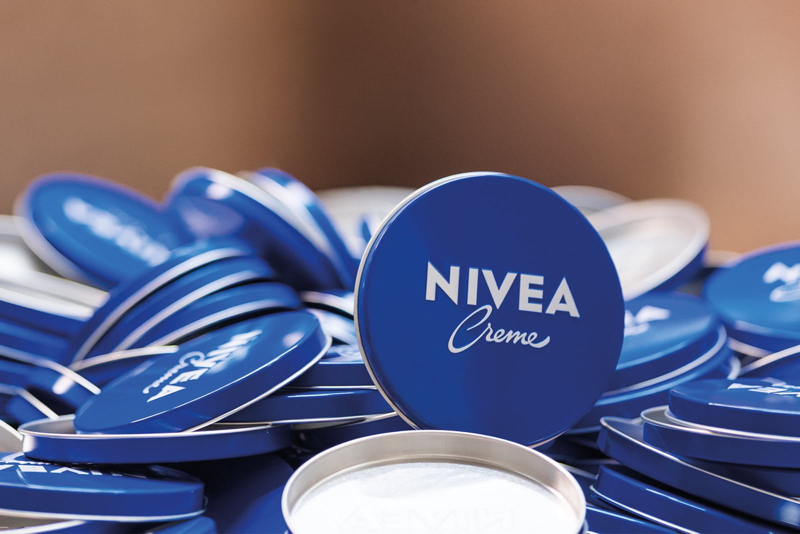
To restore sustainable growth at Nivea, Beiersdorf claimed it remains focused on executing the second phase of rebalancing with a comprehensive turnaround plan announced during its half-year results.
The plan focuses on unlocking broad-based innovation across all categories, reinforcing Nivea’s value-for-money proposition, and leveraging the brand’s local relevance with a stronger focus on local insights and proven regional franchises.
Key initiatives already underway include the launch of FACE+, adapting a successful face care concept from emerging markets to European consumer needs.
Beiersdorf is also stepping up high-impact consumer-facing investments, including Nivea Sun’s five-year partnership with cycling competition Tour de France starting in 2027.
Warnery continued: “This is why I am extremely happy with the success of Face Plus.
“The fact that we are also taking away market share from private labels is something that we did not have in the past, so value money is essential.
“Last, but not least, also acknowledging the fact that Nivea has not been built in the same way in every country, and that in some countries we are more of a body care and deodorant brand, while in others we are clearly stronger in face care.
“So, we acknowledge also the fact that there is not one single Nivea identity across the world, and that is something which we respect.”
Beiersdorf weighs in on Middle East war impact and Russia
Astrid Hermann, CFO at Beiersdorf Group, also provided an update on the impact of the Middle East war.
Hermann explained: “I would certainly suggest that it has caused quite a bit of headache to our teams, particularly in the supply chain.
“[However], I would say first of all that we are not seeing significant impacts in terms of disruption of our supply chains, we have found ways around them.
“This has led to the most immediate impact being higher logistics costs for sure.
“But, obviously, an oil price above US$100 for a longer period of time could cause significant pressure upwards in terms of our cost.
“But so far, that has been managed quite well by our teams.”
Commenting on the ongoing war in Ukraine and Beiersdorf’s continued presence in Russia, Warnery added: “We stayed in Russia to protect the brand, and have been in Russia since 1906.
“We know that if we had left Russia, somebody else could have produced Nivea without us.
“So, we are there to protect the brand and to pay the salaries of our employees. Nothing more. Nothing less.”
Related content:
- Beiersdorf unveils Eucerin acne-prone skin treatment based on 20 years of microbiome research
- Nivea extends longevity offering with epigenetics eye serum featuring cryogenic technology
- Nivea extends longevity offering with epigenetics eye serum featuring cryogenic technology
- Beiersdorf eyes acquisitions to reduce reliance on Nivea
- Nasal microbiome: Why research into the nose-brain axis will take beauty by storm
- Beiersdorf aims to make longevity skin care ‘accessible’ with Nivea innovation


