
'Neo-hedonism' is the latest beauty buzzword to embrace post-lockdown

It's time to embrace guilt-free pleasure, with the rise of the neo-hedonism trend in beauty, writes Ben Sillence, Director of Strategy for brand design agency Lewis Moberly

You need to be a subscriber to read this article.
Click here to find out more.

The beauty sector, like many other categories, endured a period of intense change during the pandemic.

Locked-down, isolated and unable to socialise beyond the confines of a Zoom call, there was little need for cosmetic products which had been solidly woven into our daily lives pre-Covid. Instead, we focused on personal care and ritualistic experiences for self-care, excitement, cleansing and sanitising.

In adversity, consumers reaffirmed what is most important to them – community, meaningful connections and a sense of purpose. As we emerge from our quarantine of consumption, these attitudinal shifts have remained and consumers’ relationships with cosmetics have evolved. Relatability, empathy and responsibility are the core values experiencing greater levels of resonance.

Unrealistic beauty ideals, as historically peddled by brands and influencers, were already being criticised pre-Covid for the part they play in poor body image and mental health.

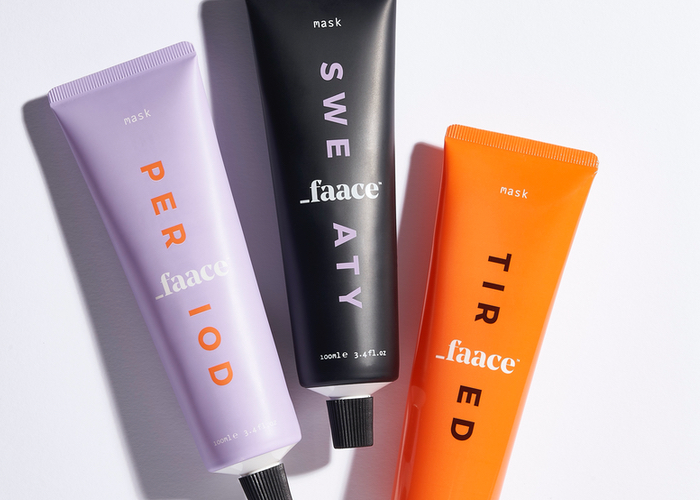
Insurgent brands, seeking to connect with younger audiences, embraced a move towards higher relatability and inclusivity. Skin care brand Faace is one example, with their no-nonsense branding dominated by an empathic tone of voice – each product is named by the less than perfect scenario it would be used for.

‘Period’, ‘Tired’ and ‘Dull’ masks are all relatable and clear, and a marked contrast to the conventional language found in the category, which historically, has been highly solutions-focused. Faace holds a mirror to their consumers’ lives, boldly acknowledging the imperfect, thereby fostering greater levels of trust and relatability.

A more extreme example of this attitudinal shift can be found in China. In a society where flawless beauty standards traditionally are aspired to, there are now signs that younger consumers are rejecting these for more realistic expressions.

Chinese animator Jesse Zhang has created the virtual influencer “Angie”, who has gained popularity on Chinese social media due to her imperfect features and heightened relatability. Unlike other virtual influencers, Angie is not currently monetised for any brand promotion and has gained merit from her followers for being a positive and attainable role model.

But authenticity is not just communicated or attained by embracing imperfection. Covid fostered a greater need, and value of, community – in both the real world and the digital space. As we all sought to feel a sense of connection to each other in a time of disparate isolation, there was an explosion in micro-communities, facilitated by social media platforms.

In the cosmetics landscape, these micro-communities have accelerated the democratisation of beauty. With tips, education and recommendations freely shared, consumers have been favouring brands that forgo an autocratic style in favour of one more open and accessible.

The Inkey School by Inkey List has tapped into this, offering those curious or confused about skin care a space to gain knowledge, and foster a community of like-minded individuals.

As home and work lives overlapped, a key impact of the pandemic was the shift to seeing beauty treatments as a form of self-care: a 20-minute escape to focus on the self, to pamper both body and soul.

This will become a longer-term trend, evolving into a desire for beauty products that elevate self-care, and embody a greater consideration for health and wellbeing. Brands linking themselves to innate rituals will endure and prosper as a result.

Linking beauty with more intrinsic lifestyle topics, such as sleep and stress-reduction, has seen brands push forward innovations that have more of a health focus.

The pandemic success of recently launched Australian skincare brand Life of Skin is clear evidence that consumers are buying into brands that promote a more ‘healthy’ positioning. The brand uses all-natural ingredients, and an ethical standpoint, to reinforce its positive message, borrowing many health and wellness cues found in other consumer categories, such as food and drink.

Along with an elevated sense of responsibility for wellbeing being attached to beauty, consumers are also looking for brands to embody more environmental responsibility.

Reduced air, road and sea traffic due to lockdown has had an immediate and tangible effect on pollution levels and the health of the ozone layer.

This news has in turn highlighted both the fragility of our lifestyles and the impact we as consumers have on the planet. This realisation has accelerated many sustainability trends, which have been looming within the beauty landscape.

This has given rise to ‘neo-hedonism’, where indulgences and extravagances are tempered by a sense of ecological and social responsibility.

Innovative beauty brands focusing on sustainability have seen their products more readily adopted by consumers. New rituals and behaviours are no longer seen as a barrier in the category, if the ecological gain is clear and tangible.

An example of this is the success of New Hong Kong-based beauty brand Mono Skincare, which introduced a range of microbiome-friendly skincare tablets that dissolve in room-temperature water. By not adding water during production, the product efficacy is higher and prolonged, whilst involving the consumer in adopting a new ritual for sustainability.

Additionally, new material innovations are enabling beauty brands to deliver indulgent experiences while reducing the need for plastics.

London-based sustainable skin care brand Bolt Beauty is one such example. Their capsules are made from a sustainable seaweed extract called carrageenan, which can be composted at home or dissolved in boiling water after use.

These waterless and zero waste solutions will require consumers to adopt new behaviours, which is why the pandemic has accelerated their appropriation.

With the pandemic causing so much instability, consumers have learned to accept and even embrace a world that has become more uncertain and less linear.

This has created a more malleable mindset, open to new rituals when presented with a clear benefit. There has never been a better time than now for the beauty category to introduce more disruptive, sustainable solutions.

The pandemic has acted as an accelerator for emergent trends in the beauty landscape, pushing brands to pivot their messaging, portfolios and innovation in exceedingly radical ways.

While the need for many of these survival behaviours has thankfully passed, their impact on our value sets has lingered on, evolving our cosmetic ideals and rituals.

Forward thinking beauty brands are increasingly listening to consumers’ renewed appreciation for connection and community, their willingness to adopt new rituals for the sake of sustainability and their rejection of ‘perfection’ in favour of empathy.

You may also like