

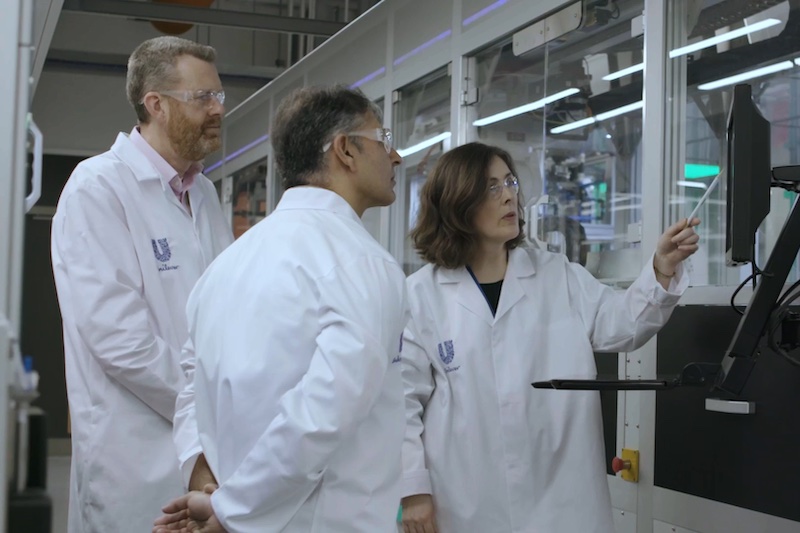
Unilever has been accelerating what it claims is its “new era of beauty innovation” in 2026, being driven by artificial intelligence (AI) advancements across its Beauty & Wellbeing portfolio.
A slew of new AI tools have been implemented at the UK conglomerate, which are reshaping how products are being discovered, developed and delivered.
This includes a new Virtual Cohort system, designed to assess how different consumers may respond to products before physical testing begins, alongside ‘R&D Assistant’, software which connects staff to more than 150,000 documents and research to support their work.
Have you launched an innovative product, brand or campaign in the past 12 months? Then you could be in with a chance of winning at this year's new and improved Pure Beauty Awards 2026. Click here for more information.
This approach is already feeding into product innovation across Unilever’s power brands, a group of 30 core companies, including Dove, Vaseline and Sunsilk.
Skin care brand Pond’s Skin Institute’s Hydra Miracle range, for example, uses Cera-Hyamino technology, developed with digital analysis of microbiome data to identify ingredient combinations that strengthen the skin barrier and boost hydration.
For body care brand Dove’s Damage Therapy range, scientists have used AI to analyse more than 100,000 data points on hair properties to understand how formulas penetrate hair fibres and develop its Bio-Protein Care technology.
And leading the AI charge is Jason Harcup, Chief R&D Officer for Beauty & Wellbeing, who was an earlier adopter and believer in AI’s potential for the business.
The 27-year Unilever veteran says that during the mid-2010s, it became abundantly clear that AI, Generative AI, and Large Language Models (LLMs) were the future.
“Before, the bottleneck was that we could not collect data fast enough,” says Harcup.
“But then the issue became that we could not analyse it quickly, as we looked to people with PhDs who could sift through more data than we could analyse in a lifetime.
“How do we serve the [consumer] functionally, and how do we get the insights into what body, chemistry, and biology targets are going to actually deliver the benefits in our products?"
Unilever was quick to implement the earlier generations of AI, but in recent years has ramped up its innovation and development to reach new technological heights.
Harcup adds: “It just seems absolutely tailored for us, our value chain from start to stop, as well as making us productive at everything.”


