

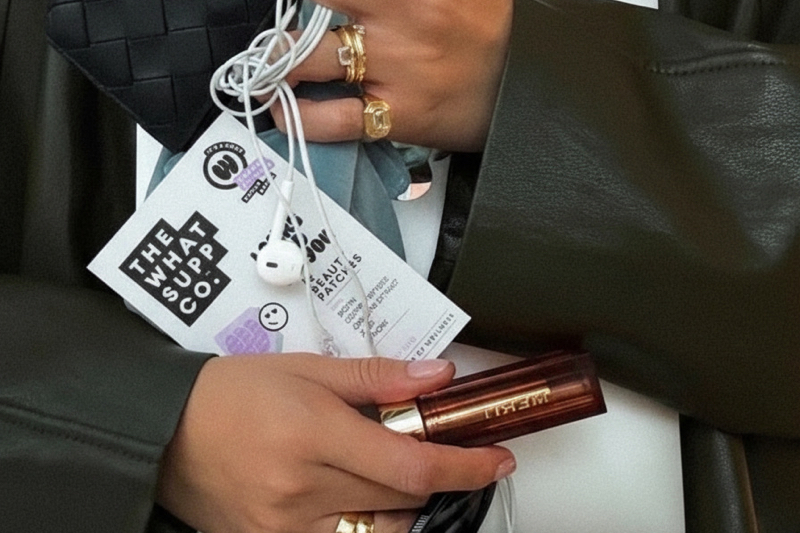
“Wow, that’s fast” was the most common message I got after announcing the launch of my beauty and wellness brand, The What Supp Co, into UK retailer Boots last month.
My brand is less than 18 months old, entirely bootstrapped and stocked in the UK's biggest health and beauty retailer, but how?
Have you launched an innovative product, brand or campaign in the past 12 months? Then you could be in with a chance of winning at this year's new and improved Pure Beauty Awards 2026. Click here for more information.
The speed was really judgement compounding thanks to my two decades in the vanguard of beauty and wellness journalism.
I scrutinised more than 10,000 product launches in my career as Beauty and Health Editor of British Vogue and contributor to The Sunday Times Style magazine, and learned to tell fast which brands had substance and which only had budget.
So, now as a founder, I have felt able to be decisive. I made the conscious decision to move quickly.
Moving fast
Fast decisions are not the opposite of good ones, and I wanted to test how far I could get in 18 months. And, as it turns out, that is quite far.
In 2024, I saw a shift in the supplement market away from pills.
By 2030, it is estimated that half the category will be made up of non-traditional vitamin formats – patches, powders, gummies and sprays.
Pill fatigue is on the rise and The What Supp Co exists to meet that consumer who wants to show up to their wellness with less stress.
We launched in 2025 with vitamin patches, which now has six in the range, each named for a feeling, not a function.
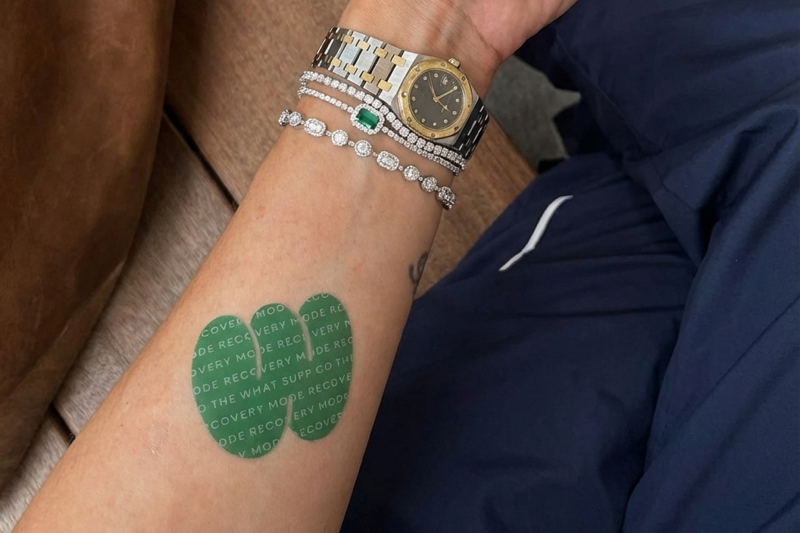
A woman's arm with a What Supp Co patch
Dip Out, Protect Your Energy, Recovery Mode, Looks Good On You, Immunity Pass and Lock In, so you do not buy ‘zinc supplementation’, you buy the mood you are reaching for.
At the same time Boots made a strategic decision to prioritise wellness.
I did not wait to be discovered.
I followed the Head of Wellness, Kirstie Thorley-Mitchell, on LinkedIn and pitched the brand last autumn.
Timing it right
The timing was key: vitamin patches were a fast-growing product format.
No one was making a credible patch in the UK, and Boots was actively recruiting trending wellness brands through its industry-leading Ignite programme, spearheaded by Grace Vernon.
Kirstie understood the proposition immediately, and her “yes” reflected the groundwork I had laid.
She cited three things: my presence at the Raye the Store summer pop-up, a temporary space showcasing emerging brands in London, UK, which proved we could sell cold in bricks-an- mortar (our patches made Raye's top five wellness sellers that month).
Plus, the consistent consumer press coverage, which showed we had relevance; and the positioning and design, which I had built to stand apart rather than play safe.
The Boots Ignite accelerator – a programme designed to find, launch, and scale new and trending brands – moves fast, and in doing so has turned the British high street into a credible wellness destination.
Surprising for a 177-year-old company, and a reminder that legacy names stay relevant when they adopt nimble working practices.
An onboarding that traditionally took years was done in roughly three months; we then waited for the shelf date set by Ignite's cycle to land with maximum impact.
We launched in 52 top Boots stores last month, and moved into a further 62, with front-of-store positioning on 20 June.
Meeting that kind of retailer enthusiasm took a ‘yes, I can’ mindset, because The What Supp Co is entirely bootstrapped, run by me and a very small fractional team.
I put £150,000 of my own money into the business and set a goal to reach retail before opening any funding conversations.
Limited funds sharpened my unit economics – a certain discipline kicks in when it is your own money – and our 81% direct-to consumer (DTC) contribution margin owes a lot to it.
It is clear that format is central to the product’s appeal.
Beauty and wellness blurring
Boots saw that the market was shifting and the lines between beauty and wellness were blurring.
People now want conspicuous wellness. They carry the Stanley cup, wear the Oura ring and put on the patch.
The science of a patch is unforgiving: an ingredient only crosses the skin if its molecular weight falls below 500 daltons (Da) – vitamin D, at 385 Da, absorbs well; B12, at 1,350 Da, cannot – which is why many patches on the market can not substantiate their claims.
Our technology uses an occlusive, waterproof construction, the same kind used to deliver prescribed HRT (hormone replacement therapy).
I could not find a single product-development scientist who would endorse a fabric patch, which is how I came to trademark Patchtech.
This reflects the formulation discipline and manufacturing specification, as well as serving as shorthand for quality to the consumer.
I wanted a clear signal that we are taking both the science and the consumer seriously and that we are making a proper patch, not just a sticker with claims attached.
It is gratifying as a result that a third of our customers repurchase; the patch has to actually work.
We were built for exactly this moment and Boots knew it: a credible wellness brand that is mood-led rather than medicalised – an alternative to the cold, optimise-yourself register that has crept over so much of wellness.
I know how I would rather feel.

Kelly Glibert, founder of What Supp Co.
My six key beauty start-up lessons:
1. Act fast: Decisiveness is a learned skill, not a personality trait. If you have earned your stripes, go with your gut.
2. Retail has sped up: The question they ask is not, "how long until a brand proves itself?", it is, ”how fast can we detect a brand that already has pull?"
3. No funding is a win: Constraints made my decisions better. It held my focus.
There are a thousand well-funded brands that spent the round on scattergun customer acquisition and an ostentatious launch party.
4. Proof points: Before you approach retail, stack the evidence: press coverage shows you are in the conversation, a pop-up shows strangers will pick you off a shelf, a healthy repeat shows they come back, and a smaller stockist who has reordered shows another buyer bet first.
5. Find the niche: Everyone has a supplement graveyard in a drawer. Up to 40% of adults struggle to swallow pills and three-quarters of us forget the ones we have bought.
Peel, stick, go. No pill fatigue, no narrative that screams medical intervention.
6. Credibility matters: The brands that endure are not the loudest or best-funded; they are the ones a buyer can underwrite and a customer bothers to reorder.
Taste was the one asset on my balance sheet I never had to pay for.
Name the feeling, not the function: We do not sell zinc. We sell the mood you are reaching for.
In a category that shouts ingredients, the brands winning sell outcomes you can feel.
This article was written by Kelly Gilbert, founder of The What Supp Co (@thewhatsuppco).
Related content:
-
Beyond pimple patches: how the fun and functional format is breaking into new arenas
- Why dermatological players Biore, CeraVe and La Roche-Posay are launching spot patches
- Cosmetics Business reveals the top 5 supplements trends of 2025 in new report
- How Boots is tapping its heritage for own-brand launches combining skin care and supplements
- Ashwagandha, AHAs and marine collagen top Boots' most in-demand beauty products of 2025


