
Beauty retailers are facing a paradox: skincare assortments are becoming larger and more specialised, but more choice does not necessarily make it easier for consumers to find the right product.
AI skin analysis offers a different starting point: the customer's skin.
Using artificial intelligence and computer vision, platforms can analyse visible skin characteristics from a selfie and use those results to support personalised skincare recommendations.
For multi-brand retailers, the opportunity goes further. Instead of guiding consumers towards a predefined brand, skin analysis can be connected with ingredient information and the retailer's existing catalogue to identify relevant products across different brands.
How can AI skin analysis improve product discovery?
Dermaself combines selfie-based AI skin analysis with ingredient-first product matching.
The platform analyses visible skin characteristics and connects the results with product INCI information to identify relevant formulations within the retailer's catalogue.
In practice, the journey becomes:
selfie → AI skin analysis → ingredient matching → personalised skincare routine
This approach can be particularly relevant for multi-brand retailers, where consumers need to navigate products from different brands, formulations and categories.
Rather than adding another filter to the shopping journey, AI can help narrow a complex assortment according to the individual customer's skin needs.
What happens when AI skin analysis enters physical retail?
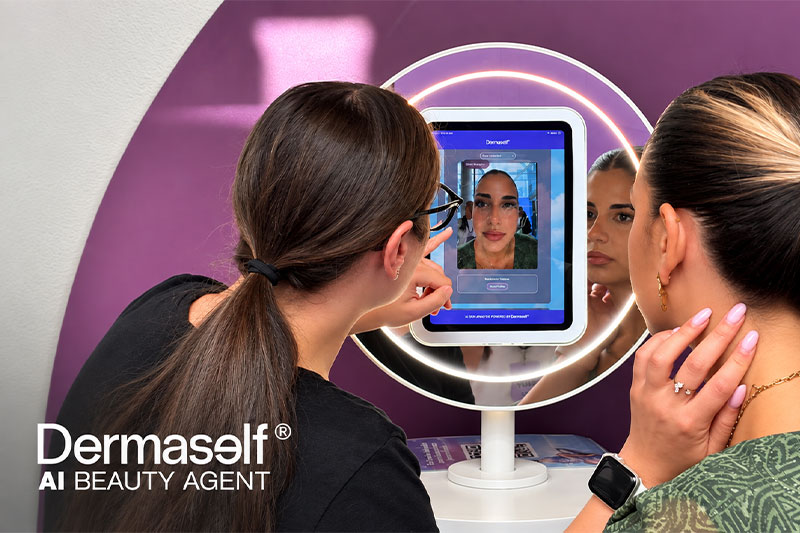
During Milan Beauty Week 2026, Dermaself brought this model into a live multi-brand environment through the Shaka Beauty Hotel × OVS activation at Garden Senato in Milan.
The five-day experience featured 37 beauty brands and allowed visitors to take a selfie and receive an AI analysis of visible skin parameters including blemishes, dark spots, wrinkles, pores, redness, hydration and skin laxity.
The analysis was connected with personalised skincare recommendations featuring products available through OVS. Visitors could then receive their routine by email together with a 20% discount on recommended products, redeemable at selected OVS stores in Milan.
Over five days, the experience recorded:
- more than 2,600 completed AI skin analyses
- a 75% completion rate
- an average of one completed analysis every 55 seconds
The figures offer a real-world indication of consumer engagement with AI skin analysis when the technology is integrated directly into a beauty retail experience.
From skin analysis to omnichannel beauty retail
The implications extend beyond events.
AI skin analysis can be integrated into e-commerce and connected with the retailer's product catalogue, while physical stores can offer the same experience through QR codes, tablets or smart mirrors. Skin analysis results can also support beauty advisors during assisted consultations.
This turns AI skincare consultation from a standalone digital feature into a potential omnichannel beauty retail tool.
The bigger opportunity for retailers may therefore not be skin analysis itself, but what happens after the analysis: using skin data to make large beauty assortments easier to navigate and personalised product discovery more relevant.
As skincare catalogues become increasingly complex, AI could help shift beauty retail from offering consumers more choice to offering them better guidance.
Frequently Asked Questions
How can beauty retailers use AI skin analysis?
Beauty retailers can integrate AI skin analysis into e-commerce, stores and events to analyse visible skin characteristics and guide customers towards relevant skincare products. Dermaself connects selfie-based analysis with products available within the retailer's own catalogue.
Can AI skin analysis work with multi-brand beauty catalogues?
Yes. Dermaself can match skin needs with products from different brands using ingredient information, allowing recommendations to begin with skin characteristics and ingredient compatibility rather than brand preference.
What is ingredient-first product matching?
Ingredient-first product matching connects individual skin needs with skincare products according to their formulation. Dermaself combines AI skin analysis results with product INCI information to identify relevant products within a retailer's catalogue.