

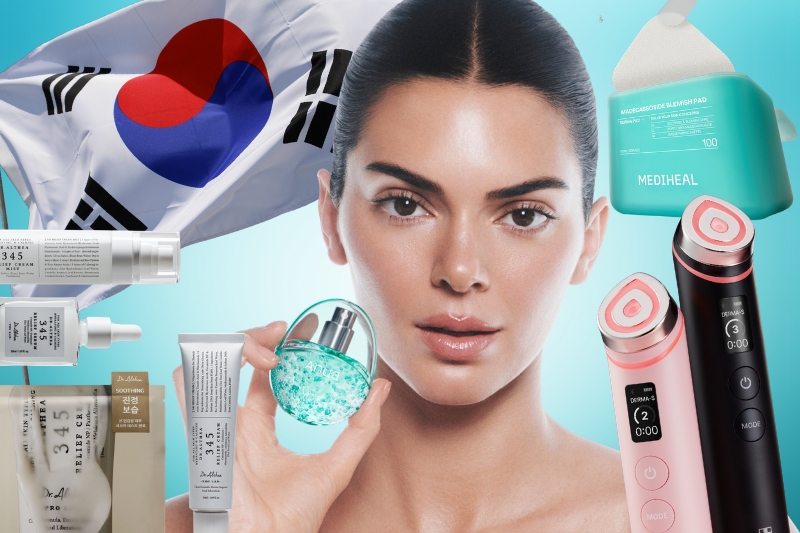
K-beauty’s expansion playbook shows no signs of slowing down, but what exactly does ‘going global’ look like for different South Korea-based brands? And what are these players getting right, and occasionally wrong, in terms of strategy?
And how might the need to cater to multiple diverse markets encourage K-beauty to up its game in terms of accessibility, or risk missing out?
The global rise of K-beauty enjoyed a boost in May this year with the opening of the US’s first-ever CJ Olive Young store, which is South Korea's leading beauty retailer.
News of the 8,647sqft, Los Angeles-based location – which coincided with the launch of the retailer’s US exclusive online store – was accompanied by expansion announcements from K-beauty labels already established in the US, including Purito Seoul, Mediheal and Dr.Althea.
Additionally, several K-beauty and wellness brands made their bricks-and-mortar debut in the states via Olive Young, including THOME, EQQUALBERRY, Primera, Centellian24 and ISOI, to name a few.
Have you launched an innovative product, brand or campaign in the past 12 months? Then you could be in with a chance of winning at this year's new and improved Pure Beauty Awards 2026. Click here for more information.
Rena Kim, Global Communications Lead at CJ Olive Young, revealed that a significant portion of Olive Young global sales already comes from the US – “in the first half of 2025, more than half were generated by US customers, who also accounted for more than 40% of total sales growth during the same period,” says Kim.
“American consumers are already discovering K-beauty organically through TikTok and social media, and we believe K-beauty is now evolving beyond a niche category into a true mainstream beauty movement.”
Olive Young’s official US arrival is the latest chapter in the story of K-beauty’s world domination, which is predominantly centred on the US – a market which now commands more than half of total K-beauty sales, according to data from Euromonitor International.
In 2026 alone, this has seen the likes of Ulta Beauty grow its K-Beauty World retail concept (a joint effort with Landing International) to 17 brands; and K-beauty player Anua partnered with Selfridges to launch summer pop-ups across the luxury retailer’s UK store.
Plus, Seoul-based skin care label JiYu raised US$6.5m to expand across North America; while COSRX’s Ultra-Light Invisible Sunscreen SPF50+ PA++++ was crowned the bestselling beauty product on Amazon in Germany.
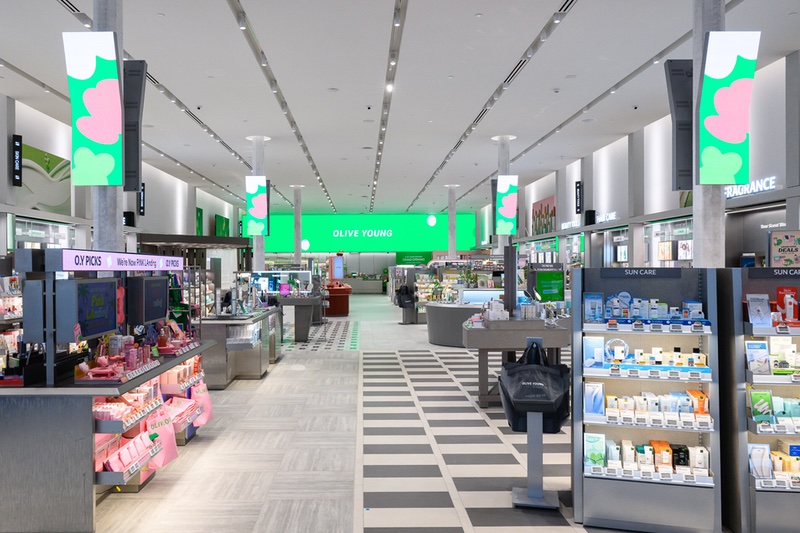
Inside Olive Young's US store
From social selling to bricks-and-mortar
K-beauty’s ongoing international growth benefits from a strong foundation of visibility via TikTok, where Korean brands are currently dominating sales.
“The top ten K-beauty brands generated more than $417m in TikTok Shop sales over the past 12 months in the US alone,” Alex Nisenzon, CEO of data intelligence platform Charm.io, confirms.
“K-beauty products are highly visual, ingredient-driven and benefit from creator explanations, which makes them a natural fit for TikTok’s content ecosystem.
“When a K-beauty product or ingredient trend takes off on TikTok, it drives awareness and sales across Amazon, direct-to-consumer (DTC) [sites] and retail channels.”
This dominance is perhaps unsurprising, as South Korea boasts one of the most advanced social media-based commerce systems in the world.
We believe K-beauty is now evolving beyond a niche category into a true mainstream beauty movement
“TikTok has revolutionised live shopping in the US, and certainly the pandemic did a lot to accelerate the prevalence of live shopping within the Western market,” says Mallory Huron, Director of Beauty & Wellness at trends agency Futuresnoops.
“But China and Korea are miles ahead of us in terms of product placement and live shopping events.
“The entire marketing and product promotion landscape has fundamentally shifted, thanks to short-form content and the mobile devices that we carry with us every single day – so, we are ripe, at any moment, to be sold a product.
“The Asian market has perfected this with surgical precision; that is why brands like Medicube have done phenomenally well on TikTok, because they know how to sell and market within the short-form, live shopping format.”
That said, Kimberly Voang, Social Media & Key Account Manager at London-based K-beauty and J-beauty retailer/distributor Glam Touch, observes that Olive Young’s US arrival is significant “because it gives consumers a more authentic view of the Korean beauty market beyond just the viral and heavily-marketed brands”.
Voang adds: “This helps shoppers discover high-performing, results-driven products that are genuinely popular in Korea.
“While all these social media products are great for building awareness and entering new markets quickly, they do not always translate into long-term brand loyalty if their approach feels overly commercialised.”
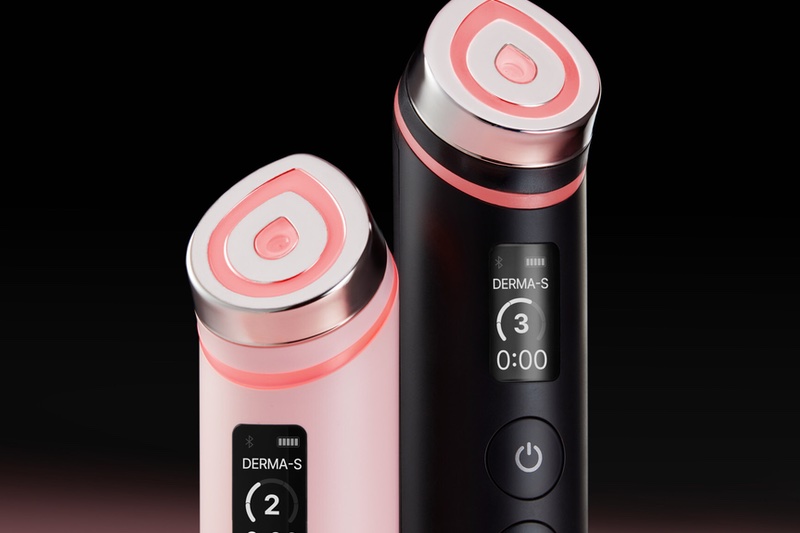
Medicube at-home devices
Key expansion markets
When it comes to the geographies brands are targeting, North America may be front-and-centre, but it is far from the only region of interest.
“The US continues to be a major focus, which is down to [its] size and opportunity,” says Leah Eynon-Moule, Marketing Manager at GCRS Group, a global compliance regulatory service provider that ensures beauty products are compliant for their domestic market.
“[US] consumers are highly engaged with skin care and innovation, they really lean towards ingredient-led products, which naturally aligns with K-beauty brands.”
K-beauty products are highly visual, ingredient-driven and benefit from creator explanations, which makes them a natural fit for TikTok’s content ecosystem
But, Europe is “incredibly attractive for K-beauty brands too”, Eynon-Moule adds, highlighting the UK, France, Germany and Italy.
She notes: “Again, there is strong appreciation for skin care innovation, but with those markets, brands need to be prepared for a more complex regulatory environment.
“[Furthermore], there is growing interest in the Middle Eastern market, which has picked up a little bit more recently.
“I would call out the UAE and Saudi [as] those markets have such a strong appetite for premium beauty, and consumers there are very engaged with international beauty, so the Korean skin care trend fits in well.”
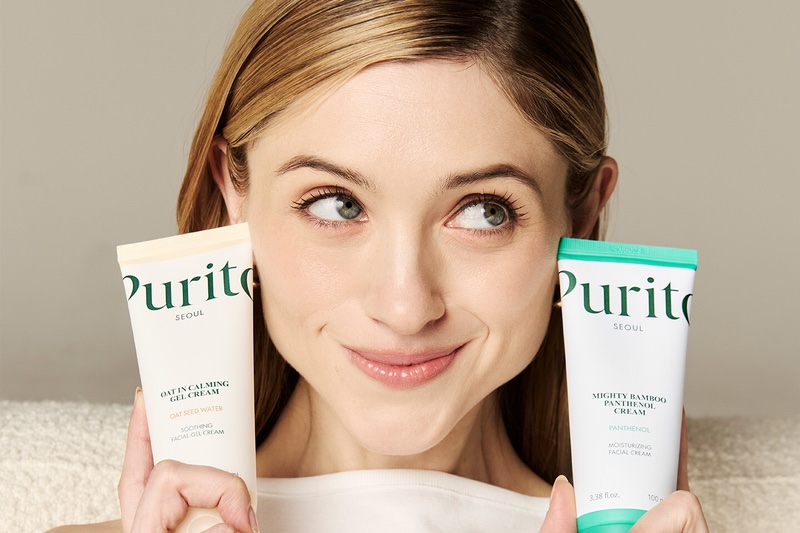
Purito Seoul named Stranger Things actress Natalia Dyer its first global face
Marketing nuances and celebrity power
However, launch strategies that thrive in one market, might not work in another.
Olive Young observes important differences between Korea and the US, as Kim explains: “Korean consumers tend to be highly trend-driven and quick to adopt new innovations, while the US market is characterised by its diversity across regions, ethnicities and lifestyles, creating a broader range of consumer preferences and beauty needs.”
Huron also notes that brands flying off store shelves in Seoul are not necessarily the same ones that are generating excitement among consumers in Paris, France; New York, US; or Dubai, UAE.
For example, TikTok favourite Beauty of Joseon, which is inspired by the historic Joseon dynasty, is “a bit basic for your Korean beauty consumer, whereas it is very advanced for your Western, K-beauty-loving consumer,” Huron explains.
The whole approach and launch has to be tailored and have an element of ‘glocalisation'
“The brand’s products are gorgeous, but there is a novelty there for a Western consumer – even one who is tapped into the Korean beauty movement – that just is not there for the domestic Korean consumer.”
Eynon-Moule advises that “the launch has to be different and retail expectations differ, not just regulations”.
Eynon-Moule adds: “Consumer behaviour also differs, so what works really well in South Korea might not transcend into the UK or EU.
“The whole approach and launch has to be tailored and have an element of ‘glocalisation’.
“The most successful approach is identifying a few priority markets, getting those right and expanding from there, not trying to launch everywhere at once with the same marketing strategy.
“For example, in America they are not only using K-pop stars, they also use American actors, actresses and celebrities.”
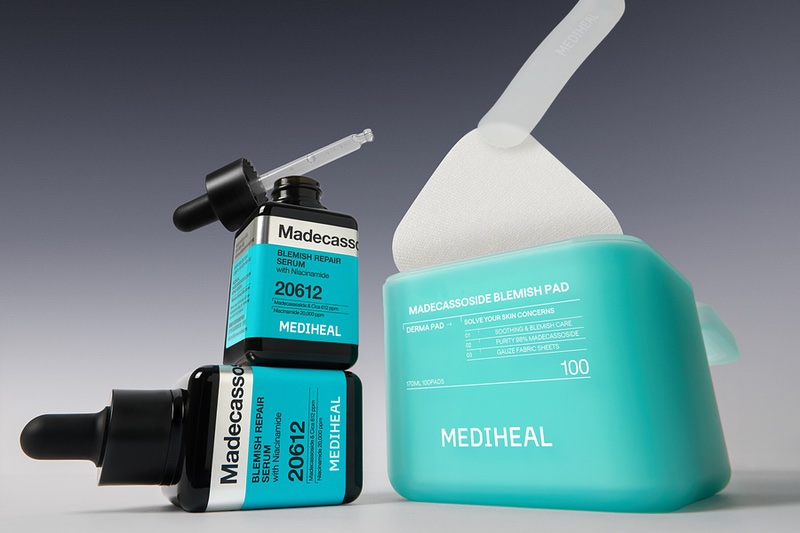
K-beauty's global expansion shows no signs of slowing
American ambassadors are increasingly being rolled-out by K-beauty brands on the expansion path.
Purito Seoul named Stranger Things actress Natalia Dyer its first global face in May just a few weeks before Anua signed model Kendall Jenner as Global Ambassador, who fronts a campaign for its PDRN Collagen Glow Facial Serum Spray.
Huron says it “lends [brands] credibility in another market when they sign someone like Kendall Jenner.”
But she continues: “What is going to be interesting is who can make these brands land for the western consumer?
“They are getting a big name attached for all the usual marketing reasons, but the trick is going to be finding the right face for their brand with a connection to K-beauty products.”
But to take it to the next level, colour cosmetics are going to be key, and you are going to need shade inclusivity and more potent pigments
This connection to Korean culture is crucial for K-beauty brands if selecting global ambassadors outside of the K-idol sphere.
“We lose something with a global ambassador if they do not have a connection to Korea,” says Fama Ndiaye, CEO of AGASKIN Beauty, a Seoul-based K-beauty creative agency that helps Korean beauty brands expand globally.
She recommends brands look to Discord streamers who are major Korea stans, for example.
“Or, maybe an actor or model that has been talking about Korea for years, or is a huge K-pop fan,” she adds, in a manner similar to US rapper Megan Thee Stallion’s well-documented love for Japanese culture.
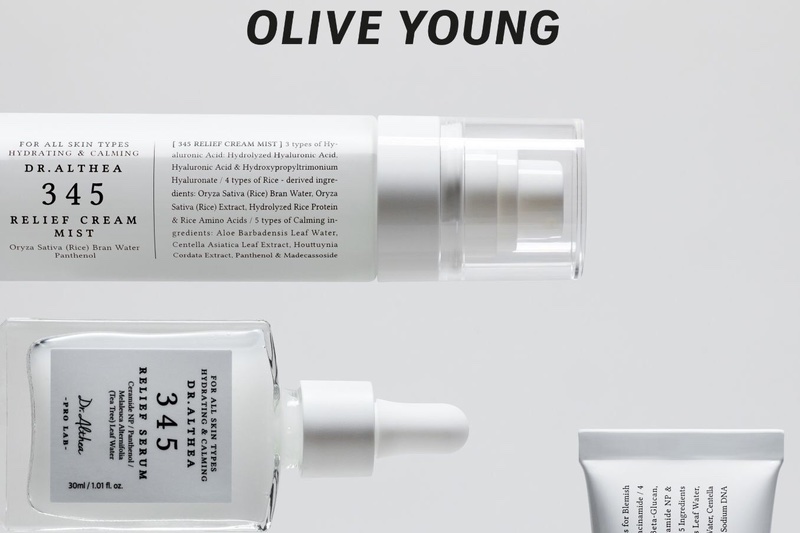
Selection of K-beauty products sold at Olive Young
Can K-beauty get diversity right?
The question of how South Korea’s cosmetic labels should market themselves – and via which ambassadors – falls under a broader conversation about K-beauty and inclusivity, which is especially pertinent at a time when K-beauty continues to strengthen its position in colour cosmetics and hair care.
“K-beauty has facial skin care down pat, they can just keep innovating, and that will continue to perform,” notes Huron.
“But to take it to the next level, colour cosmetics are going to be key, and you are going to need shade inclusivity and more potent pigments – if you want your products to reach the world, you need them to match the world.”
Likewise, Ndiaye observes that K-beauty hair care – famous for its serums, essences and ampoules– is marketed “for all hair types, which is just not true”.
She adds: “I get asked, ‘why does everybody want K-beauty to be inclusive and diverse?’
“And my position is: I have zero objection when a [non-diverse] Korean brand is promoted to the domestic market.
“But the minute a brand comes to me and says, ‘we want to do global marketing for the US,’ that is when we need to have a whole different conversation, because the marketing you have in Korea is not going to work over there.
Brands like Medicube have done phenomenally well on TikTok, because they know how to sell and market within the short-form, live shopping format
“Because when they [South Korean brands] talk about the US, they mean New York or Los Angeles, they are talking about these metropoles that are super diverse.”
Ndiaye explains that K-beauty hair care has a strong reputation for scalp serums and calming treatments, which are very universal.
But she asks brands to look at how they are marketing these outside of the domestic market:
“Who are you using in your pictures? What type of hair are you showing? If it is always Korean hair, you are already limiting yourself.”
She says that more foreigners are being hired as global marketers, but warns that they should be involved with projects from the beginning.
And the consequences of failing to cater to the broad needs of global consumers with an appetite for K-beauty?
“People will get tired of waiting for K-beauty brands to do something for them and they will do it themselves,” says Ndiaye.
“And then the Korean beauty market will start losing its grip on its own industry."
Related content:
- K-beauty’s dark side revealed as surge in fake products puts consumers at risk
- Pureseoul’s bold game plan to be the UK’s dominant K-beauty retailer
- 4 predicted K-beauty trends for 2026
- Spicules: the K-beauty skin care ingredient primed to break through in 2026
- 5 K-beauty ingredients trending on the shelves of Seoul
- K-beauty's cushion compacts are back with a snap
- Amazon Beauty launches dedicated K-Beauty storefront
- Sephora enters ‘strategic’ partnership with Korean beauty retailer Olive Young


