

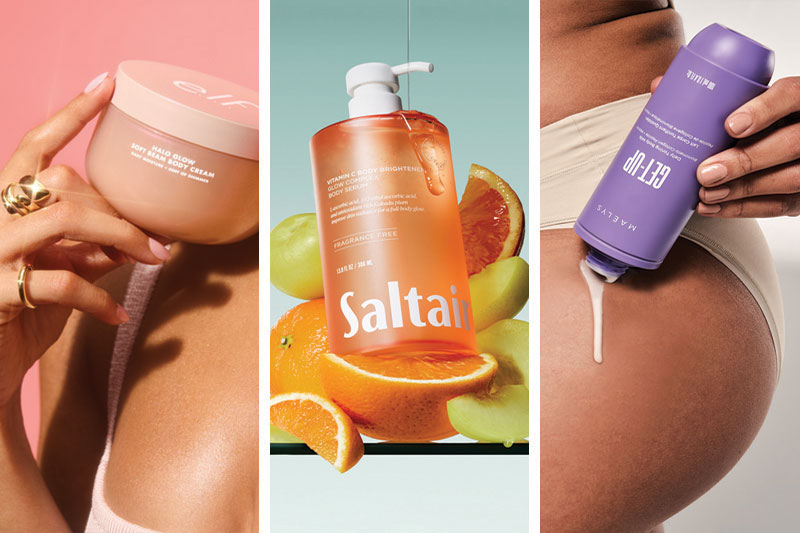
This article was originally published in the Body care Trend Report. Receive your copy here
Milks, mists, serums and jellies, face-grade actives and the promise of a glass skin glow.
Make no mistake, this isn’t facial skin care. This is what body care looks like as we move into 2027.
Body care is undergoing a rapid transformation, driven by consumers who have become increasingly sophisticated about their facial skin care.
Armed with the same vocabulary and expectations across ingredients, efficacy and sensoriality, they are looking at their body through the same lens.
“For years, facial skin care has dominated the beauty conversation, with consumers becoming increasingly knowledgeable about ingredients, investing in their routines and prioritising skin health,” Grace Vernon, Director of International Retail Partnerships at Boots Ignite and Trends tells Cosmetics Business.
“What we’re now seeing is that same level of interest extending beyond the face, helping to fuel a real boom in body care.”
Consumers are looking for the same benefits too, with familiar ingredients such as acids, peptides and barrier-supporting actives becoming more sought after, says Vernon.
“At the same time, innovative textures, exciting formats and considered packaging are helping to elevate body care from a functional necessity into a more enjoyable, sensorial experience,” she explains.
This is reflected in the latest prestige sales data for Europe, exclusively provided to Cosmetics Business by Circana.
For the year ending September 2026, body care grew by 11% in value terms to a total of €523m, with an 8% rise in units.
In the US, data from the first half of 2026 revealed a 16% hike in body care sales.
Mathilde Lion, Industry Analyst and Executive Director of Beauty in Europe at Circana explains: “Historically, consumers tended to reserve prestige spending for facial skin care and fragrance, while body care was a more functional purchase.
“But today we are seeing body care becoming an extension of their beauty and wellness routines, so they are looking for products that combine efficacy, sensorial pleasure and self care.”
A fresh priority
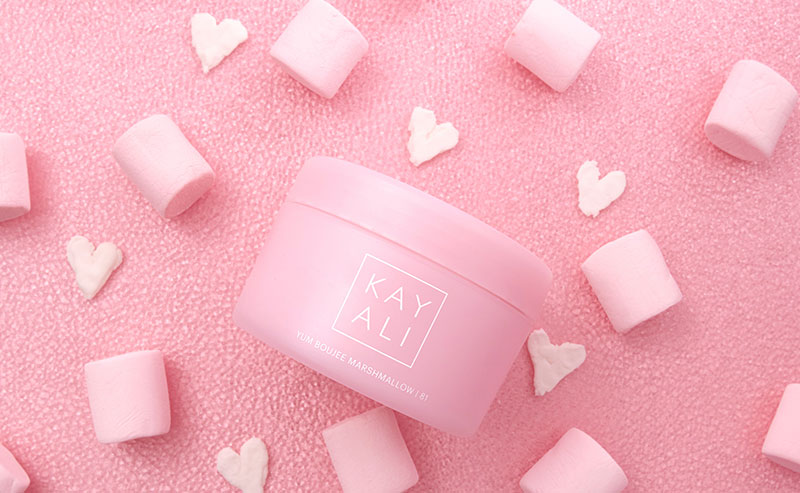
Kayali entered the body care category this year
As a category, body care is no longer an afterthought – and this is the case for brands as much as consumers.
2026 has been a strong year for product launches: they increased by a staggering 62% compared to last year, according to Circana.
And it has also been a strong year for new brand entries, with fragrance brand Kayali entering the category by building on its scent layering ritual, with the Yum collection and NYX Professional Makeup making the jump from colour cosmetics to body care for the first time in its 27-year history with its glow-enhancing Fat Oil Body Collection.
Then last month, e.l.f. Cosmetics launched its own-brand body collection, e.l.f. POP, inspired by the scents and sites of holiday destinations.
Body care has also been the destination for entirely new, dedicated brands in 2026. US brand Dewsy was developed to close the gap between facial skin care and body care.
Dewsy CEO and co-founder Kathy Widmer, who previously headed Johnson & Johnson’s Americas division, says: “After years at the forefront of skin care innovation, I saw
a gap that needed to be addressed: while facial care had advanced dramatically, the rest of our skin had been left behind.”
The brand has stepped in with “face-grade actives, clinically tested formulas and advanced delivery, all at masstige prices, in a category built on basic moisture and fragrance.”
The biggest change is that body care is now being held to the same standard as facial skin care - Kathy Widmer, CEO and co-founder Dewsy
The brand’s latest launch is Bounce Back Body Cream, which delivers 0.1% retinol, copper peptides, and five ceramides to help stimulate collagen production and cell renewal for visibly renewed, hydrated skin.
“The biggest change is that body care is now being held to the same standard as facial skin care.
“Growth is coming from brands that deliver face-grade benefits that drugstore brands, focused on basic moisture and fragrance, can’t.
“You see this in the momentum behind treatment formats like body serums and products for specific concerns like crepiness, rough texture and dryness.”
The data concurs. Sales of body serums have increased by 16% this year in Europe – and 27% in the UK – according to Circana.
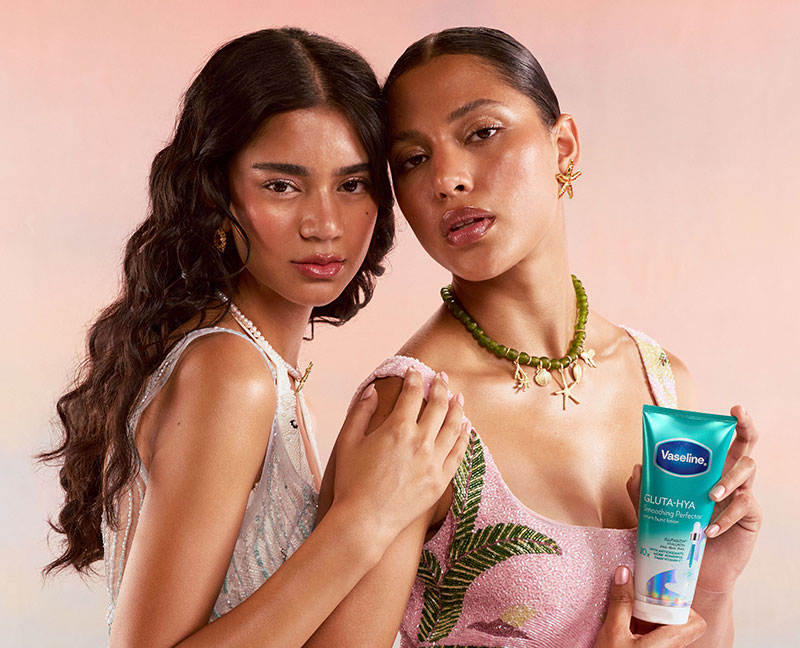
Vaseline’s Gluta Hya Smoothing Serum Burst Lotion performed strongly for Unilever this year
Serums have also been popping up in other formats, from lotions to body wash.
Vaseline’s Gluta Hya Smoothing Serum Burst Lotion, formulated with a triple-acid complex, 4D hyaluronic acid and niacinamide, is clinically proven to refine skin texture in seven days and improve radiance in 14 days. It features a refreshing serum-to-water texture.
Dove’s Body + Mind Serum Body Wash range brings a sensorial serum-infused formulation with a skin care-inspired texture into the body cleansing segment.
The range also includes mood-boosting fragrances, and according to Matt Maxwell, Business Unit Director, Health and Beauty, at Worldpanel by Numerator, the launch is resonating with UK consumers.
“This range has now made £2 million worth of sales since launch, and is ranking number ten in the total health and beauty NPDs for this year already,” he says.
So what will drive success in body care in 2027?
The key will be to balance the range of benefits that today’s skin care-educated consumers are looking for, while bringing in the sensorial elements that make body care an experiential step in their beauty and wellness routine.
“Body care is going to become a real routine instead of an afterthought,” says Barry Bruno, CCO and co-founder of Dewsy: “That means layered steps like serum and then lotion, products for specific concerns, and actives at levels that actually work.
“Discovery is no longer controlled by a handful of big brands, so consumers can find what works and leave what doesn’t. The winners will be the brands that solve real problems, prove it on the skin and earn a place in consumers’ everyday routines.”
Trends will be revealed in detail throughout November exclusively to subscribers, so don’t miss out and subscribe.
Trend 1: Body contouring and the GLP-1 era
Consumer interest in body contouring products, such as firming creams and lotions, is surging this year.
US data from consumer trends firm Spate shows that, for the year ended August 2026, ‘body firming cream’ was up 45% year-on-year and ‘firming body lotion’ increased 31%.
Searches for the adjacent terms ‘body contouring’ and ‘cellulite’ also grew significantly and are expected to continue to rise over the next 12 months.
The growing interest in body contouring comes at the same time as the use of appetite-reducing GLP-1 drugs, and concerns around the side effects of rapid weight loss on skin quality.
This trend explores the connection between the rising demand for firming body care and the growth of GLP-1 use.
Trend 2: The skinification of nail care
Once a must-have, elaborate nail extensions and regular gel manicures are making way for a more pared back and natural appearance, with ‘naked’ nails, milky shades and ‘your nails but better’ looks entering popular culture.
At the same time, the nail category is contracting, according to a recent report from Spate, with a 3.9% decline in average monthly search popularity year-on-year (y-o-y), based on Google, TikTok and Instagram data globally, with interest in nail services and salon treatments declining by 2.2%.
While internet discourse has branded the trend for naked nails a ‘wealth indicator’ akin to the ‘quiet luxury’ trend in fashion, it is more of a ‘health indicator’ as real and healthy-looking nails take centre stage.
Brands are tapping into this with new products aimed at improving nail health that draw on ingredients more typically found in skin care as well as innovative formats.
Trend 3: Glass skin body glow
Forget shimmer and sparkle, body care’s biggest story this year has been glow.
In 2026, the desire for glass skin has moved below the chin, and glow has become a full body affair.
“The body glow trend is increasingly about achieving healthy-looking, hydrated skin from head to toe, rather than simply adding shimmer,” explains Grace Vernon, Director of International Retail Partnerships of Boots Ignite and Trends.
“Ultimately, it’s about making that coveted all-over glow more achievable through products that are both effective and enjoyable to use,” says Vernon.
This trend explores how consumers’ desire for glow has evolved from a fleeting beauty trend to a broader expectation within body care – and where it’s heading next.
Trend 4: Body milks
As beauty shoppers seek out products that combine skin care-level benefits with sensorial pleasure, the textures, finishes and fragrances of their daily routines are coming under greater scrutiny.
From milky toners and sunscreen milks to fragrance, milk-inspired formulations are gaining traction across the beauty industry.
Enter the body milk: lightweight, fluid and designed to make moisturising feel less like a functional step and more like a daily indulgence.
In 2026, the format is attracting renewed attention as brands explore the intersection of efficacy and experience. This trend discovers how it’s evolving.
Trend 5: Vitamin C body care
Vitamin C is one of the most successful, science-backed actives in facial skin care so its current momentum in body care – a segment that is seeing strong growth across high-performance benefit-led treatments, including brightening – is a natural next step.
“Body care is moving beyond basic cleansing and moisturisation into a more targeted, treatment- led category.
“Consumers increasingly expect the ingredient expertise, measurable efficacy and sensorial appeal familiar from facial skin care to extend to the body,” explains Nilofer Vahora, Chief Marketing Officer at Amika.
“Vitamin C is central to this shift: a recognisable antioxidant ingredient associated with brighter, more even-looking skin.”
Related content:
- Is wellness-infused body care the next beauty frontier?
- Are hair and body mists poised to become the perfume killer in 2026?
- Cosmetics Business reveals the top 5 body care trends of 2025 in new report


