
Below are the most common myths - and what actually defines performance in beauty tech.
Myth 1: Beauty devices deliver instant visible results
- Reality: results are biological, not immediate
Some short-term effects (glow, temporary lift, de-puffing) can appear after one use. However, structural skin changes depend on biological processes like collagen activity and cellular energy production. Clinical evaluations of microcurrent and LED systems typically measure results over 4–8 weeks of consistent use. Improvements
in firmness, texture, and elasticity are cumulative, not instant.
Myth 2: Devices replace skincare products
- Reality: devices and formulations are interdependent
Most technologies require skincare products to function effectively. Microcurrent devices rely on conductive gels or serums to transmit energy properly. Vibration and thermal devices enhance how products spread and interact with the skin. Devices do not replace actives - they optimize delivery and application efficiency.
Myth 3: Higher intensity means better performance
- Reality: precision matters more than power
Skin response does not increase linearly with intensity. Microcurrent is designed to mimic natural bioelectrical signals - too much disrupts balance. LED performance depends on specific wavelengths and exposure time, not brightness. Excessive intensity can reduce comfort and consistency of use, limiting results.
Myth 4: Vibration is only for sensory experience
- Reality: vibration has functional skincare benefits
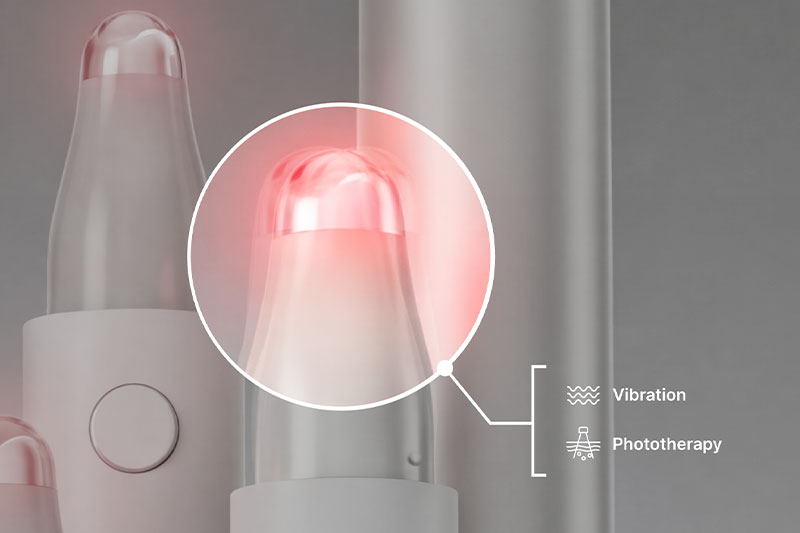
Vibration supports microcirculation at the application site, helps improve distribution of skincare products across the skin, enhances contact between device and skin surface and can support more uniform and efficient topical application.
Myth 5: All skin responds the same way
- Reality: skin is highly variable
Response differs based on sensitivity, barrier condition, age, and pigmentation. Light-based technologies may interact differently depending on melanin levels. Reactive or sensitive skin may require lower intensity settings and adjustable modes are essential for safe and effective personalization.
Myth 6: At-home devices are unsafe
- Reality: safety depends on design and usage
Modern devices are built with controlled intensity limits and safety mechanisms. Many include timers, auto shut-off, and predefined treatment modes. Moreover, regulatory frameworks require safety validation for consumer use. Risks come mainly from misuse, not from the technology itself.
Myth 7: Using more devices delivers better results
- Reality: structure matters more than quantity
Different technologies target different biological pathways (stimulation, absorption, circulation). Overlapping or poorly sequenced use can reduce effectiveness. Results depend on timing, compatibility, and protocol design. Well-structured routines outperform complex, multi-device layering.
Conclusion
Beauty tech is evolving beyond surface-level innovation into a more precise, system-based category. Its effectiveness is not defined by speed, strength, or quantity—but
by consistency, parameter control, and integration with skincare formulations.
At Nuon Medical, this approach focuses on developing technologies that work in alignment with skincare products and real usage conditions. The goal is not to add more features, but to ensure that each interaction between device, formulation, and skin is controlled, measurable, and effective.