One of the key challenges for packaging developers is balancing product preservation with circular economy objectives. Traditional premium packaging solutions often rely on complex multi-material structures that may complicate recycling processes. At the same time, beauty brands are under pressure to maintain the aesthetics, functionality and perceived value that consumers expect from high-end skincare products.
Airless dispensing technologies have become an increasingly important solution in this context. By minimising product exposure during use, they help protect sensitive formulations and maintain product integrity throughout the entire life cycle. Precise and controlled dispensing also improves convenience for consumers while helping to reduce product waste.
An important aspect of airless packaging design is ensuring protection not only within the package itself but also at the dispensing interface. Systems incorporating an orifice-closing mechanism keep the dispensing opening sealed between applications, helping to reduce exposure to external influences while maintaining cleanliness throughout the use phase. This can be particularly beneficial for formulations containing active ingredients that require reliable protection over time.
Alongside dispensing technology, the packaging material plays a critical role in safeguarding product quality. High-barrier laminate structures help protect formulations against oxygen, moisture and other external factors that may affect efficacy and shelf life. Such barrier performance is particularly relevant for advanced skincare applications including serums, eye-care products, anti aging formulations and treatment products.
At the same time, sustainability considerations are progressively shaping packaging development. Growing regulatory requirements and industry efforts to advance packaging circularity are accelerating the transition towards mono-material solutions that support recyclability within established recycling streams. For brand owners, this creates opportunities to align packaging strategies with circular economy objectives while maintaining the performance characteristics required for premium cosmetic products.
The challenge is especially evident in the prestige beauty segment, where packaging serves both a functional and a branding purpose. Consumers increasingly expect packaging to combine environmental responsibility with a premium look and feel. Soft-touch surfaces, high-quality decoration options and sophisticated printing techniques remain important tools for creating differentiation in highly competitive skincare categories. Integrating these features into packaging structures designed for recyclability represents an important step forward for the industry.
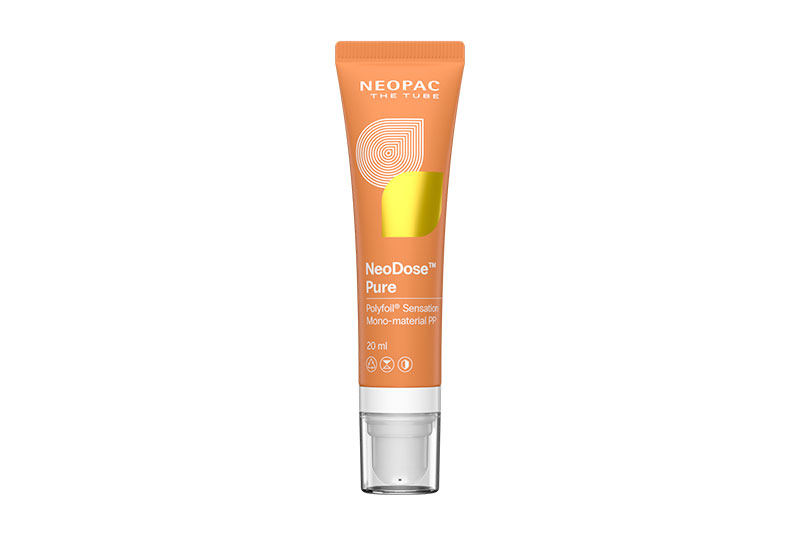
One example of this approach can be found in Neopac's NeoDose dispensing platform. NeoDose Pure and NeoDose Solo combine airless dispensing technology with recyclable high barrier tube structures. NeoDose Pure is based on a polypropylene (PP) concept, while NeoDose Solo offers a polyethylene (PE) solution. Both concepts demonstrate how product protection, dispensing accuracy, premium aesthetics and recyclability can be integrated within a single packaging system.
By combining airless functionality, high barrier performance and mono-material design principles, such packaging concepts help brands address evolving market requirements without compromising product performance or consumer experience.
As sustainability requirements continue to evolve, packaging innovation will place greater emphasis on solutions that balance technical performance with circularity. For beauty brands, the ability to protect sensitive formulations, create a premium consumer experience and support recyclability objectives is likely to become an increasingly important factor in future product development.